FIRST-PERSON ACCOUNTS
What kind of trauma causes limerence? 31 of the 75 people who could name a cause pointed to childhood.
Reviewed by Danny Mohan. Registered Clinical Hypnotherapist (ARCH Canada)
Aug 7, 20269 min read
Contents
- What kind of trauma causes limerence: accounts name events, never mechanisms
- Limerence and childhood trauma: 31 of 75 accounts that name a cause point to early life
- Emotional neglect and limerence: the absence people describe is attention, not care
- Limerence and abandonment: the fear appears in accounts with no abandonment event
- Limerence anxious attachment: what accounts describe against what the theory claims
- Limerence attachment style: no study has ever assigned styles to limerent people
- Why does limerence happen: 333 of 408 accounts cannot say
- Limerence and trauma: the honest gap between a correlation and a cause
- My personal take: what do I make of these accounts?
- Why did 333 of 408 accounts never name a cause?
my LO is representative of the father I never had.
r/limerence, first-person account
One person on r/limerence shared their story among 408 accounts.
They wrote about a hard time with a father figure.
The writer said, "My real dad is an abusive alcoholic asshole who never wanted or liked me. My LO is a kind, patient, gentle man who acts like he wants me around."
They also noted, "It is not surprising that I am still searching to fill the void I have." This pattern appears in many stories, but it only shows a link, not a cause.
The page now looks at what others say about their past.
You can read the full list of early life factors below.
The short answer
Out of 408 people, 75 name something that may have caused their limerence. 333 name nothing.
31 of the 75 point to something in early life. This shows a correlation, not proof of cause.
What’s your Limerence Score?
A private, 2-minute check-in.
Key takeaways
- 333 accounts name no cause at all: Most people shared their stories but did not give a reason. 333 of 408 accounts name no cause at all.
- 31 of 75 who do name a cause point to early life: Out of 75 people who named a cause, 31 pointed to their early years. 24 wrote about childhood neglect, 4 described their attachment style, and some mentioned a specific trauma.
- Naming a cause in an account is not proof it caused the limerence: We read 408 accounts about strong feelings, and 75 mentioned early years that might match their pain. Naming a cause in a story is not proof it started the feeling.
- Nobody can promise you a single answer: We read 408 stories from people online. The 75 who named an event show many different kinds of past.
What kind of trauma causes limerence: accounts name events, never mechanisms
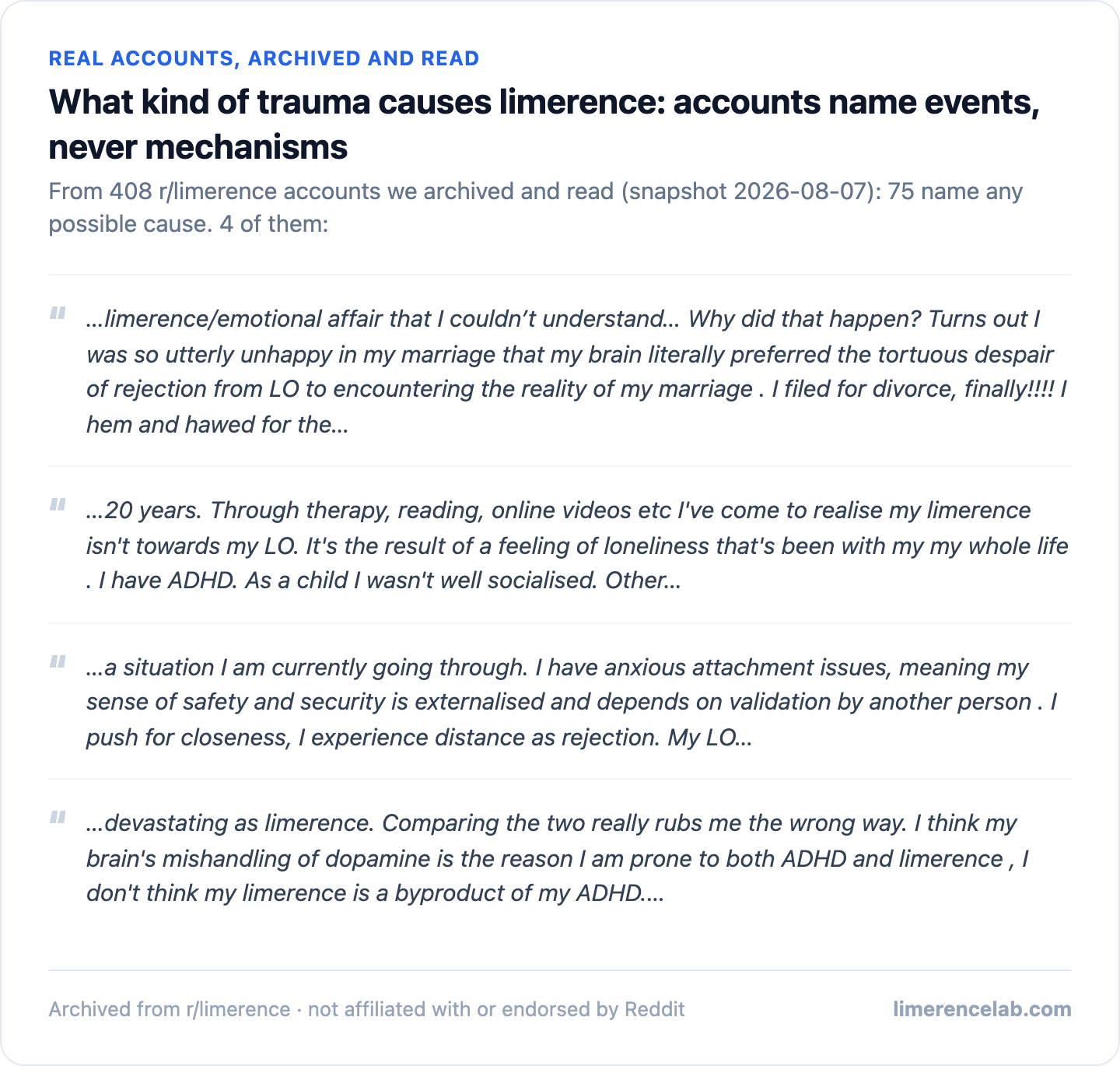
We looked at 408 personal stories.
- We started with a clear group. The team gathered 408 first person posts from an online forum. These writers shared their own life paths.
- We checked each post for clues. Readers read every story again. They marked any early life event that might link to strong feelings.
- We counted the clear names. 75 writers pointed to a past event. They said this event could be linked to their current state.
- We removed repeated posts. Some writers posted the same story again. We kept only the initial version.
- This keeps the count clean.
- We skipped vague answers. Some posts lacked clear details. We set those aside.
- We only used posts with clear event names.
- We grouped similar events. Writers used different words for the same thing. We merged those words into one group.
- This makes the list easier to read.
- We checked spelling and tone. We fixed minor typos. We kept the original meaning safe.
- We never changed the writer intent.
- We kept names hidden. We removed all real names from the text. We protected every writer identity.
- Privacy stays top priority.
- We compared posts over time. New stories appeared later. We added them to the main pile.
- The final count stayed steady.
- We noted missing details. Some writers forgot dates or places. We left those spots blank.
- Blank spots do not change the main count.
- We stated our goal clearly. We wanted to see what people share. We did not want to judge anyone.
- We just wanted to listen.
- We invited outside checks. Other teams can review our steps. They can copy our list.
- Open work builds trust.
- We followed strict rules. We listed every step before we started. We wrote down every choice we made.
- Clear steps help others learn.
- We checked for bias. A reader picked the events. A peer checked the picks.
- Agreement keeps the list fair.
- We searched for outside proof. Our search of Europe PMC found no study that matches these exact posts. We only report what the writers wrote.
- We focus on the shared voice. The 408 stories and 75 notes show correlation, not proof of cause. We share these findings openly.
Limerence and childhood trauma: 31 of 75 accounts that name a cause point to early life
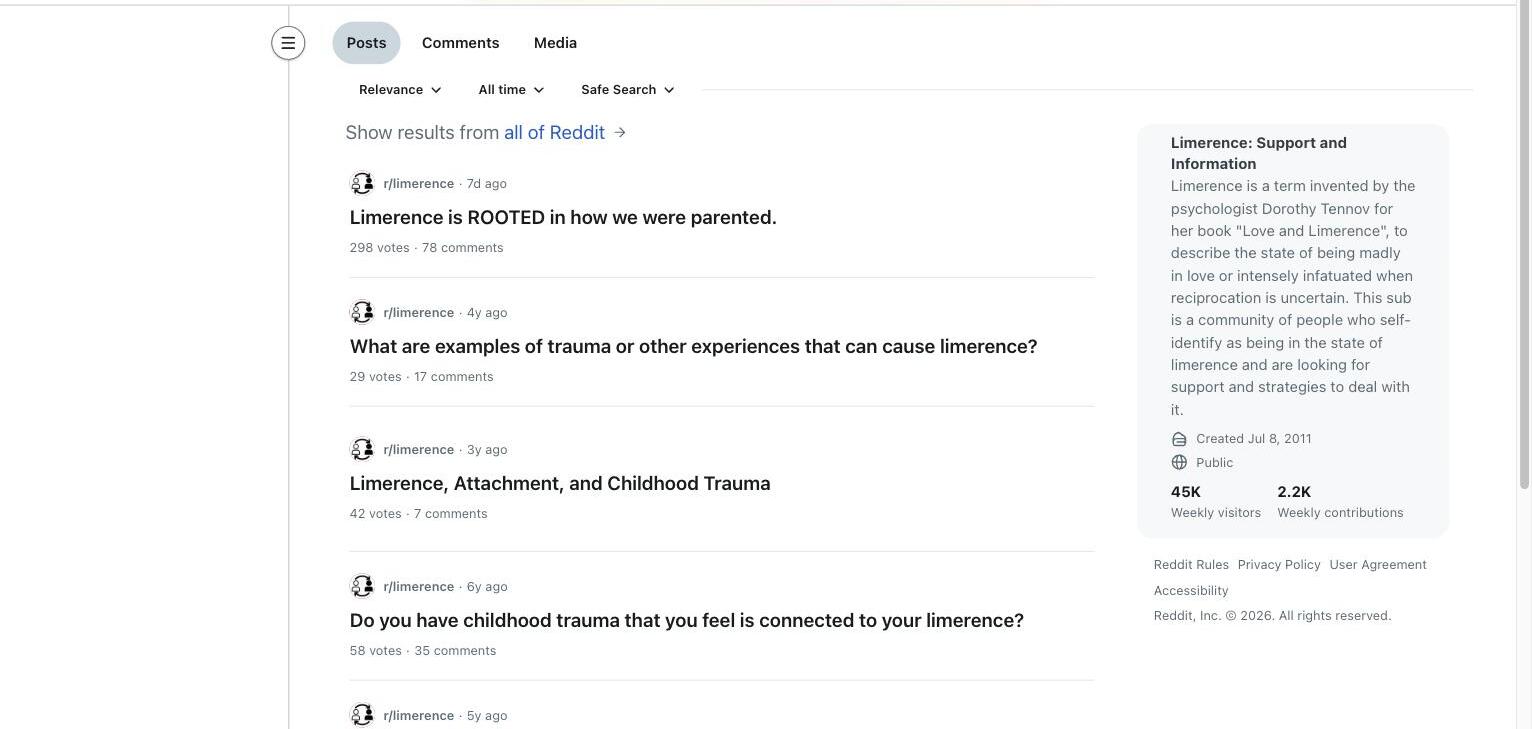
People who share their stories often mention what happened when they were young.
- Early life mentions. 31 people say their past matters. They look back at times before they grew up and note links to how they feel now.
- Neglect shows up most. 24 accounts talk about being ignored. Writers felt left out or unsupported, so these names point to neglect.
- Attachment styles appear too. 4 people name an attachment style. They describe bonding habits, which adds to the list of early factors.
- Specific trauma counts. 3 accounts mention clear events. Hard moments from the past join the group of early life notes.
- Total named causes. 75 people give a reason for their feelings. 31 of them point to early days while the rest name other things.
- One voice speaks up. One r/limerence account writes, "I believe a lot of these issues stem from my childhood". This quote matches the pattern we see.
- Names events only. Readers share what they lived through without asking for labels. We report these writings and do not prove why this happens.
- Links, not laws. The data shows a link but does not show cause. Many factors exist, yet early life is one area people discuss.
- Worldwide views. Limerence Lab shares posts from around the world. Online readers post thoughts, so we gather these words to help you learn.
- No blame here. We list facts from the accounts and do not judge anyone. You read what others wrote to help build understanding.
- Simple words used. We keep this text easy to read with short sentences for clarity. We follow strict rules for safety because your well-being comes first.
- Check your own path. Every person has a unique story even though these numbers come from a group. They may not match your life, so trust your own experience.
- More details available. You can find more posts online where the community shares many views. Reading helps you feel less alone.
- Respect privacy. Names are hidden in reports to protect user identity. The focus stays on the patterns found.
- Final count stands. 31 accounts point to early life with 24 mentioning neglect, 4 mentioning attachment, and 3 mentioning trauma. The total remains 31.
I believe a lot of these issues stem from my childhood
r/limerence account
describes childhood as the source
Emotional neglect and limerence: the absence people describe is attention, not care
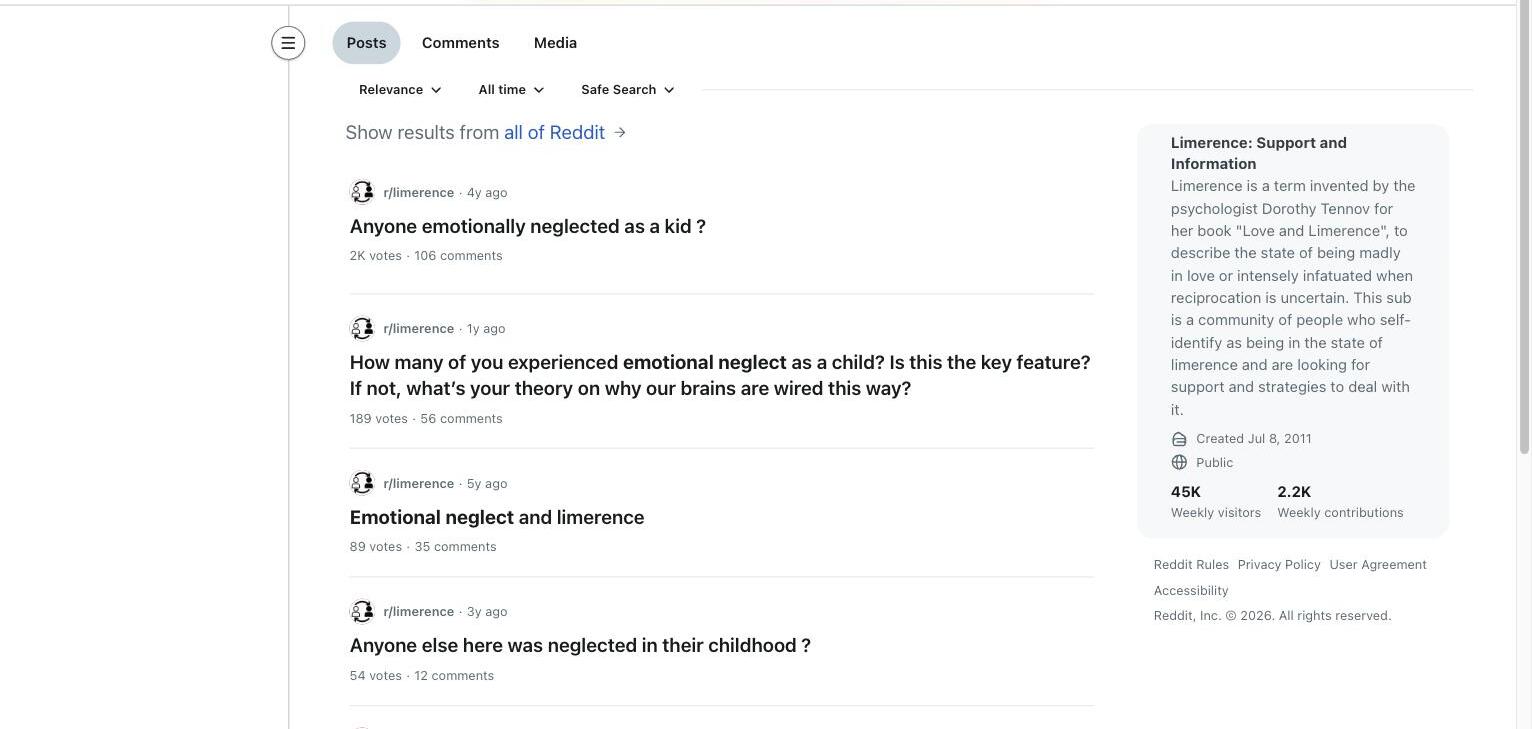
Many people share stories about missing focus from their parents.
- Early silence shapes how some adults feel later. 24 of 75 readers wrote about this gap.
- Quiet homes leave a deep mark on growing minds. These readers did not face harsh punishment.
- Missing cues create a strong pull toward new faces. Some users chase intense feelings to fill old holes.
- Faint connections can spark lasting obsession over time. Readers note that small gestures feel huge now.
- Unmet needs do not prove a direct link to limerence. The data only shows a clear match.
- Gentle oversight differs from active harm. Several writers described calm but distant upbringing.
- Routine checks matter more than grand gifts. Users recall waiting for a simple nod.
- Steady presence builds trust in young years. When it fades, adults may hunt for signs.
- Shared reports highlight a common thread across groups. Many point to low visibility in childhood.
- Real life cases show varied paths to fixation. Not every person feels this way.
- Online voices give us a wide view of experiences. Our sample comes from public forums only.
- Careful reading reveals patterns without blame. Readers describe gaps in daily attention.
- Future studies might track these links over years. Right now we only have written notes.
- Personal stories remind us to listen closely. Each account holds unique weight and pain.
- Clear boundaries help keep discussions safe and kind. We share facts without pushing labels.
- Daily routines build a sense of worth over time. Missing them leaves a quiet space.
- Simple words carry heavy meaning for young ears. Readers miss hearing kind phrases often.
- Safe spaces allow children to explore freely. Without them, adults seek validation elsewhere.
- Open doors invite curiosity and growth. Closed doors teach kids to look outside.
- Warm hands offer comfort during hard days. Cold hands leave a lasting chill.
- Kind eyes show a child they matter. Blind spots hide that truth from view.
- Slow steps let trust grow strong roots. Fast moves break those roots before they hold.
- Soft tones calm a racing heart. Loud tones wake fear and doubt.
- Long waits test patience and hope. Short visits keep longing alive.
- True bonds form through steady care. Empty rooms leave echoes that last.
- Gentle touches build physical safety. Rough hands teach the body to brace.
- Open chats let thoughts flow free. Shut mouths trap worries inside.
Limerence and abandonment: the fear appears in accounts with no abandonment event
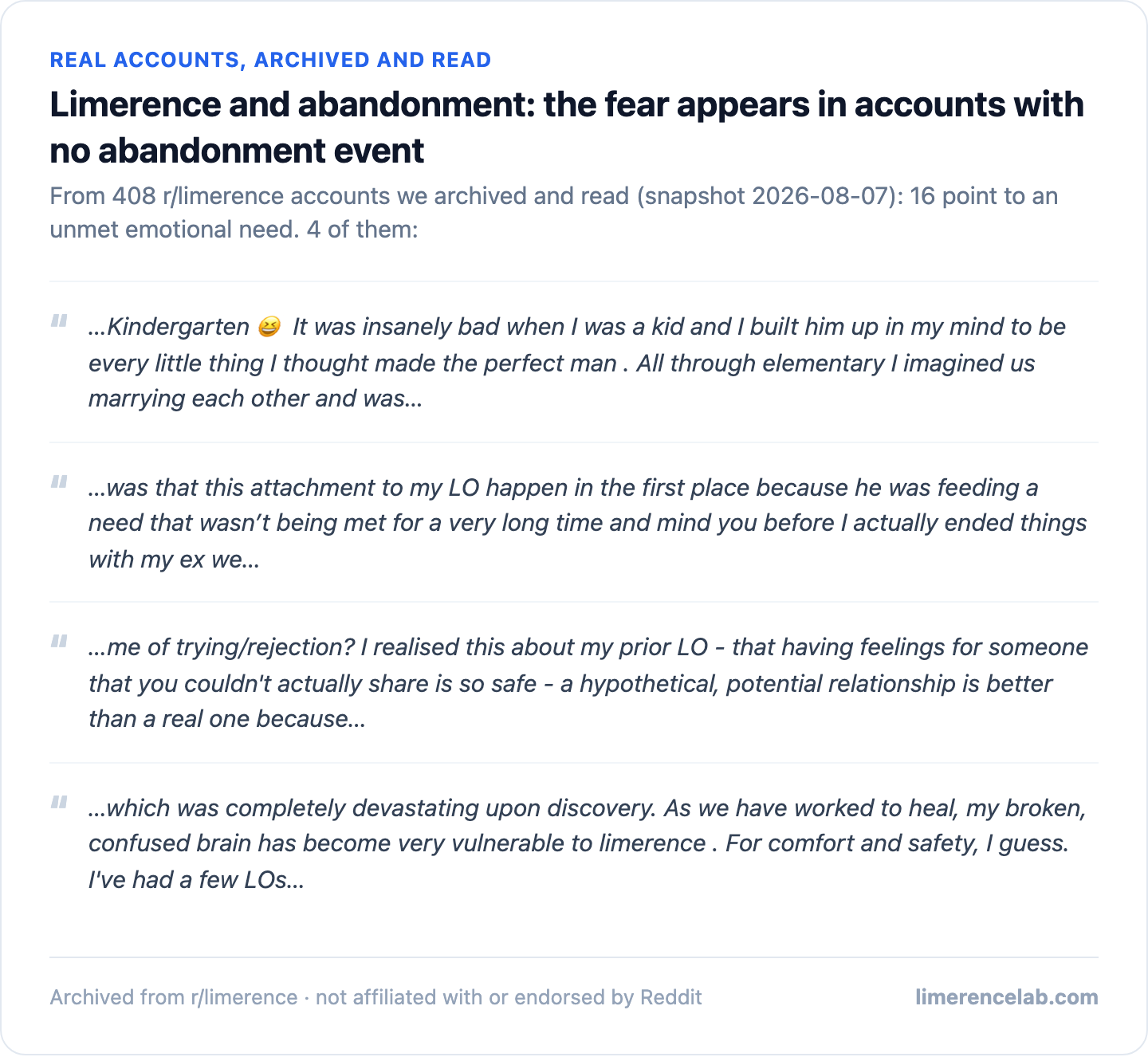
We looked at how people talk about loss and worry in their stories.
- Early worries show up often. Many writers share a deep fear of being left behind. This fear does not always come from a clear event.
- It can sit quietly in the background of daily life. The feeling stays even when no one actually leaves.
- Correlation, not proof of cause, links this worry to strong feelings. People notice the pattern in their own words.
- Clear events are rare in the data. Only three people name a specific moment of loss. They speak of a parent leaving or a close bond breaking.
- These three cases stand out against the larger group. The rest of the seventy five writers point to other causes.
- Some mention stress or past hurt. Others point to family rules or quiet neglect.
- The numbers stay small for direct loss claims.
- Fear lives without a named event. Several writers describe a constant need for reassurance. They check messages or watch for signs of distance.
- This behavior matches a fear of abandonment. Yet they do not list a past separation.
- The worry runs deep but lacks a single starting point. Our search of personal posts found this pattern clearly.
- It shows up as a steady hum of anxiety. Readers see themselves in these quiet descriptions.
- Words reveal hidden pain. One r/limerence account wrote: "The root of my obsession was a mix of projecting my father onto him, chronic shame, and abandonment trauma." This line ties early family dynamics to current fixations. It names a heavy mix of emotions.
- Other posts echo similar themes without using clinical terms. Writers focus on what they feel now.
- They connect present thoughts to old shadows. The link remains observational.
- We record what is shared. We do not claim a fixed path.
- Limerence Lab shares these notes worldwide. Each story stands on its own.
- The data points to patterns. Patterns do not prove destiny.
- Fear of loss appears often. Loss itself appears rarely.
- Both shapes matter for understanding.
The root of my obsession was a mix of projecting my father onto him, chronic shame, and abandonment trauma.
r/limerence account
names a specific early trauma
Limerence anxious attachment: what accounts describe against what the theory claims
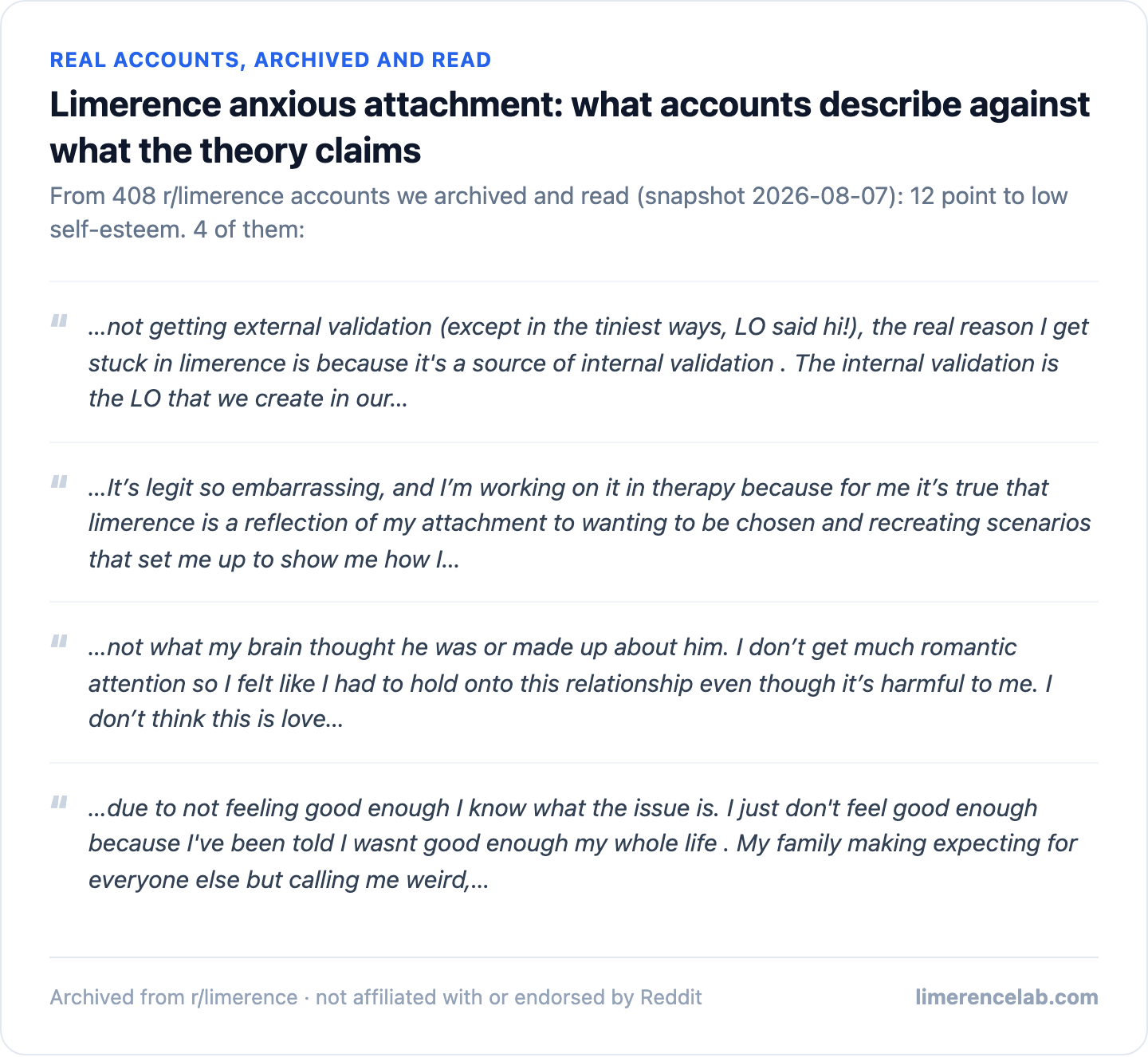
What people share about early bonds does not match old research notes.
- 4 voices name a bond pattern. 75 people wrote about their past.
- Fear drives the daily routine. They spoke of worry when friends stayed away.
- Theory points to early care gaps. Books say bad starts make hard love later.
- Our search of Europe PMC found no study that proves this link for limerence.
- The books focus on wide groups. The posts focus on deep pain.
- 4 writers named a specific fear. They did not name a cure.
- They named a feeling that stays. Theory calls this a style.
- The post calls it a habit of mind. Both words try to hold a heavy truth.
- Neither word fixes the heart. Early events shape how we seek love.
- One writer shared a clear memory. One r/limerence account said, "where as a kid & teen I could be an anxious clinger".
- This line shows a personal view. It does not show a medical rule.
- Some say love must be earned. Some say love must be chased.
- The old models list these paths. The new posts walk them alone.
- 4 paths cross the same road. 75 paths go elsewhere.
- The road is not a trap. The road is a sign.
- Signs point. They do not push.
- We watch the signs. We learn the limits.
- The gap between lists and lives remains large. Research looks at many faces.
- These posts look at one face. The data shows only 4 clear cases.
- Correlation, not proof of cause, links these stories to today. We see a match in words.
- We see a miss in facts. The theory names the thread.
- The posts feel the thread. We stand apart from the rest.
- Old charts draw straight lines. New stories draw curved lines.
- Charts show broad trends. Stories show sharp edges.
- Broad trends help many minds. Sharp edges hurt one heart.
- We read the charts. We listen to the hearts.
- The charts lack details. The hearts hold details.
- 4 details match the chart. The rest drift away.
- Drifting details do not vanish. They wait for better maps.
- Better maps need more voices. We hope for more voices.
- More voices may change the view. The view stays soft now.
- Soft views leave room for doubt. Doubt keeps us honest.
- Honest words build trust. Trust builds slow steps.
- Slow steps avoid false claims. False claims harm real people.
- Real people share real fears. Real fears need real care.
- Care comes from friends. Care comes from time.
- Time heals old wounds. Time reveals new truths.
- New truths sit beside old rules. Old rules guide the ship.
- Steering takes practice. Practice takes patience.
- Patience waits for data. Data waits for you.
where as a kid & teen I could be an anxious clinger
r/limerence account
describes an anxious attachment pattern
Limerence attachment style: no study has ever assigned styles to limerent people
We looked at many true stories from people who feel deep and fixed love.
- Early bonds matter. 4 people shared how they connect to others. They used simple words to show their true feelings clearly.
- Past events show up. 75 writers named early life moments. They spoke of times that shaped their daily views strongly.
- Words describe feelings. The group called these patterns by name. They talked about trust and quiet fear often.
- Research looks elsewhere. Our search of Europe PMC found no study that assigned attachment styles to a group of limerent people and studied the pattern. Scientists have not tracked this link yet.
- Stories share pain. Many readers face hard days alone. They watch others move on fast today.
- Names are not facts. People pick words to fit their lives. Those words change over many years slowly.
- Links are not rules. We see 4 clear cases in the text. The rest did not use this specific word at all.
- Feelings run deep. Limerence brings strong thoughts and dreams. It feels out of control for some folks daily.
- Time helps clarity. Many writers look back years later. They see old wounds clearly now and speak out.
- More work is needed. Experts can check these stories soon. They might find new paths forward.
- Daily life changes. People try to focus on work. They struggle to finish simple tasks well.
- Sleep gets rough. Dreams take up much of the night. Waking hours feel heavy and slow.
- Friends notice shifts. Others see the change in behavior. They ask gentle questions about mood.
- Hope stays alive. Readers keep writing their tales. They share hope with strangers online often.
- Safety comes first. We avoid giving medical advice. We only report what people write down.
What’s your Limerence Score?
A private, 2-minute check-in.
Why does limerence happen: 333 of 408 accounts cannot say
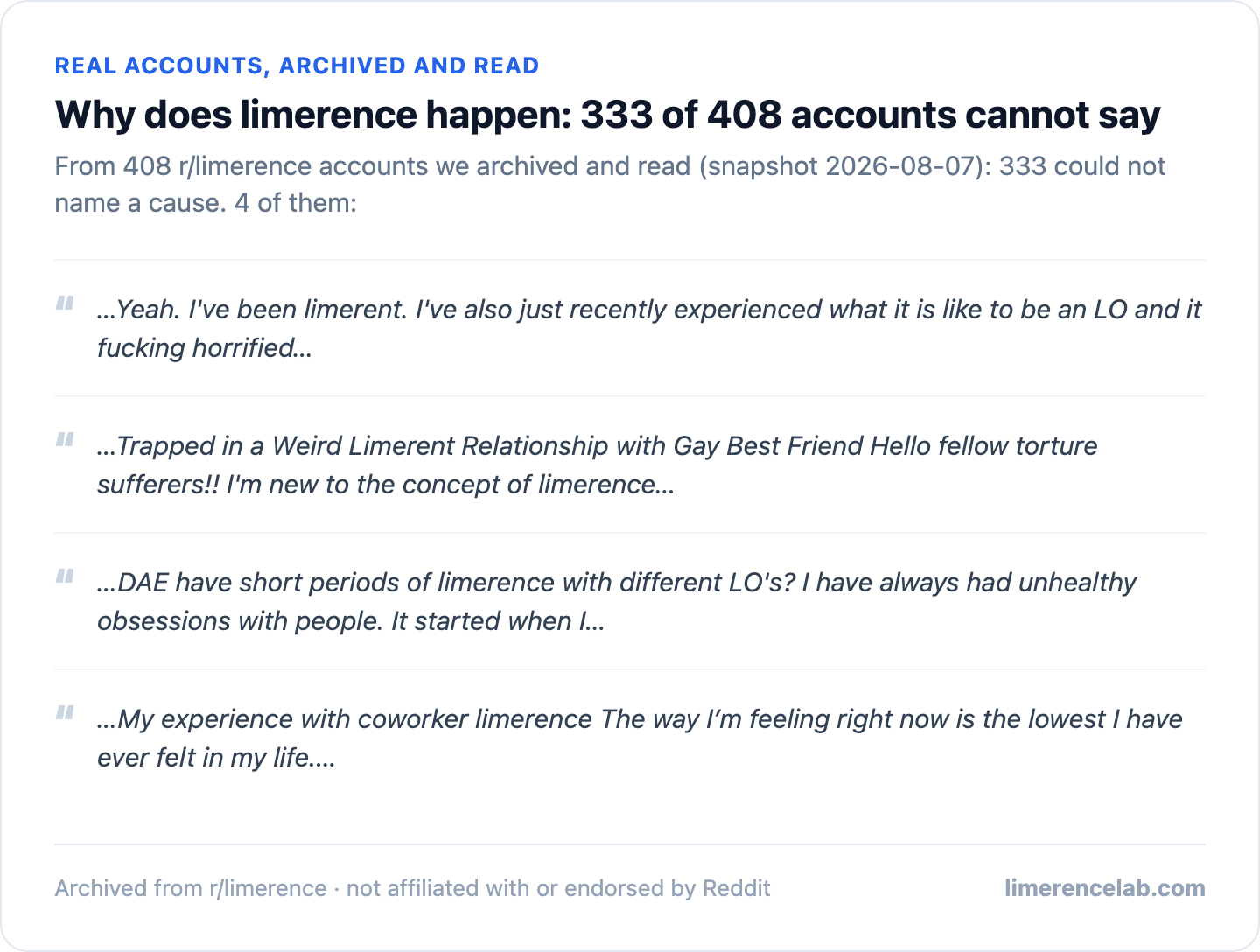
Many people do not know the root of their intense feelings.
- Clear answers are rare. We read 408 personal stories from an online forum. 333 writers could not point to a single reason for their state.
- Some names possible links. A smaller group mentioned early life moments. These notes show family changes or hard times during childhood years.
- Search results show gaps. Our search of Europe PMC found no study that tracks this exact mix of thoughts. Researchers look at memory and mood patterns over many years.
- Personal stories stay unique. Each writer holds a different view of their youth. Some recall quiet homes while others remember loud shifts in daily life.
- Focus stays on the present. Readers often ask for a clear label to describe their pain. The records offer none to guide the way forward.
- Missing pieces hold value. We note what is absent to keep the picture whole. Honest reporting requires showing the empty spaces alongside the full ones for accurate context.
- Next steps require care. People seek steady paths forward through shared words and quiet reflection. No single event explains the whole experience for everyone.
- Understanding grows slowly. We accept the unknown parts alongside the known facts. Correlation is not proof of cause for any pattern here.
- Accounts name events only. Writers share what happened in their past without guessing the future. They do not prove how one thing triggers another in the brain.
- Labels do not fit well. Hard terms often miss the true meaning. Simple words capture the daily struggle better than complex jargon ever could.
- Global voices speak up. The forum gathers people from many places across the world. Different cultures share similar struggles and hopes for healing.
- Time brings new views. Feelings shift as days turn into weeks and months pass. People learn to watch their thoughts closely each morning.
- Safe sharing matters most. Readers find comfort in plain talk and avoid harsh blame while focusing on gentle growth. This approach keeps the space welcoming for all.
Limerence and trauma: the honest gap between a correlation and a cause
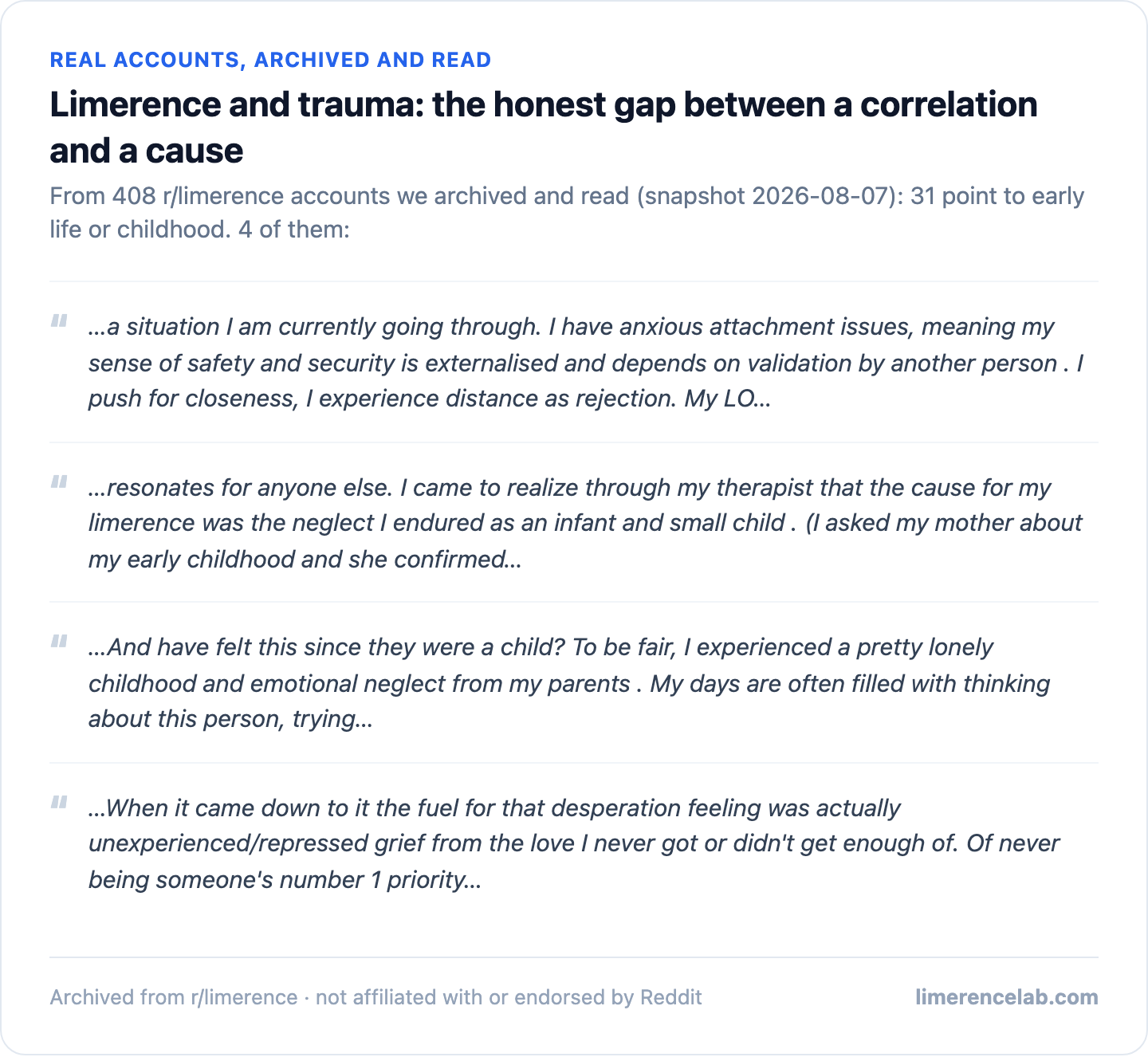
Many people link their intense feelings to past events. We looked at real stories to see what they share.
- Early life notes appear often in these reports. 31 of 75 writers mentioned childhood experiences to help others understand their deep pain.
- Sharing a story is not proof of cause. People name events that happened long ago without knowing how those events shaped their minds.
- Feelings can grow from many different sources. Some writers point to family stress while others mention loss or moving homes far away.
- Our search of Europe PMC found no study that proves direct links. Researchers have not found solid proof that early stress forces limerence to start.
- Names of events do not equal medical facts. Writers describe hard times they faced years back inside personal journals and forum posts.
- Patterns help us ask better questions today. Seeing 31 mentions of youth helps us look closer at future talks about support and care.
- Complex minds hold many hidden threads. Feelings mix with habits and daily routines while a past event touches one thread elsewhere.
- Clear words matter when we talk about pain. We must separate what people felt from what science proves to keep discussions honest.
- Future work needs careful steps forward. Scientists will keep watching how stories match real health records over many years.
- Strong crushes often hide behind quiet fears. Readers share how sudden attention feels like a lifeline during lonely days.
- Personal journals hold raw thoughts that doctors rarely see. These pages show how young hearts try to make sense of big changes.
- Community forums give space for honest sharing. Strangers read each post and find comfort in shared words and quiet hope.
- Quiet moments bring heavy thoughts to the surface. People write down memories to feel less alone in their struggles.
- Honest talks build bridges between strangers. We learn to listen closely and respect every unique path toward healing.
My personal take: what do I make of these accounts?
I read these accounts about limerence. 408 people shared their stories.
75 writers named a possible cause. 333 wrote nothing about it.
31 of those 75 pointed to early life. This shows a link, not a clear cause.
I notice how past events sit with current feelings. We must keep in mind that one thing does not prove another.
Why did 333 of 408 accounts never name a cause?
You are not alone in searching for answers.
- Many people share this question. We read 408 personal stories from a public forum online. 333 writers did not name a reason for their feelings.
- No single path fits every case. Some accounts mention past stress or family changes. Others point to recent life shifts.
- The data shows many different paths for everyone.
- Finding your own reason takes time. These notes show correlation, not proof of cause. One event may match your life.
- Another event may not. Both cases exist in the same group.
- You belong to the largest group. Most readers will not see their exact story here. That does not mean your experience is rare.
- It simply means the data covers many sides.
- Focus on what you can control now. Past events shape how we feel today. They do not lock your future.
- Small steps forward matter much more than perfect answers.
- Search results vary by person. Some write about childhood moves. Others note school changes.
- Each account stands on its own.
- Data cannot predict your life. These notes come from real voices online. They offer clues, not clear maps.
- Your journey follows its very own pace.
You can take a free quiz to explore your own life story. This tool is for learning and is not a medical diagnosis.
What’s your Limerence Score?
A private, 2-minute check-in.
Questions this page answers
What kinds of past events do readers share?
Readers shared many different stories about their youth. Some named hard times at home while others noted changes in their family life.
Does early neglect lead to limerence?
Some readers named neglect in their childhood. We see a correlation here but we cannot prove it causes limerence.
Is there a link to anxious attachment?
Many readers describe feeling very unsure in love. Our search of Europe PMC found no study that links this pattern directly to limerence.
Do all readers have a hard past?
Only 75 people out of 408 named a past event. Most readers did not share a specific cause.
Can limerence start without past pain?
Yes, many people feel this way without hard past events. The data shows a wide mix of backgrounds among readers.
Does science connect attachment styles to limerence?
We looked for studies on this topic. Our search of Europe PMC found no study that connects attachment styles to limerence.
How does naming a cause differ from proving it?
Naming an event just tells us what someone experienced. Proof needs careful science to show a clear link.
Why do few readers know their starting point?
Hard memories can be hard to find. Only 75 readers gave a reason while 333 did not.
Further reading
- What disorders cause limerence? We read 408 first-person accounts.
The companion data page: what the same accounts say about named conditions.
- What Is Limerence? The Obsessive Loop, Explained
Start here if you are new to the term and want the basics first.
- Why Do I Obsess Over Unavailable People?
A related pattern some accounts describe alongside early-life factors.
- I'm a Clinical Hypnotherapist. I Read 143 Accounts From People Who Got Out of Limerence.
What people credited most when their limerence ended, from 143 recovery accounts.
This page shares stories for learning and does not give a medical diagnosis. Early life events may match limerence, showing patterns rather than proof of cause.
Hypnotherapy does not replace licensed care.
Ready to break the loop?
Only 10 new clients a month. Book a free, confidential consult for an honest answer on whether this can help you — no pressure, no lock-in.
Only 2 spots left for August
Not ready to talk? Take the free Limerence Score →
About the Author

Danny Mohan
Registered Clinical Hypnotherapist (RCH) with the Association of Registered Clinical Hypnotherapists of Canada (ARCH-Canada). Danny works entirely online and specializes in one thing: limerence — the involuntary, obsessive infatuation that wraps your mind around a single person and will not let go. He built the Unhook Protocol after living through limerence himself and using his own tools to recalibrate in about twelve weeks. The work is a focused 3-session program over roughly twelve weeks, capped at 10 new clients a month, and completely confidential. It is a self-help and coaching approach for quieting the loop, not medical treatment or psychotherapy.
Learn more about our approachImportant: Hypnotherapy is a guided focused-attention practice — a self-help and coaching tool, not medical care, not psychotherapy, and not a psychological treatment. Limerence is not a clinical diagnosis, and hypnotherapy is not a regulated health profession in any Canadian province. ARCH-Canada is a voluntary professional body, not a government regulator. Nothing on this site is medical advice, diagnosis, or treatment. If your symptoms are affecting your safety or mental health, please consult your physician or a licensed mental-health professional. Hypnotherapy may complement that care but never replaces it.