I'm a Clinical Hypnotherapist. I Read 143 Accounts From People Who Got Out of Limerence. Only 6% Credited Therapy.
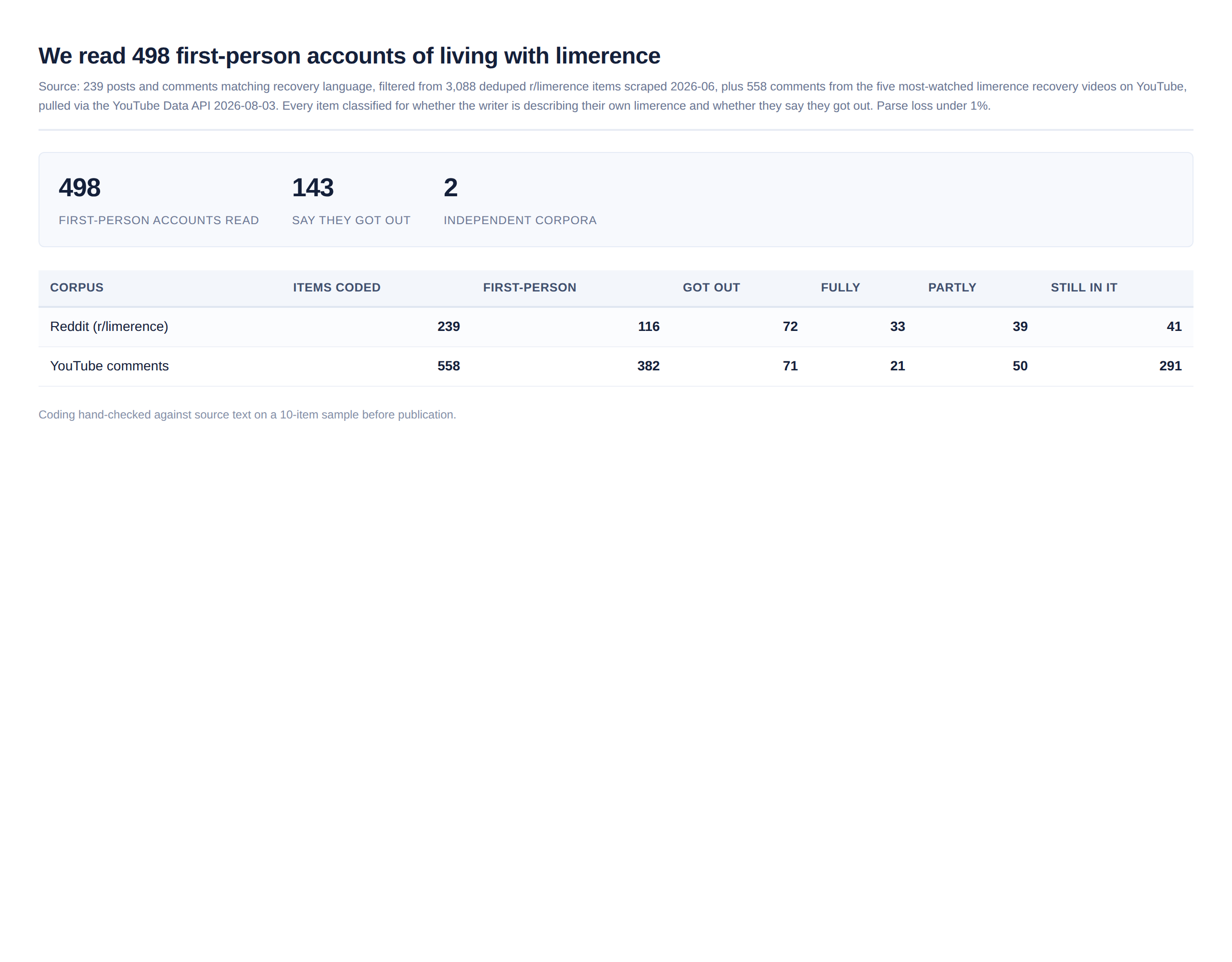
Limerence has one published treatment study. That study describes a single patient. I also reviewed 498 first-person accounts to see what people who got out said helped.
The short answer
Limerence has one published treatment study. That study describes a single patient. A review of 498 first-person accounts found that 143 people said they got out of limerence. Those accounts credit insight most often, at 38%, while 6% credited therapy. My honest answer is that limerence may become less gripping, even when thoughts and feelings do not stop at once. No honest source can promise a cure or give you a success rate.
Key takeaways
- One treatment study exists: Limerence has one published treatment study. That study describes a single-patient cognitive behavioral case study from 2021.
- The research has two index counts: Limerence research contains 31 Europe PMC results and 10 PubMed results. The two counts describe different indexes, not two claims about the total number of papers.
- Insight ranks first in recovery accounts: Recovery accounts credit insight most often, at 38%. Self-help follows at 26%, no-contact appears at 11%, and therapy appears at 6%.
- The LQ-11 adds a research tool: Researchers published the Limerence Questionnaire, called the LQ-11, in 2025. The questionnaire gives researchers a validated way to measure limerence-related experiences.
Limerence has a simple word with a hard meaning: cured. Some people mean the thoughts stop. Some mean the feelings stop. Others mean the person no longer controls their day. Those are not the same goal, and a promise that sounds kind can make you feel worse when your mind does not change on schedule. I looked at the research, the search results, and first-person accounts. I found a small research base and a much larger set of personal stories. The stories do not prove one method works for everyone, but they show a pattern worth taking seriously. People often describe a change in how they see the bond, the other person, or their own needs. That kind of insight may loosen the grip, even when it does not erase every thought or feeling.
The honest answer is less neat than a cure claim
Limerence has one published treatment study. That study describes a single patient. I wanted to look past confident claims and see what the available evidence could really support. I found 143 accounts from people who said they got out of limerence. Insight was the factor they credited most often. Therapy appeared in 6% of those accounts. That finding matters because I offer support in this area. I will not promise a cure or pretend that one approach works for everyone. A session may help you understand your pattern and decide what to do next. Free, self-directed steps may also be enough for some people. Limerence recovery accounts credit insight more often than therapy. Support may help, but no verified success rate exists for any approach.
Can limerence be cured: the question hides three different meanings
Limerence cure questions carry three different meanings. Some people mean the thoughts should stop, and some mean the feelings should stop.
Others mean limerence should lose its grip, even if thoughts or feelings still show up. The third meaning gives the fairest goal, since a mind can remember someone without being pulled toward that person all day, and a thought can appear without becoming a command.
The first two goals can turn recovery into a daily test. If a thought returns, you may decide nothing has changed, and that can add fear and shame to an already painful loop.
- Three meanings compete for the word cure. Thoughts stopping, feelings stopping, and losing its daily grip are not the same goal.
- The third meaning is the fairest one. A thought can appear without becoming a command you must obey.
- An all-or-nothing test adds shame. Judging yourself by one returning thought turns recovery into a pass-fail exam.
- Watch what runs your day, not what crosses your mind. Less checking, less waiting, and more choice matter more than a blank mind.
This page keeps research and personal accounts separate. Research shows what has been studied, and accounts show what people credit, but neither can guarantee what happens for one reader.
If limerence has taken over your choices, you do not need every feeling to disappear before you act. A useful first step is learning what is happening, then making one choice that gives you more space.
Is there a treatment for limerence: one published study, one patient
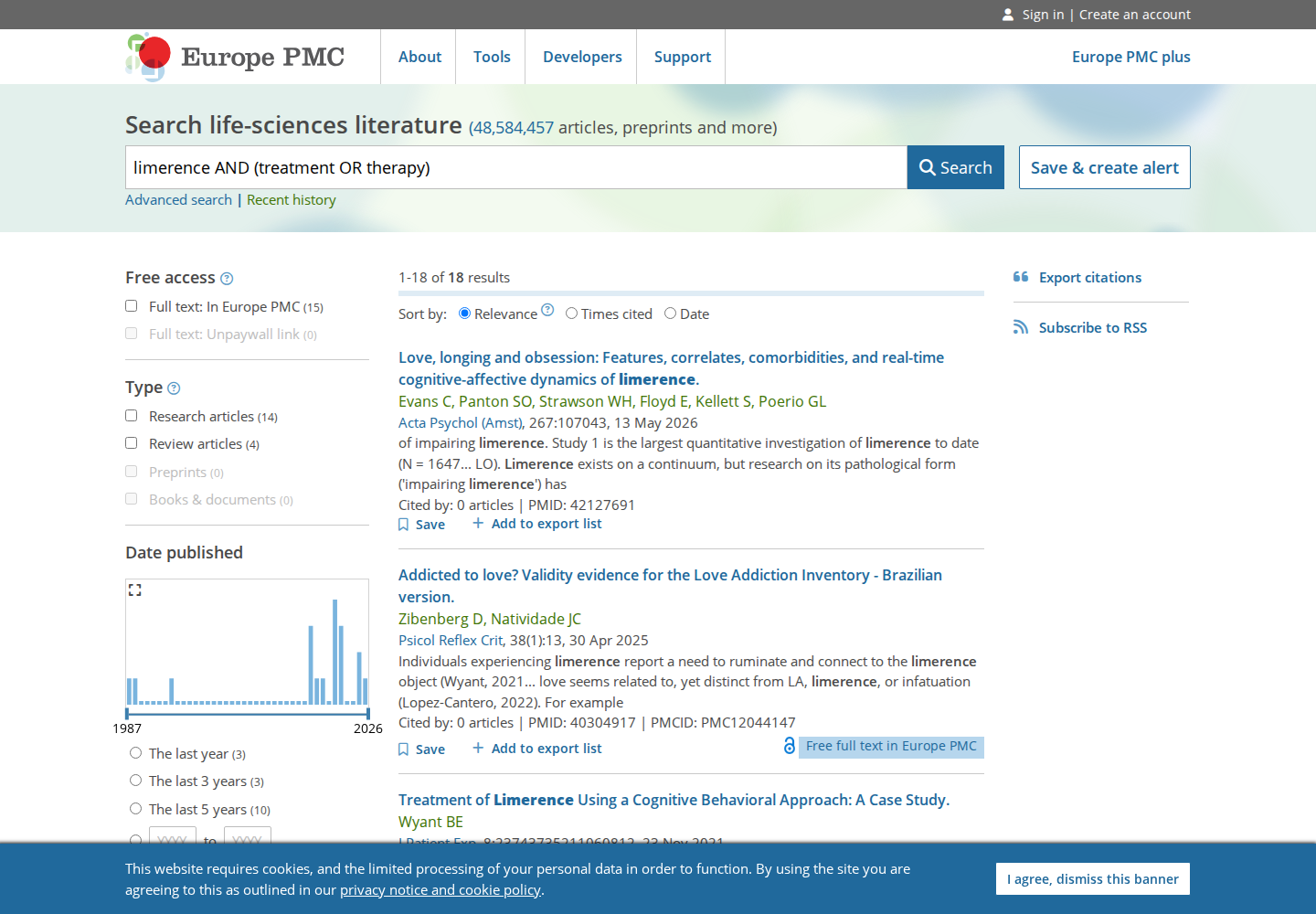
Limerence has one published treatment study. That study describes a single patient: Wyant BE, "Treatment of Limerence Using a Cognitive Behavioral Approach: A Case Study," published in the Journal of Patient Experience in 2021.
A single-patient case study can describe what happened for one person. It cannot tell us how often the same result would happen for other people.
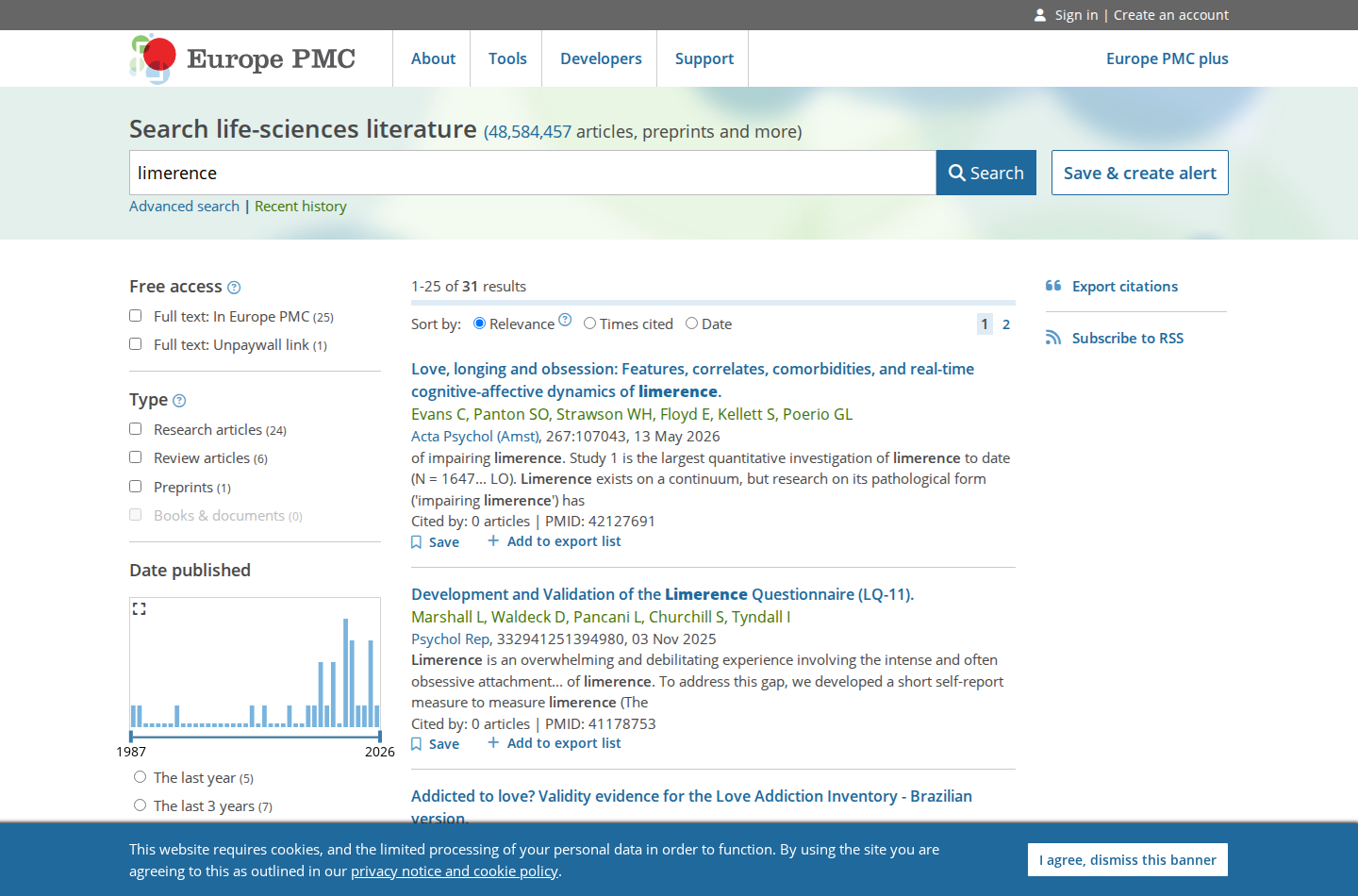
The search count also needs a clear distinction. Europe PMC indexes 31 results for "limerence." PubMed indexes 10. Those counts describe different indexes, not two claims about the total number of papers.
- One treatment paper exists. The Wyant 2021 case study describes one patient and a cognitive behavioral approach.
- Two index counts, not two totals. Europe PMC returns 31 results and PubMed returns 10 for the same search term.
- A validated questionnaire now exists. Researchers published the LQ-11 in 2025 as a way to measure limerence-related experiences.
- A measurement tool is not proof. The LQ-11 can help future research, but it does not show that any particular service works.
The current picture feels thin. One published treatment paper describes one patient, and the treatment evidence remains very small even though the broader search returns more records.
The useful question is not, "Does this sound right?" The useful question is, "What study supports this claim, and what did that study actually test?" On this topic, the honest answer often starts with limits.
Limerence research contains 31 Europe PMC results and 10 PubMed results. Limerence treatment literature contains one published case study. That study describes a single patient. Researchers published the validated LQ-11 questionnaire in 2025.
What helps limerence: 143 people credit insight most, at 38 percent
Recovery accounts credit insight most often. Across 498 first-person accounts, 143 people said they got out of limerence. These accounts show what those people credited, not a success rate for any method.
Insight was credited by 38% of the coded accounts. Self-help was credited by 26%, no-contact by 11%, and therapy by 6%. Both corpora ranked insight first and self-help second.
- Insight, 38 percent. One person wrote, "Once I identify this is limerence and why it's occurring it lifts like a veil." Another wrote, "I realized I'm not functioning like most people."
- Self-help, 26 percent. One person wrote, "Filled my time with activities, making new connections etc." Another wrote, "Focusing on hobbies and exercise."
- No-contact, 11 percent. One person wrote, "the no.1 thing that helped, is no contact."
- Therapy, 6 percent. One person wrote, "Having a safe, confidential, nonjudgmental space to process my feelings... was crucial."
The word insight covers more than learning a label. These accounts describe a change in how the person understood the pattern, the other person, or their own needs.
The strongest claim I can make is that people credit different paths. Insight appears most often in this set of accounts, but that does not make it a guaranteed method.
Across 498 first-person accounts, 143 say they got out of limerence. Insight is credited by 38%. Self-help is credited by 26%. No-contact is credited by 11%. Therapy is credited by 6%.
How to cure limerence: what the one published case study actually did
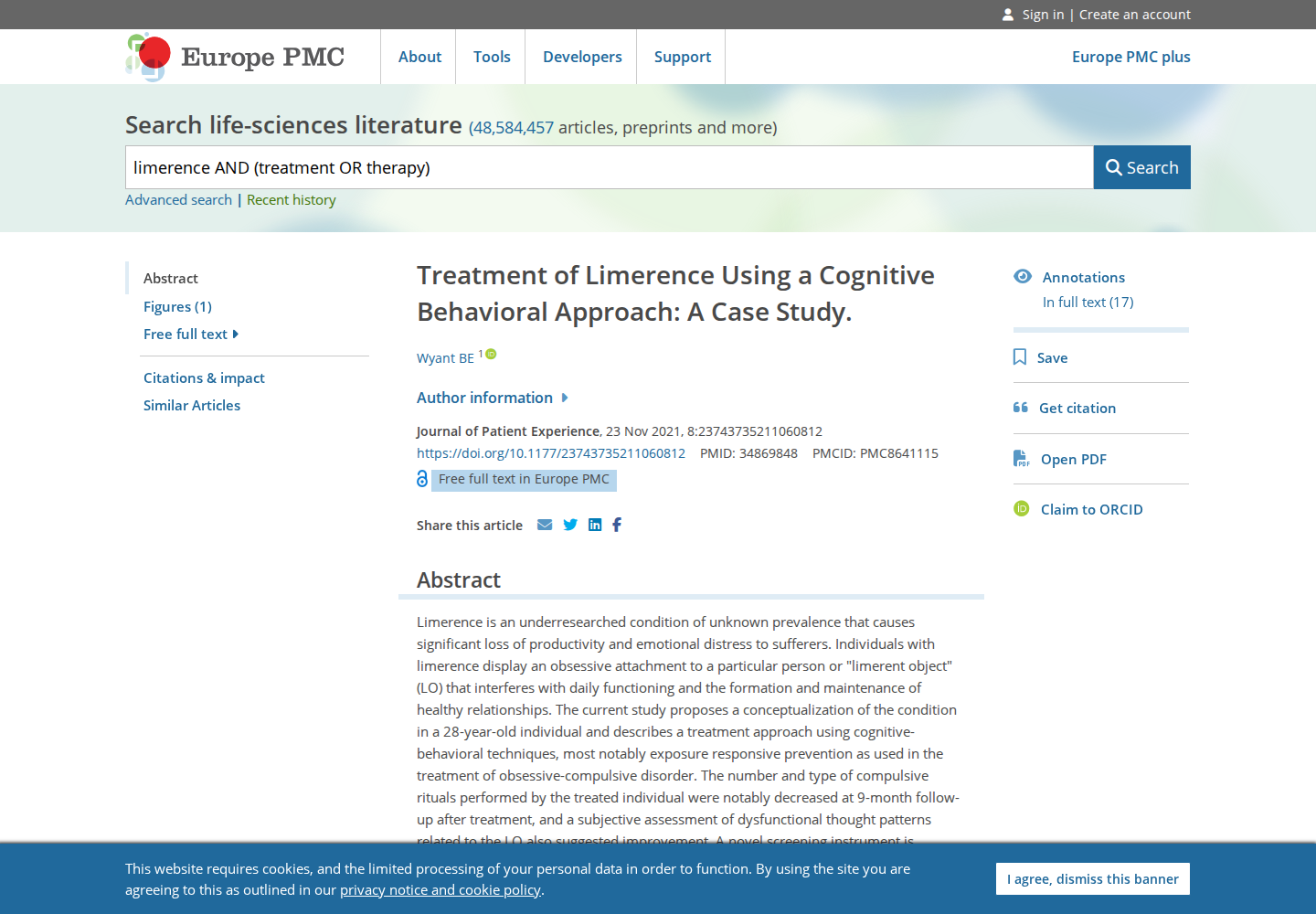
The Wyant 2021 paper describes a single-patient cognitive behavioral case study. The paper is titled *Treatment of Limerence Using a Cognitive Behavioral Approach: A Case Study*. The title tells us the approach, and the study design tells us the scale.
A case study can show what happened for one person. It cannot show that the same plan will work for everyone, so it does not give a sound basis for a success rate.
The paper shows that a cognitive behavioral approach has been written about in relation to limerence. That is different from proof that CBT cures limerence.
- One patient, one case. The paper cannot answer a question about every person who feels stuck on someone.
- No manual or trial exists. The verified record does not include a full treatment manual, a trial, or a group comparison.
- The approach is named, not proven. A cognitive behavioral approach appears in the literature, but it has no measured success rate.
- The paper opens a door. It does not settle the question of what cures limerence.
Honest writing means keeping the line clear between what the paper describes and what people hope it proves. The Wyant paper deserves attention as the one published treatment case in the set we checked, and it deserves caution for the same reason.
Can therapy help limerence: 6 percent of people who got out credited it

Recovery accounts credit therapy at 6%. That figure does not mean therapy cannot help. It means therapy appeared less often than insight and self-help when people described what helped them.
I want to say that plainly because therapy is part of what I offer. A person does not need to book a session to prove the problem matters, and a person may learn, reflect, and change alone instead.
- 6 percent credited therapy. One account says, “I've been doing weekly therapy for 4 months.”
- A safe space still mattered to some. Another says, “Having a safe, confidential, nonjudgmental space to process my feelings... was crucial.”
- Fit is not guaranteed. The phrase "my therapist had never heard of limerence" points to a real choice anyone seeking help faces.
- You do not need a perfect label first. You do need an honest fit between the therapist and what you are describing.
I will not tell you that a limerence-specific session guarantees an outcome, and I will not hide the low share of accounts that credited therapy.
My role is to help you look at the pattern, test what changes your grip on it, and decide whether guided work adds value. Therapy may help, and free, self-directed work may also be enough.
What is the best therapy for limerence: no trial has ever compared them
Limerence research contains one published treatment study, describing a CBT approach and a single patient.
The approaches below have no matching published paper. That gap does not make them useless, but a broad cure claim would go beyond the evidence.
- CBT has one case study behind it. The Wyant 2021 paper is the only named research match here, and it looks at thoughts, actions, and repeated patterns.
- Hypnotherapy has no separate study. No named limerence-specific study was verified in this review, though the approach usually centers on guided attention and personal meaning.
- Attachment work has no separate study. No named limerence-specific study was verified in this review, though this work usually centers on attachment patterns and relationship needs.
- EMDR has no separate study. No named limerence-specific study was verified in this review, though this work usually centers on distressing memories and reactions.
- Coaching has no separate study. No named limerence-specific study was verified in this review, though coaching usually centers on goals, choices, and daily routines.
- Medication has no separate study. No named limerence-specific study was verified in this review, and any decision belongs with a prescriber.
The table below is a map, not a ranking. Limerence has no verified success rate for these options.
| Approach | What it targets | Evidence in limerence specifically | Who it may fit |
|---|---|---|---|
| CBT | Thoughts, feelings, and actions | One published limerence treatment paper describes a CBT case study | People who want a structured way to examine thoughts and actions |
| Hypnotherapy | Attention, beliefs, and habits | No named limerence-specific study was verified in this review | People who want guided work with modest expectations |
| Attachment work | Attachment patterns and relationship needs | No named limerence-specific study was verified in this review | People exploring repeated relationship patterns |
| EMDR | Distressing memories and reactions | No named limerence-specific study was verified in this review | People whose work includes distressing memories |
| Coaching | Goals, choices, and daily routines | No named limerence-specific study was verified in this review | People seeking practical support and clear steps |
| Medication | Concerns discussed with a prescriber | No named limerence-specific study was verified in this review | People who want to ask a prescriber whether medication fits |
Is limerence curable: the brain chemistry objection, answered honestly
Limerence contains a brain chemistry question. Some people explain the force of the experience through the brain, and that view deserves a fair answer, not a joke.
Your thoughts can feel fast, fixed, and hard to move. Your body can also react to hope, loss, stress, and uncertainty, so a brain-based story may help explain why the experience feels so strong.
- One case study is the entire treatment record. It cannot show that a chemical explanation proves a cure.
- One case cannot cover every reader. It cannot show a certain therapy, supplement, or medicine will work for everyone.
- Insight does not erase brain chemistry. A useful explanation must still connect to your own life and choices.
- Distance is something you can test. You may need space from messages, feeds, and imagined future scenes.
I would also be wary of the opposite claim. Saying insight matters does not mean the brain plays no part, and you may need to notice the hope that keeps the loop alive or see what the person represents to you.
The most honest answer is modest. Brain chemistry may form part of the story, but the available limerence research does not give a proven brain-based answer.
I would focus less on finding the perfect label and more on whether your grip, checking, and distress begin to loosen. If they do not, that is useful information, not a reason to blame yourself.
What can help with limerence: what the accounts say did not work
Limerence accounts credit several attempted ways out. Insight receives 38% of the credit, self-help 26%, no-contact 11%, and therapy 6%. Those figures describe what people said helped, not a success rate for any method.
A person can report that no-contact helped and still miss the other person. A person can report that insight helped and still need time, support, or a change in daily life.
- No-contact was cited strongly by some. One account says, "the no.1 thing that helped, is no contact." Another says, "You MUST go no contact AND unfollow/block social media."
- Willpower alone can add shame. Telling yourself to stop thinking about someone may backfire when the thought returns.
- A replacement crush can hide the lesson. It may shift your focus without showing what the first attachment meant to you.
- None of these paths is a trial-tested rule. The accounts describe what people tried, not proof of what caused recovery.
Confessing may bring clarity for one person and more pain for another. The accounts mention these paths, but the corpus does not test them like a trial, so they cannot prove that one path caused recovery.
I would ask a better question than which trick ends this fastest. I would ask what keeps the loop going today, then make one small change and watch what follows. If a step gives you more choice, keep learning from it.
How long does limerence last: nobody can honestly give you a date
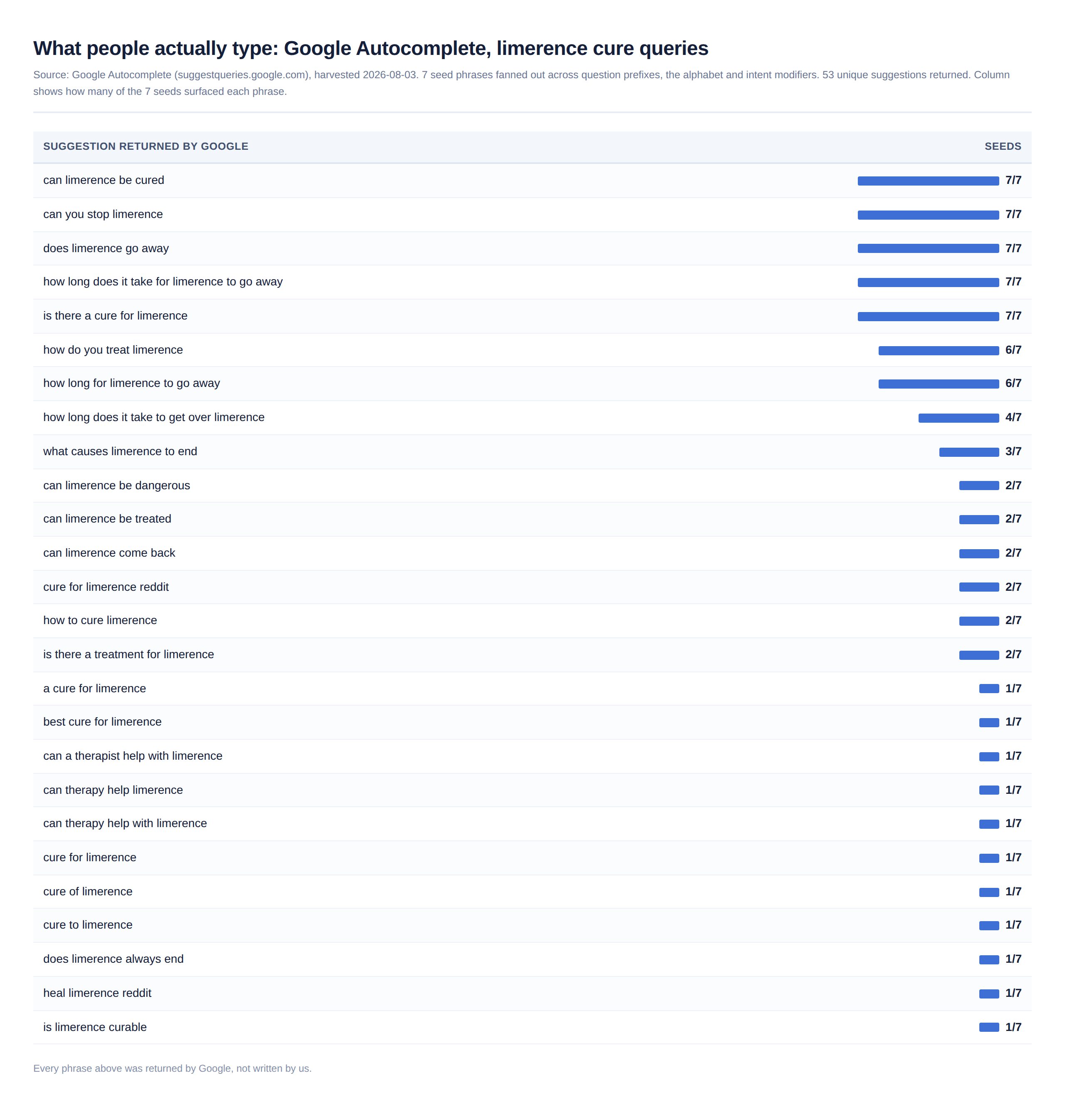
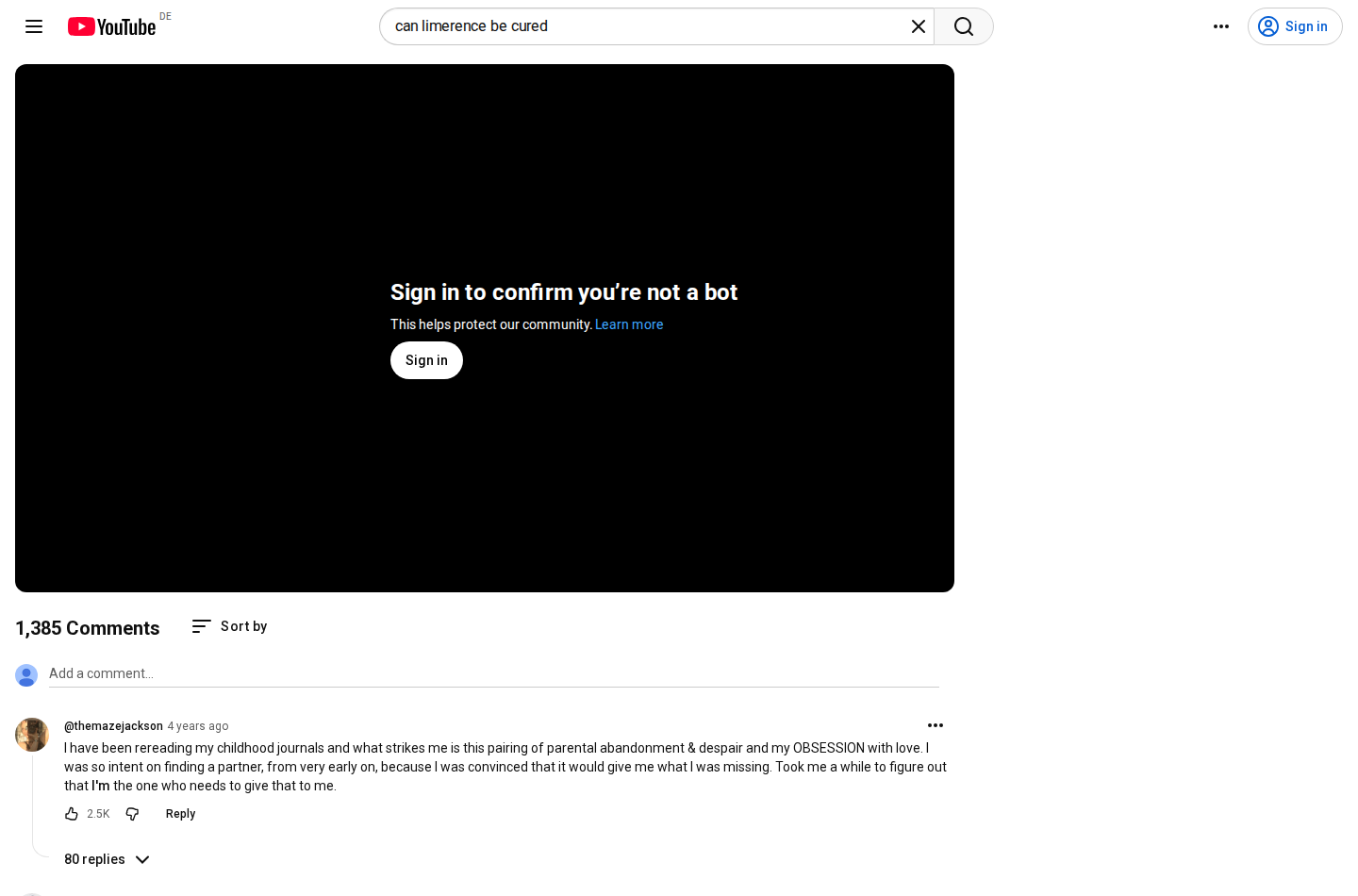
Limerence questions include duration and return. People often want a date when the thoughts will stop, but the evidence on this page does not give a safe number.
I would not promise that a fixed number of days, weeks, or months will end the experience. I would also not tell you that a return of thoughts means you have failed.
- Watch your response, not a calendar. Less checking and spotting the fantasy sooner matter more than a date.
- Relapse is not proof of failure. A memory, contact, or a hard day can bring old thoughts back.
- One bad day does not erase progress. It tells you to look at what happened before the loop grew stronger.
- Choice matters more than a perfect promise. A looser grip counts even when a memory still appears.
For the question of time, read how long does limerence last. For the question of a natural change without a formal service, read does limerence go away on its own.
My measure would be choice. More choice matters even when feelings remain, and a looser grip matters more than a perfect promise.
If your life keeps shrinking around the obsession, consider support. If your life is opening again, keep using what helps, and call that progress rather than proof of a cure.
Is limerence treatable: how you would know it is working, and when it is not
Limerence progress shows changes in attention, choice, and daily life. I do not look for one perfect day or a promise that every thought will vanish.
At the start, the mind may still return to the person often. The useful question is not whether you thought about them, but what you did when the thought arrived.
- A pause before contact counts. Pausing before checking, texting, or searching can matter more than a blank mind.
- A clearer view of the whole person helps. The imagined version may lose some power over time.
- Repeated checking is information, not failure. It signals the current plan needs a closer look, not that you have failed.
- Wider choices are a sign of change. Making room for people and tasks that matter to you is real progress.
One person in the accounts wrote, “Going on is not the same as moving on.” That line captures the difference well: life can continue while the mind stays tied to one person, and progress means the tie starts to loosen.
A lack of change also gives useful information. If the same checking, waiting, and replaying keeps taking over, I would call that a sign the current plan needs a closer look, not a failure.
More distance may help, a safe space to talk may help, and a new way to understand the pattern may help. None of those options comes with a promised result.
If you want help thinking through that next step, the program page explains what a session can and cannot offer.
What is the cure for limerence: when self-directed work is enough on its own
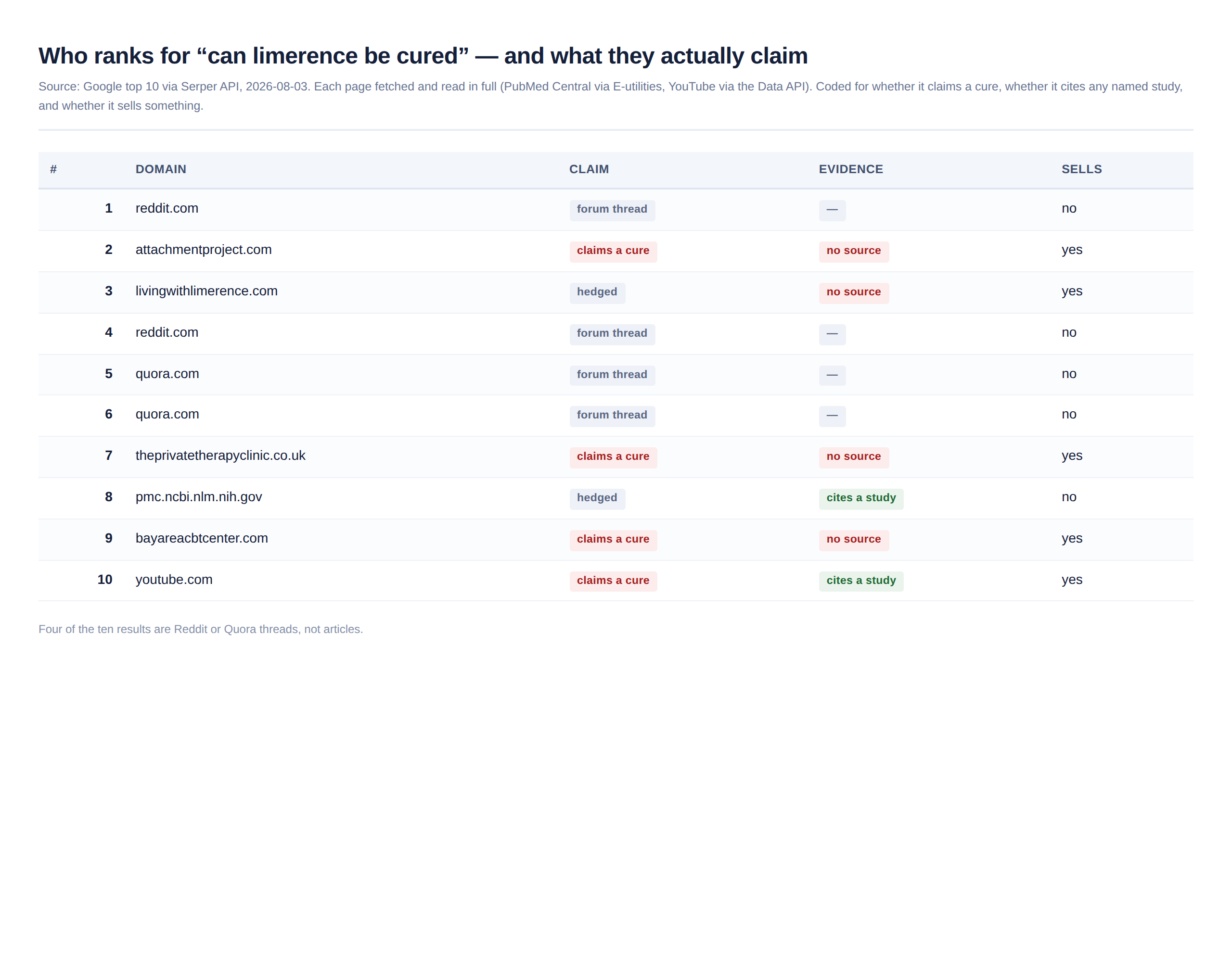
Self-directed limerence work gives some people enough room to change. Recovery accounts credit insight at 38% and self-help at 26%.
Those figures matter to me because I run a practice that offers guided sessions. I do not want to turn every hard feeling into a reason to book.
- Self-help alone reached 26 percent. One person wrote, “I did all on my own, no help from a therapist.”
- Effort took many forms. Another wrote, “I journaled nearly every day and watched a few creators on youtube.”
- Insight can reframe the question. One account put it this way: “I realised he couldn't possibly live up to the image I had in my head.”
- Free work fits a clear pattern. Start self-led when the pattern feels clear enough to study without going deeper into it.
I would start with free, self-led work when possible, and keep notes on what makes the loop stronger and what helps you return to your own life. Be wary of advice that promises a cure or gives a fixed timeline.
A guided session may make more sense when you keep circling the same question, cannot make space for your own needs, or want a calm person to help sort the story. Even then, a session is an option, not a duty.
If self-led work gives you enough movement, keep using it. The honest goal is to help you choose the least costly next step, not to sell help you do not need.
Insight ranks first among the factors that recovered limerents credit. Self-help follows at 26%. Free and self-directed work may be enough for some people. A paid session should add clear value, not pressure.
Can a therapist help with limerence: what a session actually involves
Limerence-specific sessions provide guided reflection and practical support. I do not present a session as a cure, a diagnosis, or a way to control another person.
The work starts with your story. We look at what you notice, what you hope for, what keeps the loop alive, and what you have already tried.
- Early work names the pattern. That can make the experience easier to understand.
- Later work practices response. We look at how you react when the thoughts return.
- Confidentiality stays central. A private session should give you room to speak without being pushed toward contact or confession.
- Limits stay plain. The research contains one published treatment study, describing a single patient, not a proven cure.
You remain the person making the choices throughout. Personal accounts can show what people credit, but they cannot promise the same path will work for you.
The session arc stays focused. Early work can name the pattern, and later work can help you practise a different response, look at self-worth, shame, loneliness, and the kind of connection you want to build.
You do not need to book because an article told you to. You may decide that reading, reflection, and your own support are enough.
If you want to ask what guided work could look like, visit the program page, which explains the offer without claiming a success rate. You can take that information and make your own choice.
Want a clearer starting point? Take the limerence quiz, then use your answers as a prompt for reflection. A quiz cannot diagnose you or promise a result. It can help you name the questions you want to explore.
What’s your Limerence Score?
A private, 2-minute test that shows exactly how tight the loop’s grip has become — and the one next step that fits your score.
Take the test →2 private minutes. No one finds out.
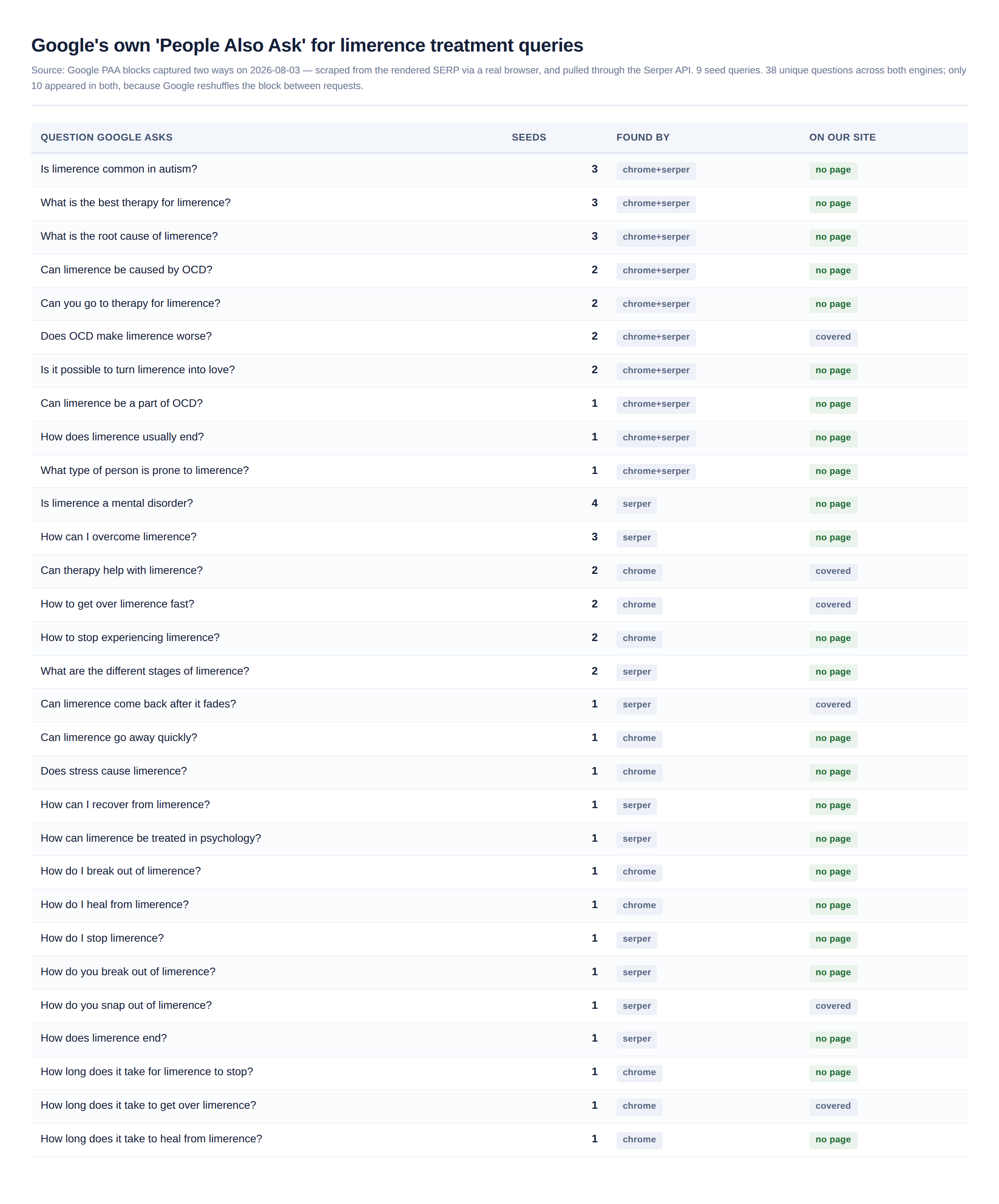
Questions this page answers
Is there a cure for limerence?
Limerence has no proven cure. Across 498 accounts we read, the grip loosens over time for most people who work at it, rather than switching off completely.
Is limerence a mental illness?
Limerence does not appear in the DSM-5-TR. It is not a diagnosis, though it can still cause real distress worth addressing.
What does the research say about treating limerence?
Published research offers exactly one treatment study, a 2021 case study describing a single patient's cognitive behavioral therapy. No larger trial has been published since.
What helps people get out of limerence, according to real accounts?
Insight helped the most people in our dataset, credited by 38 percent of those who recovered, followed by self-help at 26 percent, no-contact at 11 percent, and therapy at 6 percent.
Does therapy help with limerence?
Therapy helped the people who credited it, but fewer people credited it than credited insight or self-help in our accounts. A therapist unfamiliar with limerence may miss the pattern unless you name it directly.
Does hypnotherapy work as a cure for limerence?
Hypnotherapy has no published study testing it against limerence by name. No approach, including hypnotherapy, has a verified cure or success rate for limerence.
Can medication help with limerence?
Medication was credited by a small number of people in our dataset, without a verified percentage we can report. Any medication decision belongs with a prescribing doctor.
Is no-contact enough on its own?
No-contact alone helped eleven percent of people in our accounts. Most people who recovered combined it with insight or self-help, rather than relying on distance by itself.
How long does limerence usually last?
Limerence has no fixed timeline across the accounts we read. Duration varied widely, and how long someone had been stuck did not predict whether they got out.
Can limerence come back after you think it's over?
Recovered limerents describe occasional relapse, a pull back toward the same person or a new one after real progress. That does not erase the progress already made.
Is it normal to feel like nothing is working?
Feeling stuck is common among people dealing with limerence, and it does not mean you are doing something wrong. The 143 recovery accounts we read describe a slow shift, not a sudden fix, for almost everyone.
Can limerence be treated?
Limerence has one published treatment paper, and it describes a single patient. No trial has tested any approach. People do get out, and 143 accounts describe how, but treatment here means structured support rather than a proven protocol.
Can therapy help with limerence?
Therapy was credited by 6 percent of the people who described getting out. That is a small share, and it does not mean therapy fails. It means most people pointed to something else first, usually a realisation of their own.
Can you go to therapy for limerence?
Therapists do work with limerence, though many have not heard the word. Several accounts describe having to explain the term to their own therapist. Ask before booking whether they have worked with obsessive attachment.
Is it possible to cure limerence?
Cure is the wrong word for something that is not a diagnosis. The realistic target is the grip loosening, not the thoughts vanishing. That is the change the recovery accounts actually describe.
What type of therapy is best for limerence?
No study has compared therapy types for limerence. Anyone naming a best one is stating a preference, not a finding. The comparison table above sets out what each approach targets and what evidence exists.
How can limerence be treated in psychology?
Psychology has produced one published case study on treating limerence, from 2021. It used a cognitive behavioral approach with one patient. The wider literature describes limerence rather than treating it.
The plain answer is this: limerence has one published treatment study, and that study describes a single patient. The wider recovery accounts credit insight most often, while therapy appears in 6% of credited factors. That does not make therapy useless. It does mean that no honest practitioner can promise a cure. I would rather help you understand your options, including the option to do this on your own, than sell certainty I do not have.
Ready to break the loop?
Only 10 new clients a month. Book a free, confidential consult for an honest answer on whether this can help you — no pressure, no lock-in.
Only 2 spots left for August
Not ready to talk? Take the free Limerence Score →
About the Author

Danny M., RCH (ARCH-Canada)
Registered Clinical Hypnotherapist (RCH) with the Association of Registered Clinical Hypnotherapists of Canada (ARCH-Canada). Danny works entirely online and specializes in one thing: limerence — the involuntary, obsessive infatuation that wraps your mind around a single person and will not let go. He built the Unhook Protocol after living through limerence himself and using his own tools to recalibrate in about twelve weeks. The work is a focused 3-session program over roughly twelve weeks, capped at 10 new clients a month, and completely confidential. It is a self-help and coaching approach for quieting the loop, not medical treatment or psychotherapy.
Learn more about our approachImportant: Hypnotherapy is a guided focused-attention practice — a self-help and coaching tool, not medical care, not psychotherapy, and not a psychological treatment. Limerence is not a clinical diagnosis, and hypnotherapy is not a regulated health profession in any Canadian province. ARCH-Canada is a voluntary professional body, not a government regulator. Nothing on this site is medical advice, diagnosis, or treatment. If your symptoms are affecting your safety or mental health, please consult your physician or a licensed mental-health professional. Hypnotherapy may complement that care but never replaces it.