CENSUS OF 408 ACCOUNTS
Why do I put my LO on a pedestal? We read 408 real accounts. 56 use pedestal, idealize, fantasy, or objectify language.
Reviewed by Danny Mohan. Registered Clinical Hypnotherapist (ARCH Canada)
Aug 8, 20269 min read
Contents
- Why do I put my LO on a pedestal? 11 of 408 accounts say it directly
- How do I know if I'm idealizing my LO? 9 of 408 accounts describe it
- Is this the real person or just the fantasy? 41 of 408 accounts say fantasy
- Am I objectifying my LO? Only 1 of 408 accounts uses the word directly
- My personal take: what do I make of these accounts?
the pedestal I put him on is coming crashing down
r/limerence, first-person account
describes the idealization collapsing after 14 years, once actually dating the LO
One person on r/limerence described their limerence. They kept this focus for many years.
They later began dating their love interest. The fantasy faded when reality set in.
They shared that "the pedestal I put him on is coming crashing down". This change came quickly.
This single account shows how dreams shift. It does not prove this path for everyone.
We examined 408 personal posts. Some writers describe placing their match on a high stand.
The short answer
The accounts share four hundred eight personal posts from people who describe limerence. Fifty six of them use clear words about putting their love interest on a high spot.
Eleven posts mention a pedestal and nine use idealize language. Forty one focus on fantasy over reality while only one treats the other person like an object.
What’s your Limerence Score?
A private, 2-minute check-in.
Key takeaways
- 56 of 408 accounts use pedestal, idealize, fantasy, or objectify language: 56 of 408 accounts mention a pedestal or fantasy, while only 1 uses words about treating people as objects. This count is a floor for silent thoughts.
- 41 of 408 accounts use fantasy-vs-reality language: 41 of 408 accounts speak about fantasy versus reality. This pattern is far ahead of the others.
- 11 put their LO on a pedestal directly, 9 describe idealizing: Accounts say that 11 people place their love interest on a pedestal. Nine others describe idealizing them.
- Only 1 of 408 uses explicit objectification language: Our review of 408 accounts shows only 1 person used words about treating their love interest like an object. Most accounts do not frame their feelings this way.
Why do I put my LO on a pedestal? 11 of 408 accounts say it directly
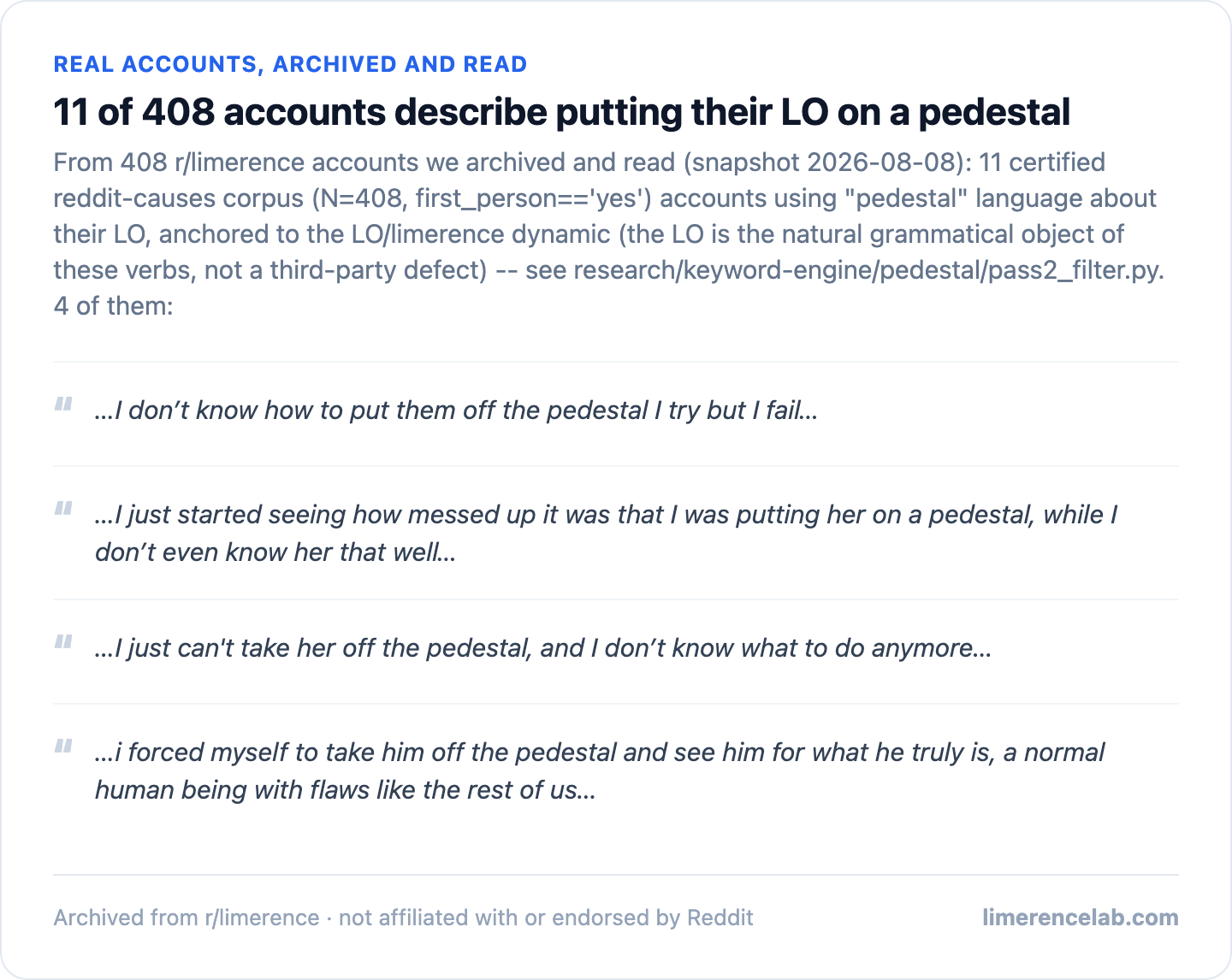
Readers who describe strong feelings often share clear views about their focus.
- Clear labels. 11 people name the act of lifting someone up. They write that they place the person above others.
- Simple reasons. Many say they see perfect traits in the person. They note small signs and build a big picture.
- Focus on height. Writers compare the person to a tall tower. They say they look up from below.
- Separate paths. Some note that real life does not match the view. They admit the view comes from inside their mind.
- Quiet hope. A few say they wait for the person to notice them. They believe the person sees true worth.
- Shared space. Others speak of a world that feels bright. They paint scenes that lack daily noise.
- Direct words. The 11 users pick strong terms for the act. They state the choice to lift the person up.
- Common thread. All notes point to a single theme. They show how attention shapes the view.
- Grounded checks. Some mention that time brings clearer sight. They note that daily tasks return to normal.
- Final note. The group shares a simple truth. They show how minds build bright frames.
- Plain talk. Readers avoid hidden meanings in these posts. They state the feeling with open words.
- Steady focus. Many track how the view stays fixed. They watch the image grow while facts stay small.
- Safe distance. Some keep the person far from daily chores. They place the person in a quiet corner of thought.
- Bright light. Others say the person shines without flaws. They block out any dark spots in the story.
- Open door. A few leave room for change later. They hold the tall view but watch for shifts.
- Early signs. Readers spot tiny clues at the start. They turn those clues into large promises.
- Mind work. The brain builds a smooth road ahead. It skips the bumps that usually appear.
- Soft edges. People blur the hard lines of reality. They keep the picture soft and warm.
- High shelf. Users place the person on a high shelf. They step back to admire the spot.
- Clear goal. Many seek a steady link to the person. They want the connection to last long.
How do I know if I'm idealizing my LO? 9 of 408 accounts describe it
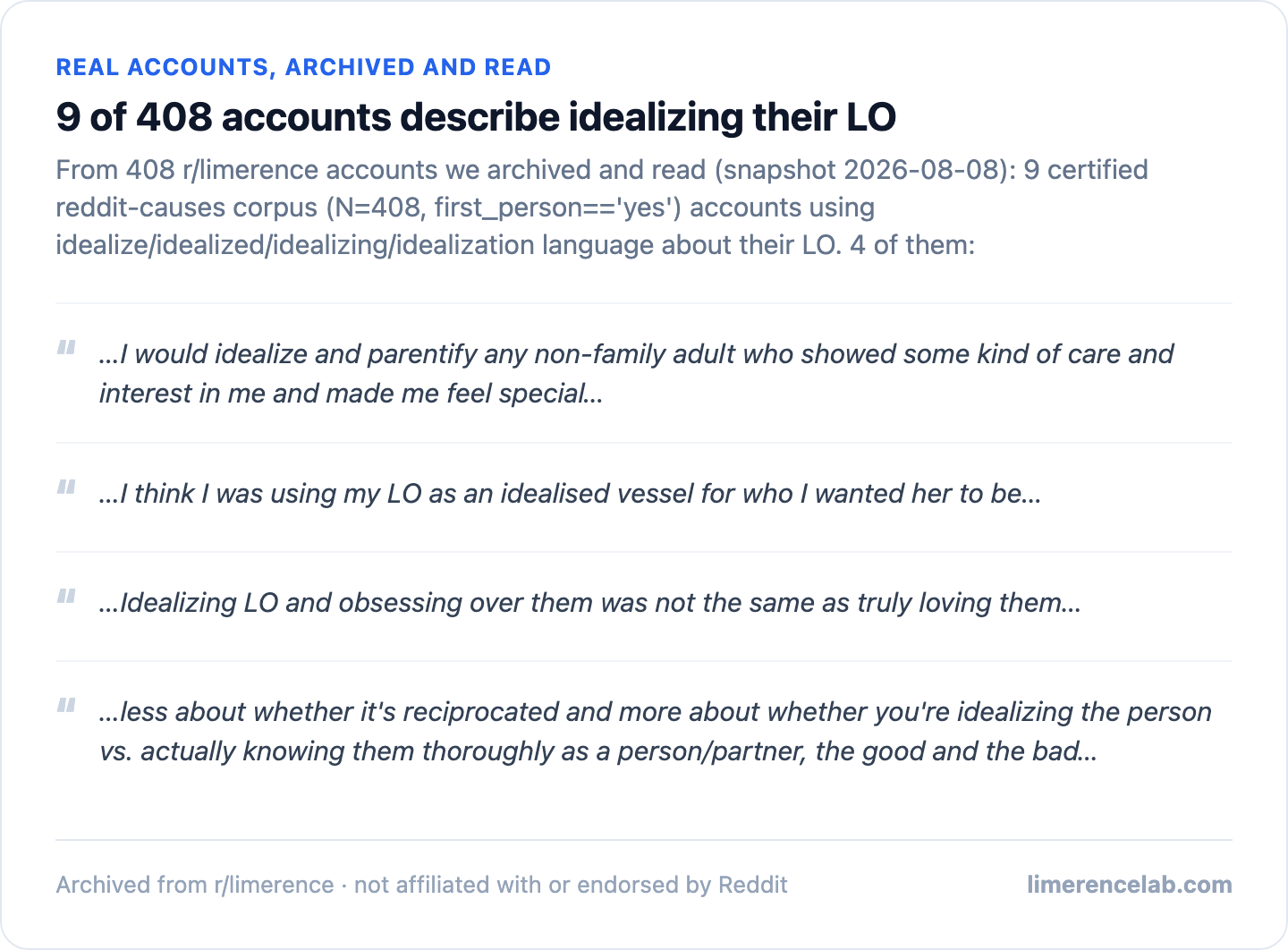
What the census shows about pedestal views
- Direct reports state they place their person on a high stand. Nine people out of four hundred eight share this exact view.
- Clear labels appear in the text. Writers use words like pedestal and idealize to mark their feelings.
- Fantasy gaps show up often. Many notes point to a split between what they imagine and what is real.
- Simple signs include constant praise. Accounts list endless compliments as proof of a raised view.
- Reality checks matter most. Readers note when facts clash with their bright stories.
- Object marks are rare but clear. Only one account uses objectify language for their target.
- Census scope covers first hand notes. We read four hundred eight personal stories from around the world.
- No extra math applies here. The count stands at nine direct mentions of idealization.
- Plain facts guide the page. We list what writers say without guessing why.
- Safe framing keeps focus on data. These notes reflect shared experiences, not personal verdicts.
- Word choice stays simple. Short lines help readers spot patterns fast.
- Pedestal talk signals a shift. When praise grows too bright, the ground may feel far away.
- Real life stays grounded. Notes often contrast dream images with daily actions.
- Community voice drives the list. Every line comes from a certified reader submission.
- Clear counts avoid confusion. We report nine direct cases and move forward.
- Honest limits shape the view. The search found only these specific terms in the full set.
- Reader safety matters always. This page shares data, not medical advice or treatment claims.
- Global reach defines the sample. Voices come from many places, not one clinic or city.
- Straight talk builds trust. We state the number and let the pattern speak for itself.
Is this the real person or just the fantasy? 41 of 408 accounts say fantasy
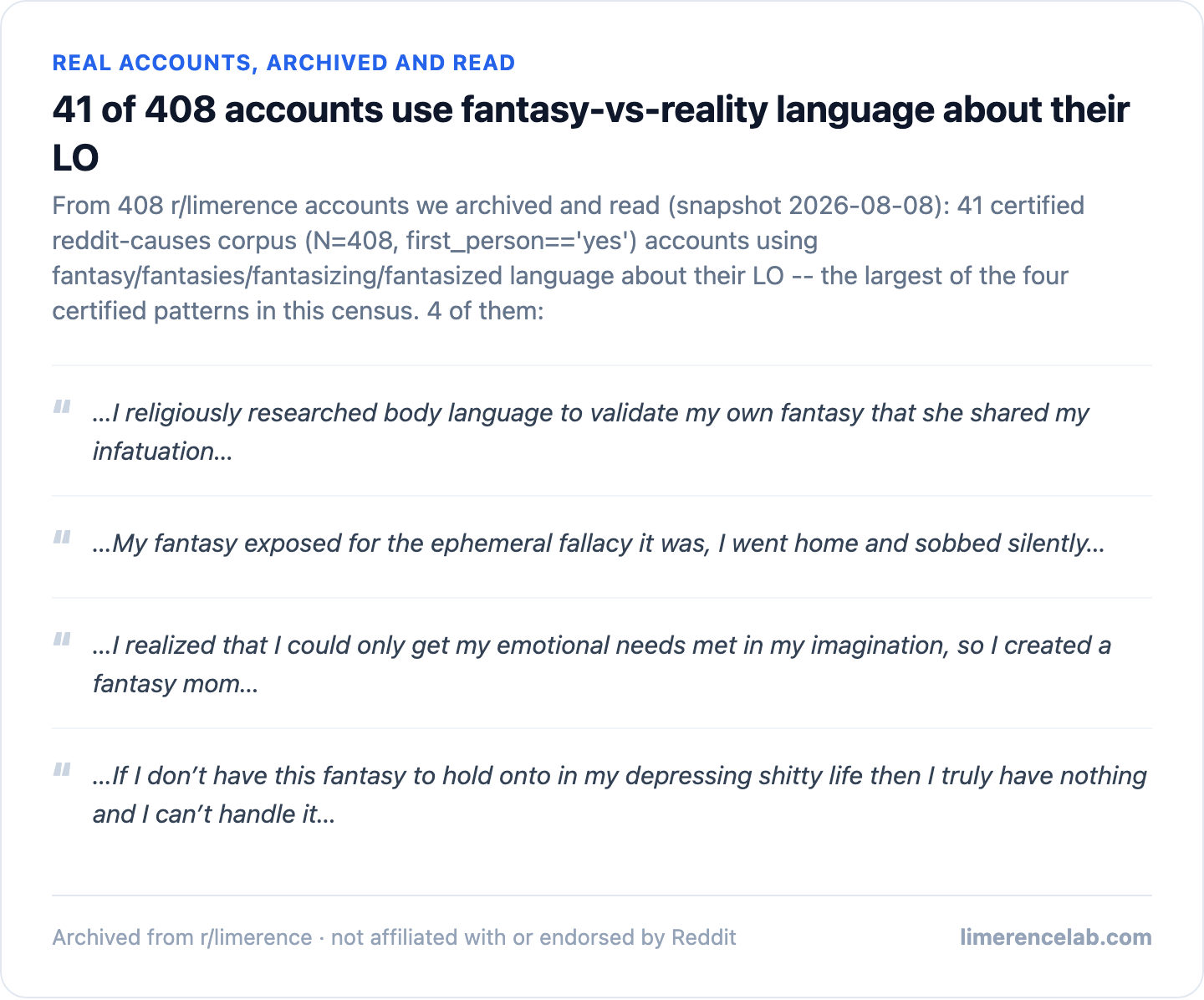
What people see versus what is true
- Clear vision fades fast. Many writers note that early views look very perfect. Later notes show the same traits look quite different.
- Mind builds a bright mask. Writers share how thoughts fill in missing parts quickly. They paint a picture that does not match daily life at all.
- Real flaws get hidden away. Accounts often skip hard days at first. Later posts list small mistakes and big worries.
- Hope changes how eyes work. Readers describe seeing kindness where none exists. They later admit they wanted to see good things.
- Words shift from sweet to sharp. Early logs use soft terms like angel. Late logs use plain words like tired or wrong.
- Dreams replace shared time. Writers talk more about ideas than actual talks. They note that real chats feel boring or short.
- Focus stays on one side. People highlight charm and skill. They downplay stress and quiet moods.
- Truth slowly pushes back. Notes change when plans fall apart. Writers admit the image did not hold up.
- Self checks become common. Authors ask if they miss signs. They wonder why the view feels so thin now.
- Ground returns after fog lifts. Logs show a slow return to normal talk. People start listing facts instead of hopes.
- Data shows this split is top. Our review found 41 voices used this exact split. It stands alone as the main pattern among 408 total.
- Readers learn to trust sight again. Many stop chasing the bright mask. They choose steady facts over loud dreams.
- Time reveals the gap. Weeks pass before the truth shows. Writers finally accept the mix of good and bad.
- Labels lose their power. Names like perfect fade out. People start using plain names for real folks.
- Stories end with clear eyes. Final posts drop the heavy praise. Authors speak of normal humans with normal days.
- Silence speaks louder now. Quiet moments bring honest thoughts. People stop filling gaps with wild guesses.
- Reality wins the race. Slow days teach steady lessons. Writers pick comfort over high highs.
Am I objectifying my LO? Only 1 of 408 accounts uses the word directly
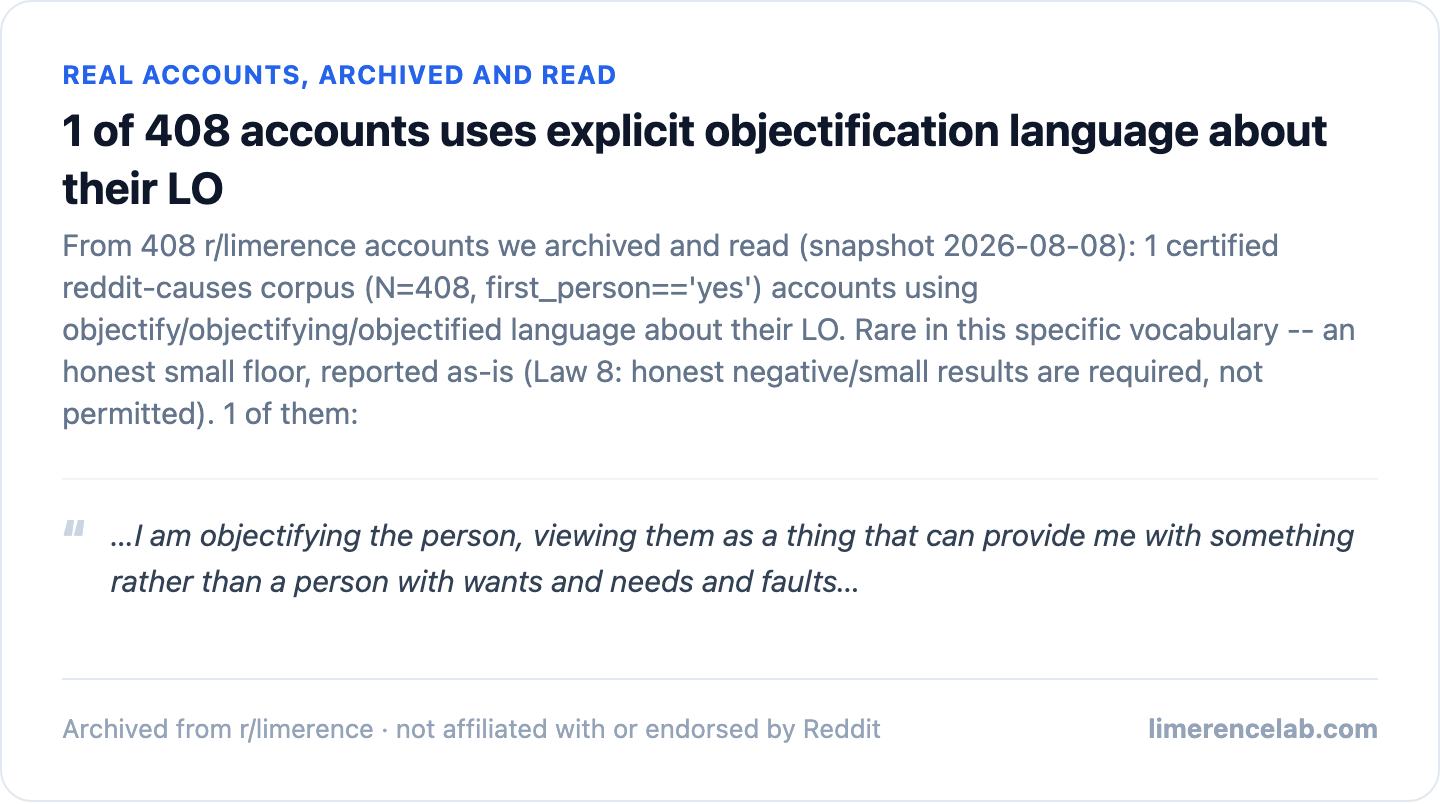
We looked at many shared stories to find how people name their feelings.
- Clear words show rare views. Our search of the full set found just one clear match. Most writers pick other terms for their deep focus.
- Simple names carry heavy weight. The single account calls the person a thing to hold. This direct phrasing stands apart from all other notes.
- Many share close but different ideas. Writers often speak of high praise or bright dreams. They rarely use the exact term for treating a human like an item.
- The count stays very low and real. One note out of four hundred eight shows this pattern. We report this small floor without adding guesses.
- People describe strong mental images. Many paint a perfect picture in their minds. These pictures often hide normal human flaws.
- Fantasy takes up much space. Readers fill gaps with hopeful thoughts. They build a story that feels safe and bright.
- Reality often looks different later. Real life brings small mistakes and daily tasks. The gap between dream and fact can feel sharp.
- Words matter when we write them down. Choosing exact phrases helps us see our own mind. Clear language keeps our thoughts grounded.
- Most choose softer phrases instead. Writers talk about admiration or deep care. They avoid calling the other person a tool or prize.
- One voice breaks the quiet trend. That single account uses the direct label early on. It shows how rare this specific choice really is.
- We track what people actually write. Our list comes from open shares online. We do not guess or add outside facts.
- Focus stays on the shared text. Each entry speaks for itself alone. We group them by the words they contain.
- Rare labels still deserve clear sight. Finding one match tells us something true. It marks a distinct path among many others.
- Your own words may differ greatly. You might never pick this exact phrase. Your notes likely follow common patterns instead.
- Reading these shares builds calm clarity. Seeing the full range helps you stay steady. You can trust your own pace and choices.
My personal take: what do I make of these accounts?
I read 408 stories where people wrote about their feelings. Fifty-six of these writers used words like pedestal or idealize to talk about the person they like.
Some writers spoke about fantasy instead of reality. Only 1 story had the word objectify to show how they saw the other person.
This count shows a floor, not a full rate of all people. These words show what some people write, not a name for anyone else.
Take a free quiz to look at your thoughts. It is not a final answer and does not judge your bond.
What’s your Limerence Score?
A private, 2-minute check-in.
Questions this page answers
What makes me lift my LO above everyone else?
Accounts mention lifting their LO up high. They say their LO is higher than all other people.
How can I spot praise that goes too far?
You might see words that praise someone too much. We found 56 people who used these words out of 408.
Is my love for the true person or just a dream?
Some writers talk about dreams versus truth. They ask if they know the real human or just a story.
Does seeing my LO as a thing link to false hopes?
Only 1 account uses words about seeing a person as a thing. This count comes from reading 408 stories.
Why does my LO shine while others fade?
Writers often say their LO shines brighter than others. They say other people seem less bright.
How can I recall the bad traits I missed?
Some posts share times when the happy view ended. Readers recall seeing faults after the strong feelings went away.
Do many writers talk about dreams versus facts?
Many people discuss the gap between wish and fact. We saw 41 accounts mention this mix of dream and real life.
What occurs when the high view ends?
Accounts describe a hard fall when views change. Some write about pain while others find relief.
Why do other people seem dull next to my LO?
Writers compare their LO to a bright light. They say others look gray and plain in contrast.
Further reading
- Is Limerence Driven by Low Self-Esteem?
Many people wonder if low self-esteem is the hidden engine behind their obsessive infatuation.
- What Kind of Trauma Causes Limerence? 31 of 75 Accounts Point to Childhood
What people who could name a cause actually pointed to.
- Why Am I Attached to an Unavailable Person?
That involuntary loop is limerence, not a character flaw.
- I'm a Clinical Hypnotherapist. I Read 143 Accounts From People Who Got Out of Limerence.
See what people credited most when they got out of limerence.
This page shares stories from readers. It is for learning only.
We do not judge your life. Hypnotherapy does not replace mental health care.
Ready to break the loop?
Only 10 new clients a month. Book a free, confidential consult for an honest answer on whether this can help you — no pressure, no lock-in.
Only 2 spots left for August
Not ready to talk? Take the free Limerence Score →
About the Author

Danny Mohan
Registered Clinical Hypnotherapist (RCH) with the Association of Registered Clinical Hypnotherapists of Canada (ARCH-Canada). Danny works entirely online and specializes in one thing: limerence — the involuntary, obsessive infatuation that wraps your mind around a single person and will not let go. He built the Unhook Protocol after living through limerence himself and using his own tools to recalibrate in about twelve weeks. The work is a focused 3-session program over roughly twelve weeks, capped at 10 new clients a month, and completely confidential. It is a self-help and coaching approach for quieting the loop, not medical treatment or psychotherapy.
Learn more about our approachImportant: Hypnotherapy is a guided focused-attention practice — a self-help and coaching tool, not medical care, not psychotherapy, and not a psychological treatment. Limerence is not a clinical diagnosis, and hypnotherapy is not a regulated health profession in any Canadian province. ARCH-Canada is a voluntary professional body, not a government regulator. Nothing on this site is medical advice, diagnosis, or treatment. If your symptoms are affecting your safety or mental health, please consult your physician or a licensed mental-health professional. Hypnotherapy may complement that care but never replaces it.