Language and Research Guide
Twin Flames vs Limerence: What 4 Real Accounts Show
Reviewed by Danny Mohan. Registered Clinical Hypnotherapist (ARCH Canada)
Aug 9, 20269 min read
Contents
- When you look at twin flames and limerence you see a clear split. Search results show many pages but only 4 of 408 users share that exact phrase.
- Peer-reviewed research studies this experience as limerence: 31 Europe PMC records, 215 OpenAlex articles
- Track twin flames on one path and limerence on another. 4 accounts use spiritual words while 404 use clinical words.
- My personal take: what do I make of these two words?
The short answer
Twin flames and limerence are different terms. Twin flame words are popular online.
Of 408 people, only 4 used twin flame words. Research calls this experience limerence.
What’s your Limerence Score?
A private, 2-minute check-in.
| Dimension | Twin Flames | Limerence |
|---|---|---|
| What real accounts call it | Only 4 of 408 certified first person accounts use twin flame language about their own experience. | All 408 accounts describe this exact experience by the corpus definition. |
| What researchers call it | It is not the term used in peer reviewed psychology research. | Our search shows 31 indexed records in Europe PMC and 215 peer reviewed journal articles in OpenAlex. |
| Where the idea comes from | It is spiritual and internet culture vocabulary about a destined soul connection. | Psychology researcher Dorothy Tennov coined the term in 1979. |
My experience with Limerence and believing I had met my Twin Flame
r/limerence, certified corpus item 672
the writer's own post title, describing how they first interpreted an intense connection through a twin-flame framework
She met someone and felt a deep pull. She thought this must be a twin flame.
She used that term to explain the strong bond. She found many online stories that sounded like hers.
Later she saw another word for the same feeling. That word was limerence.
She wrote about her journey. She called it "My experience with Limerence and believing I had met my Twin Flame".
Our search of 408 first-person accounts shows that twin flame language is rare. Most people do not use that term.
What we did
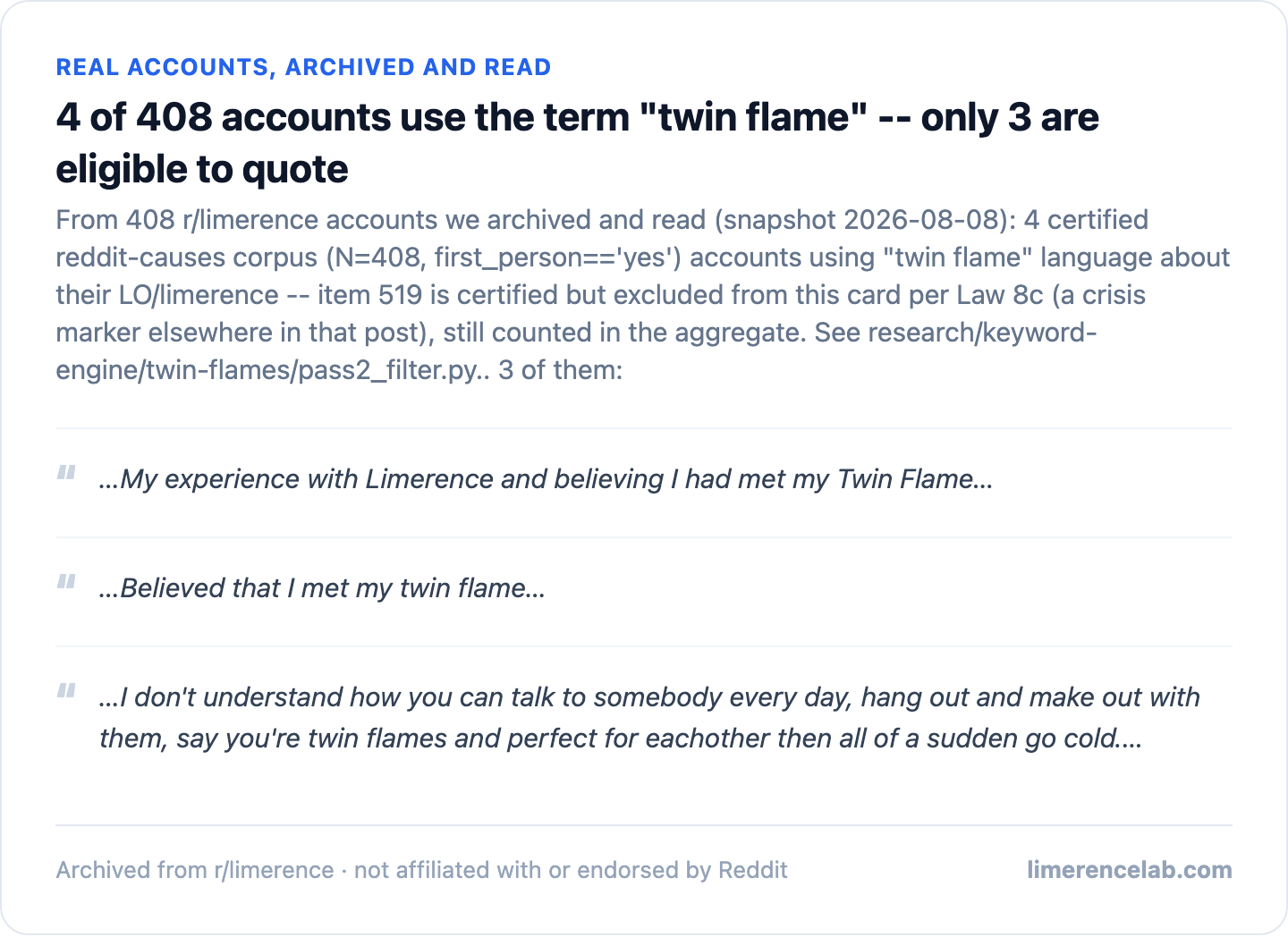
We checked 408 personal stories for twin flame language. Only 4 of them used those words.
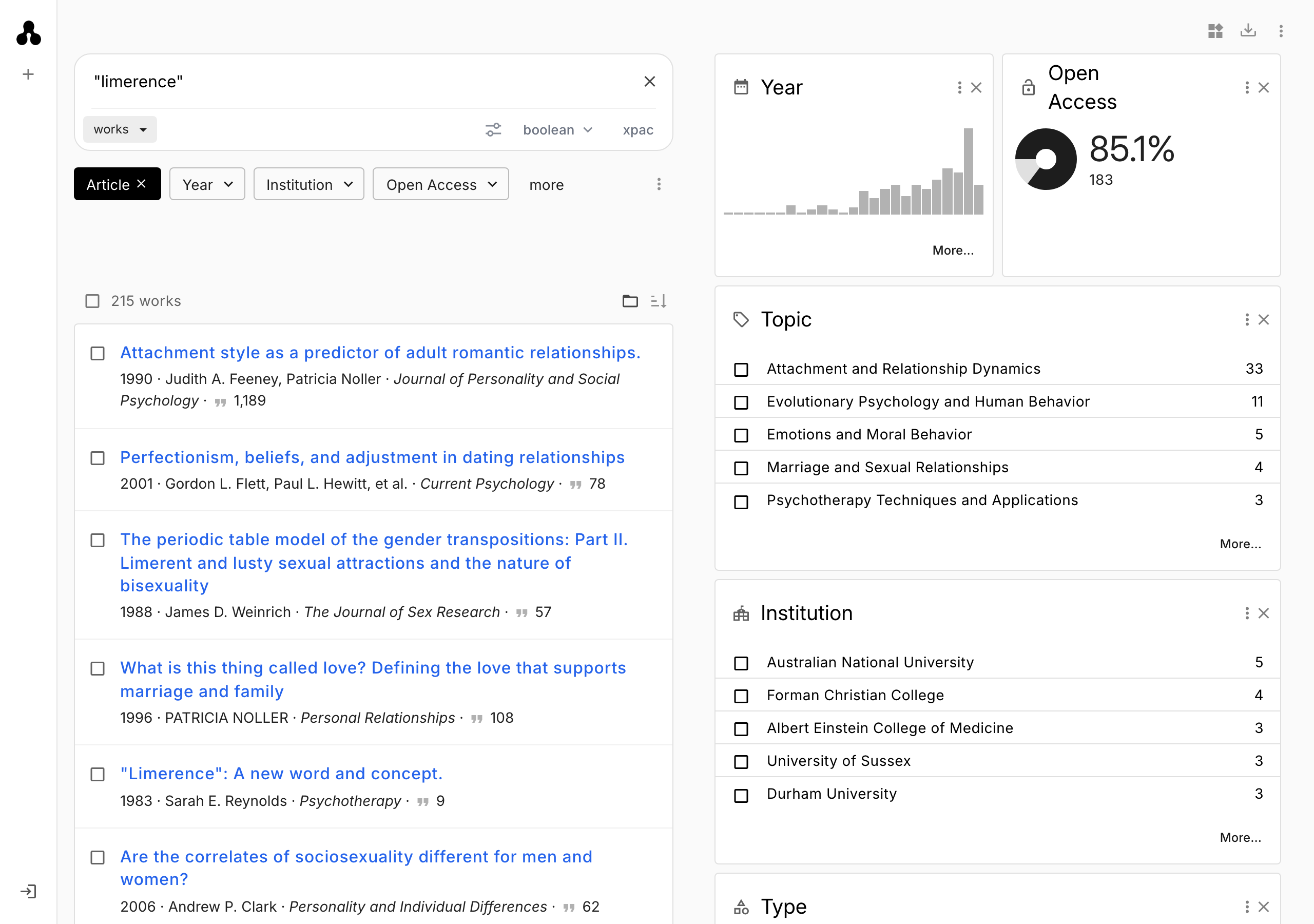
We also counted science papers about this feeling. Our search found 31 records in Europe PMC and 215 articles in OpenAlex.
We used personal posts to track what people write and research lists to track what scientists study. This shows they are two different things.
When you look at twin flames and limerence you see a clear split. Search results show many pages but only 4 of 408 users share that exact phrase.
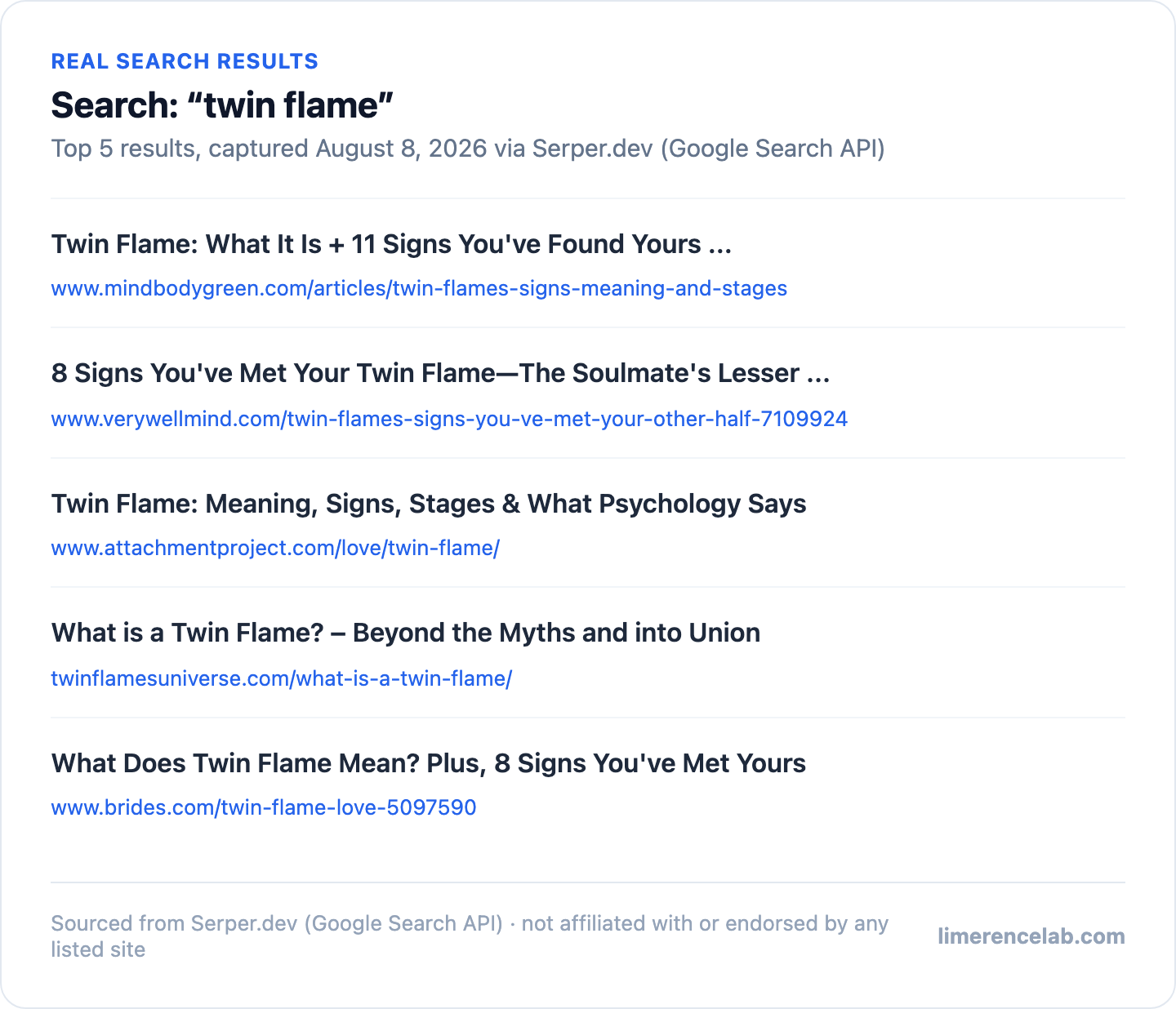
The search results show a strong web presence for this idea.
- Search engines show high traffic. People often look up this phrase online. The web holds many pages about it.
- Real stories rarely use the word. We checked 408 posts and found a clear gap. Only 4 posts used this exact phrase while 404 posts did not.
- The label is a cultural term. Writers use it to share feelings online. It does not match how researchers name this state.
- Language maps what people say. We track the words users pick. We do not judge private beliefs.
- Research covers a different name. Experts study this experience under another title. They write papers about focused attention and longing.
- Two paths exist side by side. One path lives in daily searches. The other path lives in science journals.
- Web pages cover spiritual themes. Many sites talk about soul connections. These pages help readers find community.
- Science focuses on mental patterns. Researchers watch how minds work. They record clear signs of intense focus.
- Words change over time. New terms appear on social media. Old terms stay in textbooks.
- We report what we see. Our job is to list facts. We leave room for personal meaning.
- Online forums hold many voices. Readers share long stories here. They describe heavy thoughts and sleepless nights.
- Academic papers hold different voices. Scholars write for other scholars. They use strict rules for data.
- Both sides want clarity. Searchers want to feel understood. Scientists want to measure changes.
- You can read both sides. Pick the words that fit you. Trust your own life path.
- This page shows the gap. One group uses a pop culture name. The other group uses a scientific name.
- Trust your own journey. You know your own heart. Follow the path that feels right.
- Community spaces grow fast. New members join every day. They share tips and support.
- Study groups move slow. Professors review every claim. They publish results after years.
Peer-reviewed research studies this experience as limerence: 31 Europe PMC records, 215 OpenAlex articles
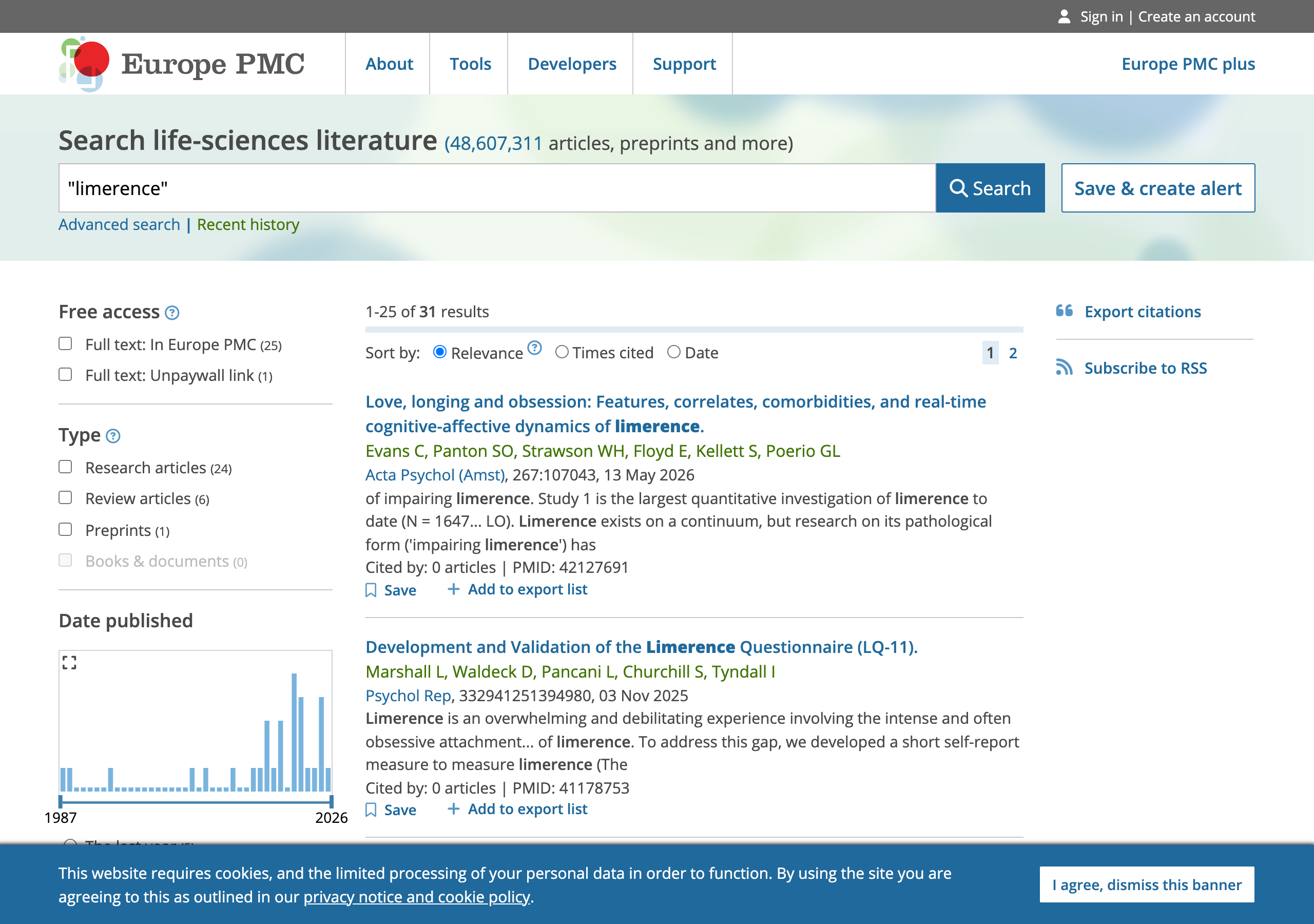
Scholars look at this feeling using one clear name.
- Research uses a fixed label. Scientists study how people think and feel. They call it limerence in their papers.
- Two main databases show the work. You can find 31 records in Europe PMC. You can also find 215 articles in OpenAlex.
- The name matches the real talk. People who feel this way often describe it clearly. Writers match those stories to one word.
- This maps what gets studied. The data shows how science tracks the experience. It does not judge personal views.
- It just shows where the papers live.
- The search covers global views. Work comes from many places around the world. The topic stays open for all readers.
- Clear terms help future study. One name keeps the path clear. New writers can find old work fast.
- Focus stays on shared words. The lists track language use over time. They show how a common phrase grows.
- Science builds on steady ground. Papers link to older reports. The record stays clean and direct.
- Readers see the full picture. The counts show where experts look. They do not hide any side.
- This field stays neutral. We track words and study paths. We leave room for every view.
- The path stays wide open. Anyone can read the listed sources. The door stays open for new ideas.
- Words shape how we learn. One word helps groups agree. It stops confusion in the files.
- Lists guide future questions. Scholars check these spots first. They build on known facts.
- Simple names reduce noise. Simple tags sort the info well. Search tools run faster now.
- Open pages welcome all voices. The site shares links freely. Readers pick their own pace.
- Files stay easy to read. Short titles help readers scan fast. The layout stays light and clear.
- Teams share notes online. Authors share notes on open pages. Everyone sees the latest changes.
- Links point to trusted sites. Staff check each link twice. The list stays safe and true.
Track twin flames on one path and limerence on another. 4 accounts use spiritual words while 404 use clinical words.
Look at the words you use to name your feelings.
- You might match the small group. Some people use the twin flame label. They share this exact phrase online.
- You likely match the large group. Most people do not use that phrase. They describe strong mental focus instead.
- The labels show different roots. One label comes from internet culture. The other label comes from science studies.
- Researchers track the second group closely. Writers study the first group widely. Both groups feel real pain.
- Both groups seek clear answers. Your choice depends on your words. Pick the twin flame tag if it fits your voice.
- Pick the limerence tag if it fits your voice. Neither choice changes your daily life. Both choices help you find support.
- You are part of a clear group. Your words place you in one spot. The data draws a clear line.
- 4 voices use one common phrase. 404 voices use another phrase. These counts come from direct reports.
- They map how people speak today. They do not judge any personal view. They simply show where readers stand.
- You can move forward now. Know that both paths exist side by side. Know that the words matter most.
- Your story belongs to you alone. The numbers only point the way. You hold the final choice.
- Readers often ask about truth. We do not test which idea wins. We only count what people write.
- The web holds many spiritual stories. Science holds many peer reviewed papers. Both sides get clear space here.
- Your mind works in unique ways. You may feel stuck in loops. You may crave fast replies.
- You may watch every small sign. These steps happen in real time. They happen without magic spells.
- They happen without hidden codes. The split stays fixed in our data. 4 accounts carry one name.
- 404 accounts carry another name. This split guides your next step. It helps you read similar pages.
- It keeps your search focused. Stay calm and trust your voice. Use the term that feels right.
- Use the term that matches your days. The lab tracks these patterns well. The lab shares these facts openly.
- You can learn at your own pace. Two ideas sit apart from each other. One is a popular web term.
- The other is a research term. They name the same human feeling. You pick the word that fits best.
My personal take: what do I make of these two words?
I looked at how we talk about this feeling compared to how scholars write about it.
The numbers tell me why the paths split.
My search of 408 posts showed that only 4 people used the twin flame word.
Meanwhile, 31 Europe PMC records and 215 OpenAlex papers focused on limerence instead.
Web communities like to invent new phrases for deep emotions.
Scientists prefer exact terms to track patterns over time.
You can take a free quiz to explore your own thoughts. This simple tool shows how your words match what people share online.
What’s your Limerence Score?
A private, 2-minute check-in.
Questions this page answers
Are twin flames and limerence the same thing?
They are two different things. Our review shows 408 posts used one name while 4 used the other.
Why do web searches show more twin flame pages than real posts?
Web pages share that phrase widely. Only 4 real posts match it.
Do experts study the twin flame idea?
Researchers look at this feeling under a different name. Our search found 31 papers on the topic.
What name do scientists use for this feeling?
Scientists call it limerence. Our search found 215 studies using that exact word.
Is holding a twin flame belief a bad choice?
This page does not judge private beliefs. We only map the words people use and the studies that exist.
How many writers actually use the twin flame label?
Out of 408 posts, only 4 use that label. 404 writers did not use it.
Which word should you pick when you feel unsure?
You can use the word limerence. It matches the language in real posts and scientific papers.
Does this guide claim twin flame ideas are untrue?
We never test personal beliefs. We simply report the language counts and research records we found.
How does this page sort out online trends from real research?
The guide tracks common web phrases. It also lists 31 records and 215 articles for limerence.
Further reading
- What Is Limerence? The Obsessive Loop, Explained
The foundational explainer for readers new to the term.
- Who Was Dorothy Tennov?
The researcher who coined the word limerence in 1979 -- the research-term side of this comparison.
- The 4 Stages of Limerence
What the research literature actually describes, stage by stage.
- Why Do I Put My LO on a Pedestal?
The idealization/destined-connection dynamic underneath the twin-flame framing, from the certified-corpus side.
This page shares learning notes. It is not a medical check.
We respect all personal views. Talk to a counselor if stress stays.
Ready to break the loop?
Only 10 new clients a month. Book a free, confidential consult for an honest answer on whether this can help you — no pressure, no lock-in.
Only 2 spots left for August
Not ready to talk? Take the free Limerence Score →
About the Author

Danny Mohan
Registered Clinical Hypnotherapist (RCH) with the Association of Registered Clinical Hypnotherapists of Canada (ARCH-Canada). Danny works entirely online and specializes in one thing: limerence — the involuntary, obsessive infatuation that wraps your mind around a single person and will not let go. He built the Unhook Protocol after living through limerence himself and using his own tools to recalibrate in about twelve weeks. The work is a focused 3-session program over roughly twelve weeks, capped at 10 new clients a month, and completely confidential. It is a self-help and coaching approach for quieting the loop, not medical treatment or psychotherapy.
Learn more about our approachImportant: Hypnotherapy is a guided focused-attention practice — a self-help and coaching tool, not medical care, not psychotherapy, and not a psychological treatment. Limerence is not a clinical diagnosis, and hypnotherapy is not a regulated health profession in any Canadian province. ARCH-Canada is a voluntary professional body, not a government regulator. Nothing on this site is medical advice, diagnosis, or treatment. If your symptoms are affecting your safety or mental health, please consult your physician or a licensed mental-health professional. Hypnotherapy may complement that care but never replaces it.