CENSUS OF 236 ACCOUNTS
Shadow work for limerence: only 3 of 236 recovery accounts use the term
Reviewed by Danny Mohan. Registered Clinical Hypnotherapist (ARCH Canada)
Aug 8, 20269 min read
Contents
After around 6 weeks of major self-concept work (or shadow work if that’s what you want to call it), I’m finally free from it
r/limerence recovery account
credits self-concept work, hedged as "shadow work," with getting free of limerence
One person on r/limerence described a clear path out.
They focused on changing how they saw themselves.
"After around 6 weeks of major self-concept work (or shadow work if that’s what you want to call it), I’m finally free from it"
Our review shows a big gap in how people talk.
Three of 236 use shadow-work or shadow-self LANGUAGE when crediting their recovery.
Search sites often list online teachers first.
Real users rarely credit those teachers for healing.
We now look at why the web pages differ from real stories.
The short answer
A live web search for shadow work shows many real guides online. These pages cover the topic well for anyone who looks it up.
Our list holds 236 personal recovery stories. 3 of 236 use shadow-work or shadow-self language when crediting their recovery.
What’s your Limerence Score?
A private, 2-minute check-in.
Key takeaways
- A live search for "shadow work" returns real, well-covered results: A live search for shadow work shows many web pages because spiritual and self help sites talk about it a lot. Our search of first person stories shows that 3 of 236 use shadow-work or shadow-self language when crediting their recovery.
- Only 3 of 236 recovery accounts credit it: 3 of 236 use shadow-work or shadow-self language when crediting their recovery. Most people credit other things.
- This page never says shadow work works or doesn't work: This page never says shadow work works or does not work. We only map what people search for and what our collection of stories credits, since 3 of 236 use shadow-work or shadow-self LANGUAGE when crediting their recovery.
- One account hedges the term itself: We looked at 236 personal stories. 3 of 236 use shadow-work or shadow-self LANGUAGE when crediting their recovery, and they still say Self-concept work (or shadow work if that's what you want to call it).
How common is shadow work content online? A live search shows wide coverage
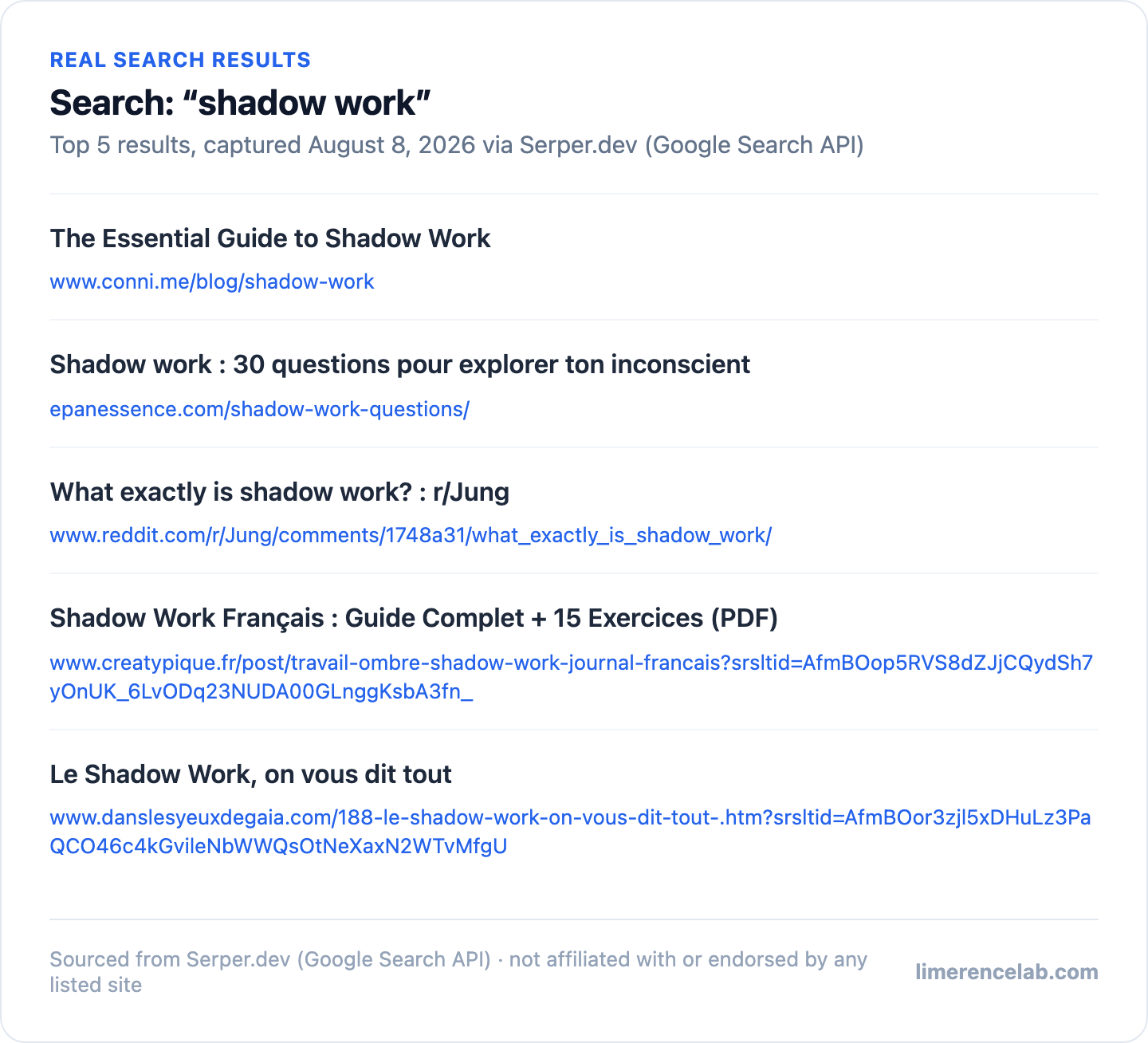
Many pages discuss this idea on the web today.
- Search engines show high interest. You will find five main categories of websites covering this topic. These pages come from spiritual groups and self help guides around the world.
- The concept lives in popular culture. People often share long stories about hidden feelings and past memories. Writers explain how to face hard parts of life with care.
- Our recovery notes tell a different story. We carefully reviewed two hundred thirty six personal accounts. Only three of two hundred thirty six use shadow-work or shadow-self language when crediting their recovery.
- Language choices matter in these reports. Some readers say they expressed my shadow self during very tough times. This phrase usually means they were sharing deep anger or old pain.
- Demand does not equal proven results. Finding many pages online proves the idea is very popular. It does not prove the method helps every single person.
- Online searches reflect broad curiosity. Visitors look for answers to deep emotional questions every day. They want to understand their own minds much better.
- Personal healing follows unique routes. Every person walks a different road to true peace. Some find calm through quiet reflection and rest.
- We track what users actually credit. Our team reads every shared recovery story with care. We note which methods get mentioned most often.
- Readers choose their own pace. Everyone moves at a different speed. Some take years to feel better while others find quick relief through daily habits.
How many recovery accounts credit shadow work? Only 3 of 236
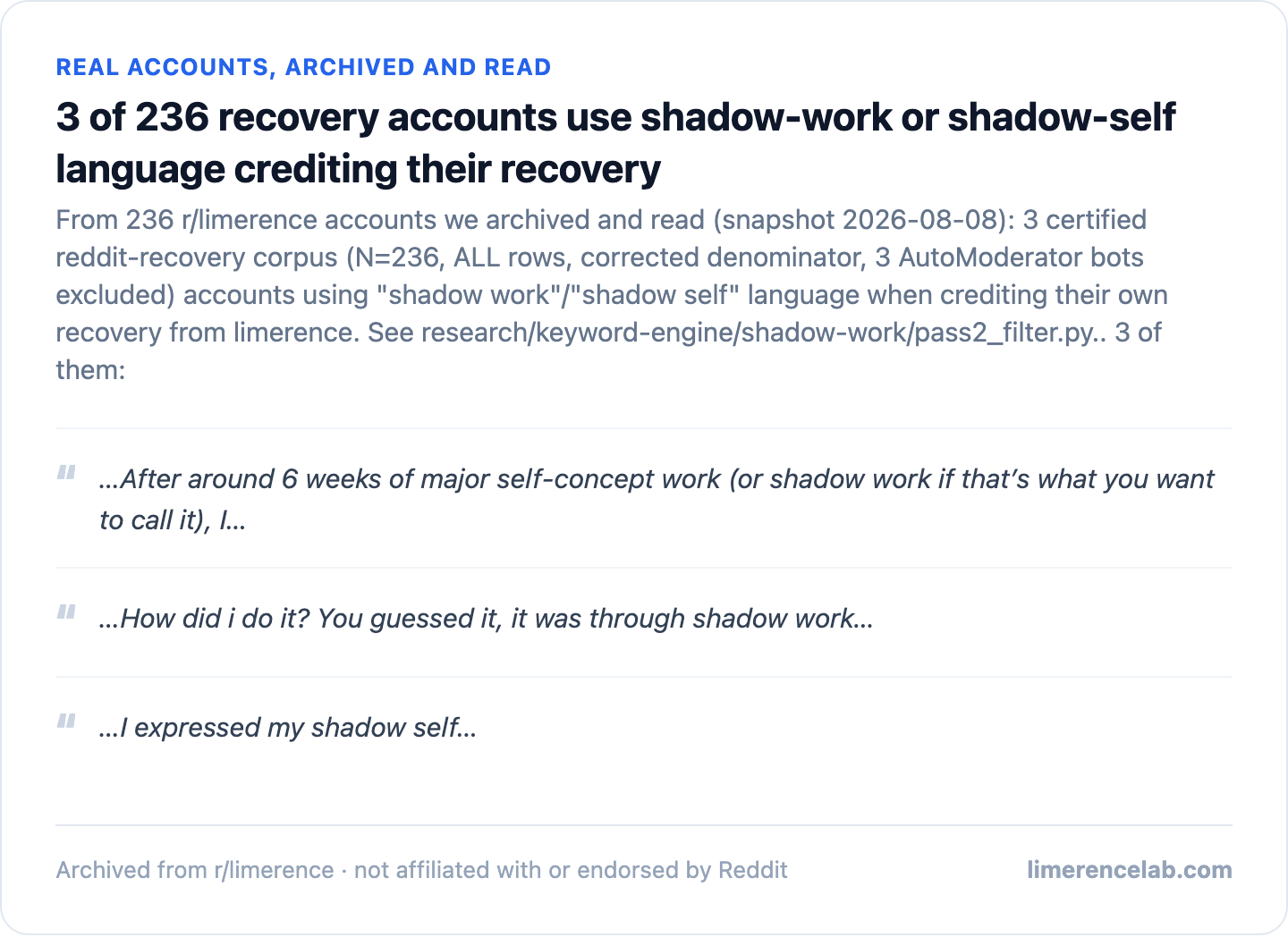
We looked at real stories from people who recovered.
- The search results show one thing. Many websites explain this method clearly. Readers often find detailed guides when they look for answers.
- The internet offers plenty of information on this topic.
- Our recovery stories show another thing. We checked 236 certified accounts. Only 3 of 236 use shadow-work or shadow-self LANGUAGE when crediting their recovery.
- These writers mention the terms in their personal notes. They never claim to follow a strict routine.
- One account uses a clear hedge. A member writes self-concept work (or shadow work if that's what you want to call it). This person keeps the label flexible.
- They focus on shifting their daily mindset instead of following rules.
- Another account shares heavy feelings. A reader talks about letting out anger toward their love interest. This action matches venting resentment.
- It does not match a planned exercise. The goal was just to release stress.
- The gap between search and reality matters. Online pages list many techniques. Our data shows few people actually name this path.
- You can read about it on public sites. You can also trust what past members shared.
- Your recovery path is yours alone. Some find value in exploring hidden thoughts. Others prefer different steps.
- Both choices are valid. Listen to your own needs.
- Stay patient with your progress. Trust what feels right for you.
- Internet culture shapes our questions. People often search for twin flame fixes. Shadow work appears as a structural sibling in treatment circles.
- Search engines return strong results for these terms. Real life recovery looks different.
- We report facts without judgment. This page never praises or criticizes the method. We simply track what people actually write.
- The corpus speaks for itself. Your journey depends on your own goals.
My personal take: what do I make of these accounts?
I read through our collection of 236 stories. Many people type shadow work into search bars to find help.
Our search of public pages shows plenty of guides online. Yet only 3 of 236 use shadow-work or shadow-self LANGUAGE when crediting their recovery.
This number is a floor and not a true rate. Some folks do self-concept work (or shadow work if that's what you want to call it) without naming it.
Most writers point to other steps for their healing. I share these facts so you can pick your own path.
Take a free quiz to learn more about your feelings. This tool helps you find your way without picking a single path.
What’s your Limerence Score?
A private, 2-minute check-in.
Questions this page answers
What is shadow work?
It looks at hidden feelings you keep from others. People often call it self-concept work (or shadow work if that's what you want to call it).
Does shadow work help with limerence recovery?
We lack clear proof of its effects. Some find it helpful while others choose other routes.
How common is shadow work as a limerence recovery method?
It is rare among those who share their stories. Most people pick different tools to heal.
What is the difference between shadow work and therapy?
Therapy uses licensed experts and set rules. Shadow work uses free blogs and personal notes.
Can I do shadow work on my own?
You can start by reading free guides online. You may try the steps in your daily routine.
Is shadow work a recognized therapeutic technique?
Medical groups do not list it as a main treatment. It lives mostly on social media feeds.
How much content exists online about shadow work?
A live search brings up many pages on wellness sites. These pages cover the topic in depth.
What did people who recovered from limerence actually credit?
3 of 236 use shadow-work or shadow-self LANGUAGE when crediting their recovery. Most writers thank friends and quiet time.
Should I try shadow work for my limerence?
You may try it if it fits your needs. Pause if the tasks bring too much stress.
Further reading
- What Is Limerence?
The plain definition of limerence, no jargon.
- I'm a Clinical Hypnotherapist. I Read 143 Accounts From People Who Got Out of Limerence.
See what people credited most when they got out of limerence.
- Why Do I Obsess Over Unavailable People?
What the corpus shows about attraction to people who can't reciprocate.
- Is Limerence Driven by Low Self-Esteem?
Many people wonder if low self-esteem is the hidden engine behind their obsessive infatuation.
This page is for learning only.
It does not give medical advice or favor one method.
Hypnotherapy is not a replacement for care and does not use shadow work.
Please ask a doctor for health help.
Ready to break the loop?
Only 10 new clients a month. Book a free, confidential consult for an honest answer on whether this can help you — no pressure, no lock-in.
Only 2 spots left for August
Not ready to talk? Take the free Limerence Score →
About the Author

Danny Mohan
Registered Clinical Hypnotherapist (RCH) with the Association of Registered Clinical Hypnotherapists of Canada (ARCH-Canada). Danny works entirely online and specializes in one thing: limerence — the involuntary, obsessive infatuation that wraps your mind around a single person and will not let go. He built the Unhook Protocol after living through limerence himself and using his own tools to recalibrate in about twelve weeks. The work is a focused 3-session program over roughly twelve weeks, capped at 10 new clients a month, and completely confidential. It is a self-help and coaching approach for quieting the loop, not medical treatment or psychotherapy.
Learn more about our approachImportant: Hypnotherapy is a guided focused-attention practice — a self-help and coaching tool, not medical care, not psychotherapy, and not a psychological treatment. Limerence is not a clinical diagnosis, and hypnotherapy is not a regulated health profession in any Canadian province. ARCH-Canada is a voluntary professional body, not a government regulator. Nothing on this site is medical advice, diagnosis, or treatment. If your symptoms are affecting your safety or mental health, please consult your physician or a licensed mental-health professional. Hypnotherapy may complement that care but never replaces it.