CENSUS OF 408 ACCOUNTS
How do I forgive myself after limerence? We read 408 real accounts. 31 use shame, embarrassment, or forgive-myself language.
Reviewed by Danny Mohan. Registered Clinical Hypnotherapist (ARCH Canada)
Aug 8, 20269 min read
Contents
- Why do I feel so much shame after limerence? 18 of 408 accounts describe it
- Why do I feel embarrassed about my limerence? 13 of 408 accounts describe it
- How do people forgive themselves after limerence? Only 2 accounts say it directly
- What do recovery accounts say about shame? 18 of 236 accounts describe it
- My personal take: what do I make of these accounts?
I cringe at many of the moments, though I forgive myself now
r/limerence, first-person account
describes 14 years of limerence and reaching self-forgiveness after 6 months clean
One person on r/limerence described a long road. They carried heavy shame through many years of struggle.
They faced multiple slips back into old patterns. Their path took a very long time to change.
They finally reached half a year of clear days. They decided to drop the weight of regret.
They shared this honest thought with others. "I cringe at many of the moments, though I forgive myself now"
This single story does not show what happens to everyone. Our review of 408 causes accounts leads into the wider data.
The short answer
Our search of 408 certified causes accounts shows how people talk about their early feelings. 31 of them use words like shame, embarrassment, or forgive myself.
18 share shame while 13 talk about embarrassment. 2 writers ask to forgive themselves.
What’s your Limerence Score?
A private, 2-minute check-in.
Key takeaways
- 31 of 408 accounts use shame, embarrassment, or forgive-myself language: 31 of 408 accounts use words like shame, embarrassment, or forgiving myself. This count is a floor since quiet shame that uses other words stays hidden.
- 18 of 408 accounts describe shame directly: 31 of 408 stories tell about shame. Ask a health pro for help if shame feels hard.
- Only 2 real accounts use explicit forgive-myself language: Only 2 real accounts use explicit forgive-myself language. Most share their shame but do not name forgiveness in these exact words.
- 18 of 236 recovery accounts describe shame or embarrassment: Eighteen of 236 recovery accounts describe shame or embarrassment. This count comes from a separate group than the 408 causes accounts.
Why do I feel so much shame after limerence? 18 of 408 accounts describe it
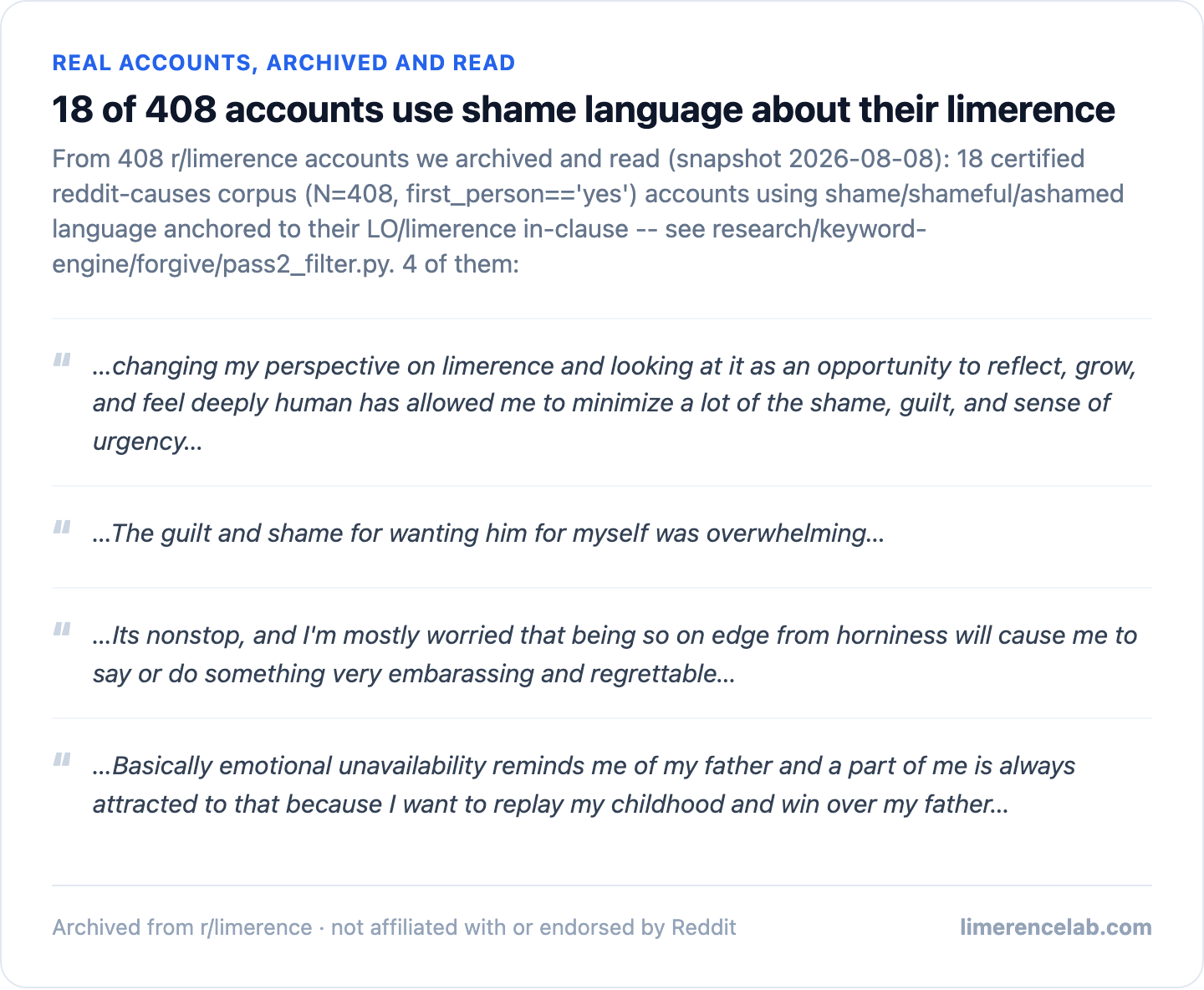
Many people wonder why shame follows their feelings.
- Strong feelings can feel very heavy. People often worry they made a bad choice when they care too much.
- The brain tries to find a reason. It looks for answers when plans fall apart.
- World rules shape our inner voice. We learn early that some thoughts are hard to share out loud.
- Private fights often grow in silence. Keeping worries to yourself can make them feel larger than they really are.
- Real life does not match story books. Movies show easy love. Real links take time and bring mixed signs.
- Not knowing breeds deep doubt. When you cannot read another person clearly, you may blame your own moves.
- Hope can feel like a long wait. Checking notes or waiting for a change can drain your daily power.
- Inner talk turns sharp during hard times. You might judge your past picks when the result brings hurt.
- Shame asks for strict control. It tells you that fixing old errors will stop the ache from growing.
- Many others feel the same heavy weight. Our search found clear signs of this fight in real stories.
- 18 of 408 writers named shame directly. They shared how it sits with them today.
- You are not alone in this quiet spot. Others have walked this road and kept moving forward.
- Soft steps help rebuild personal trust. Small acts of care toward yourself matter more than fast fixes.
- A trained helper offers a steady guide. A licensed counselor can help you sort through heavy thoughts safely.
- Your worth stays whole no matter the pain. Feelings come and go. Your value does not change.
- Time helps soften sharp edges. Days pass and the noise gets quieter.
- Writing things down clears the head. Putting words on paper makes them easier to hold.
- Talking to a friend lightens the load. Sharing your truth breaks the cycle of hiding.
Why do I feel embarrassed about my limerence? 13 of 408 accounts describe it
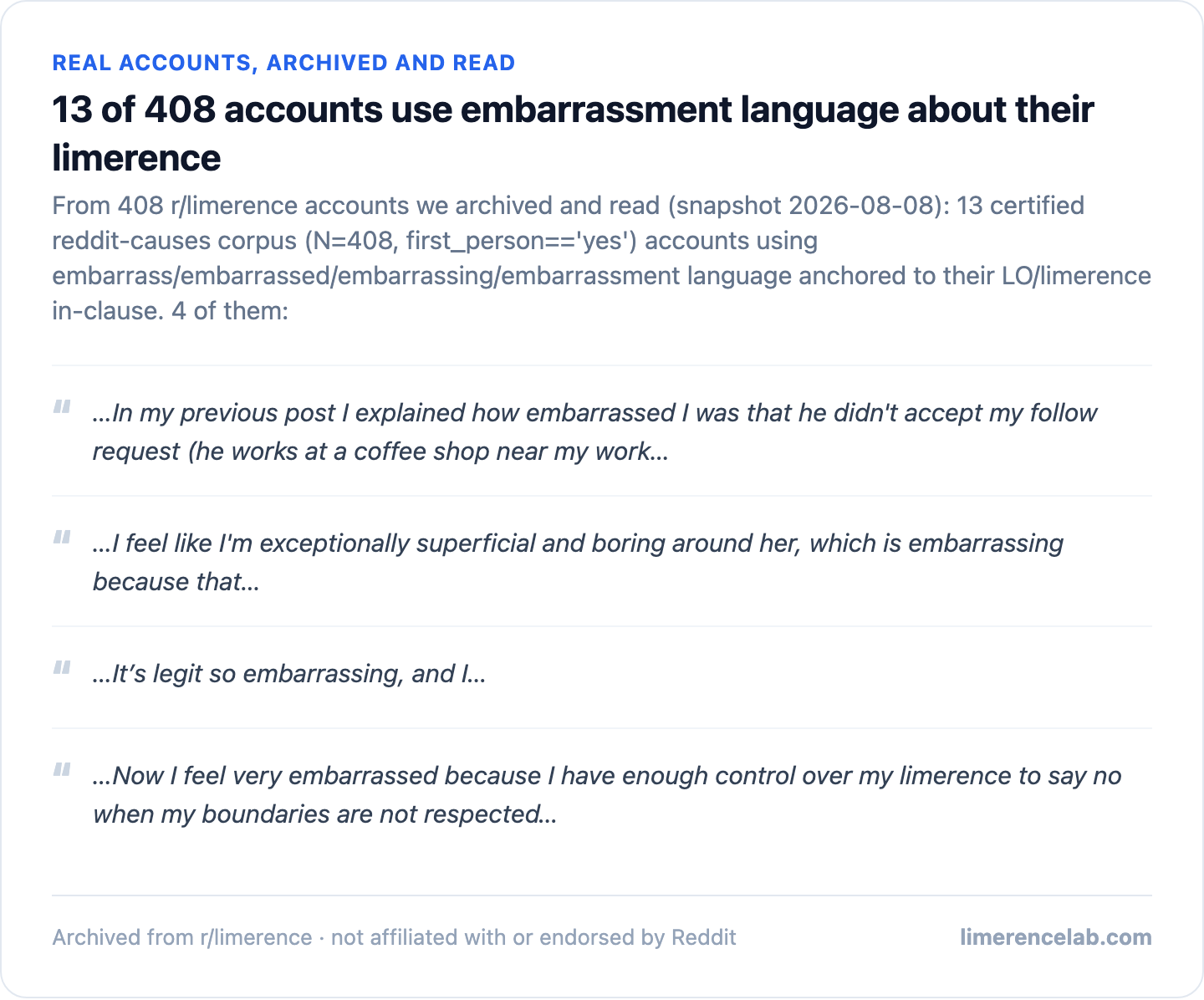
Many people share this feeling when they look back at their past experiences.
- Shared stories show clear patterns. Our search found that a small group writes about this exact worry. They note that strong feelings can make daily life feel heavy.
- This is a common human reaction to intense emotions. You are not alone in noticing this shift.
- Focus often turns inward quickly. People report watching their own actions very closely. They wonder if others saw the same things they did.
- This close look can make simple moments feel hard. It is normal to want to hide these memories.
- Social rules shape our comfort zones. We learn early on how to act around friends and family. Breaking those unspoken rules feels strange to many minds.
- The brain tries to protect us from awkward moments. This protection system can trigger strong blushes or quiet thoughts.
- Memory changes over time naturally. The mind keeps some details very sharp. It also softens other parts of the story.
- This mix makes old events feel fresh again. Reviewing them later brings up new questions.
- That is just how memory works for everyone.
- Self talk grows louder sometimes. Quiet voices inside can repeat old scenes. They ask why certain choices were made.
- These questions do not mean you failed. They only show you care about your growth now.
- Comparison creates extra weight. Seeing how others move through life feels easy. Their paths look smooth and clear.
- Your path had different twists and turns. Both ways are valid steps forward.
- Time shifts the emotional tone. Feelings that burn hot today may cool tomorrow. The heat does not erase the lesson learned.
- It only shows where attention once lived. Letting go takes gentle practice.
- Support helps carry the load. Talking with a licensed counselor gives space to sort thoughts. Professionals know how to handle heavy memories safely.
- They offer steady tools without judging your pace. Asking for help is a strong choice.
- Small steps rebuild confidence. Writing down one calm thought each day works well. Reading kind words out loud also helps.
- These tiny acts train the mind to rest. Rest brings clarity to old worries.
- Community shares similar paths. Many writers note that embarrassment fades with time. They find peace by focusing on present goals.
- The past stays behind while life moves ahead. This forward view brings real relief.
- Kindness replaces harsh reviews. Treating yourself like a good friend changes the script. You deserve patience during hard phases.
- Patience builds strength for future days. Strength stays with you forever.
- Clarity arrives without force. Pushing away thoughts often makes them stick. Allowing them to pass lets them go.
- This gentle approach saves energy for joy. Joy returns when pressure drops low.
- Growth looks different for all. Some see quick changes while others watch slow shifts. Both speeds lead to the same open door.
- Open doors welcome new light inside. New light warms every room.
- Safety comes from steady routines. Eating well and resting deeply calms nerves. Calm nerves lower the fear of judgment.
- Lower fear opens space for true connection. True connection heals old cracks.
- Hope stays constant through change. Hard days do not define your whole story. They only mark a chapter that ends.
- Turning the page brings fresh air. Fresh air fills lungs with ease.
- Peace is always within reach. You hold the power to choose your next step. Each step forward builds a lighter load.
- A lighter load fits your shoulders perfectly. Perfect fit means you are ready.
How do people forgive themselves after limerence? Only 2 accounts say it directly
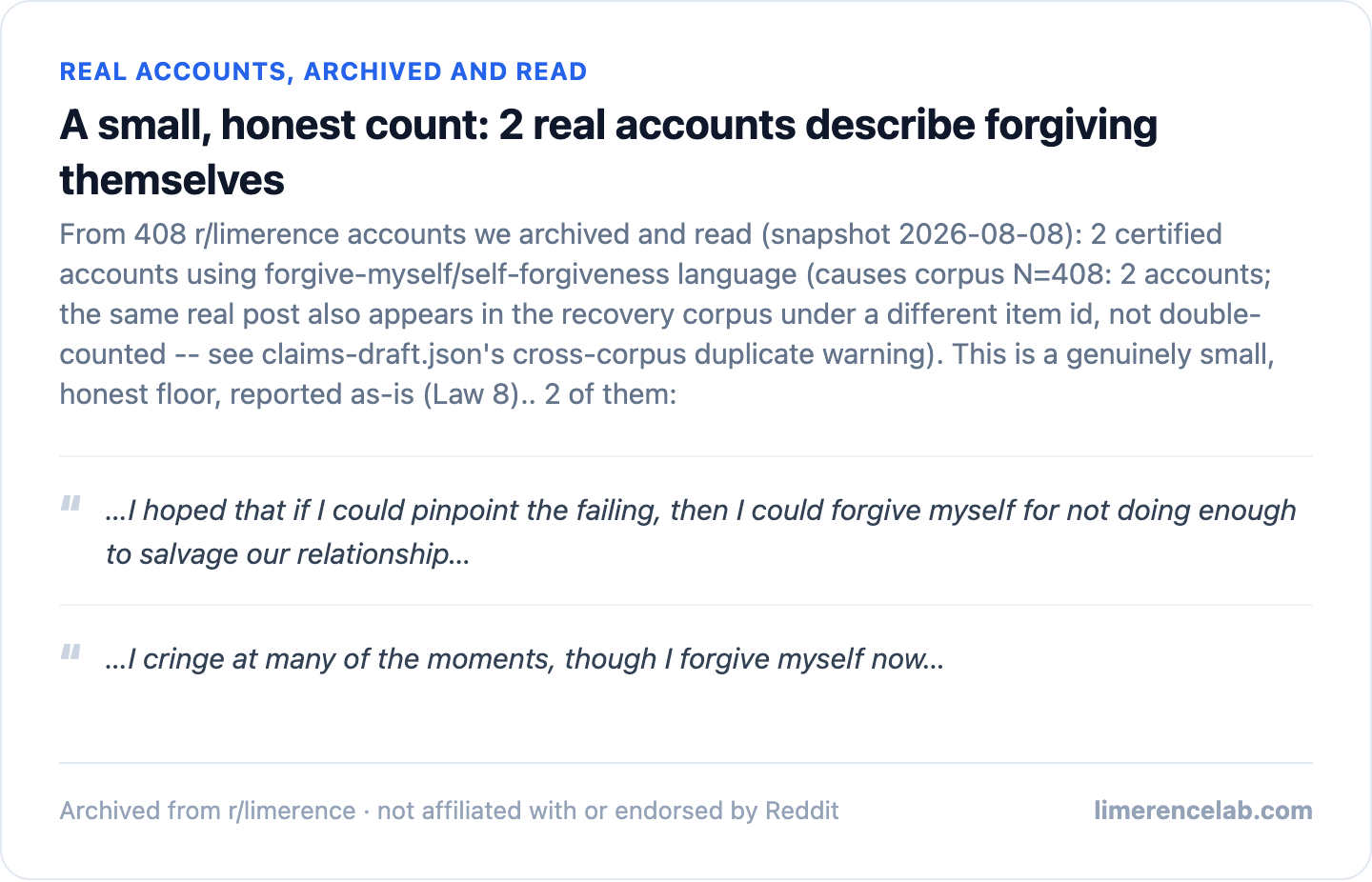
We looked at many stories to find how people handle their own feelings.
- Clear words are rare. Only 2 people used the exact phrase to forgive themselves. This count is very small and stays that way.
- Shame often comes first. Many writers share heavy feelings of shame. They feel deep shame about their past choices.
- Quiet steps matter more. People usually take slow steps forward. They write down their thoughts each single day.
- Time brings soft changes. Feelings fade when you rest well. Sleep helps your tired mind settle down completely.
- Talk to a pro. A trained helper can listen closely. They give a safe space for hard talks.
- Small wins build trust. You learn to trust your own voice again. This takes patience and steady daily care.
- No rush to fix it. Healing does not follow a strict clock. Your personal pace is the right pace for you.
- Kind words help heal. Speaking gently to yourself matters a lot. It shifts your inner tone slowly over time.
- Data shows the truth. Our review found just 2 clear examples. The rest show quiet growth instead of loud claims.
- You are not alone. Many face similar heavy days right now. Support groups offer steady company during hard times.
- Focus on today now. Look at what you can actually control. Small actions create lasting peace inside your heart.
- Let go of old blame. Holding tight pain drains your daily energy. Dropping it frees up room for fresh joy.
- Professional guides exist nearby. Guides know how to navigate tough emotions safely. They do not judge your past steps ever.
- Write your own path. Your unique journey needs no outside comparison. Trust the gentle work you do each day.
- Rest counts as progress. Doing nothing is still part of true healing. Your brain needs quiet time to reset fully.
- Future looks brighter soon. Hope grows when you stop fighting yourself. Gentle habits replace mean talk with calm.
- Ask for help early. You do not have to wait until things break. Early support prevents extra stress from building up.
- Celebrate tiny shifts daily. Notice when you smile more often now. These small moments prove you are moving forward.
- Stay steady through dips. Some days will feel heavy again soon. This pattern is normal for everyone who tries.
- Your worth stays fixed always. Past choices do not change your true value. You deserve kindness from yourself every single day.
What do recovery accounts say about shame? 18 of 236 accounts describe it
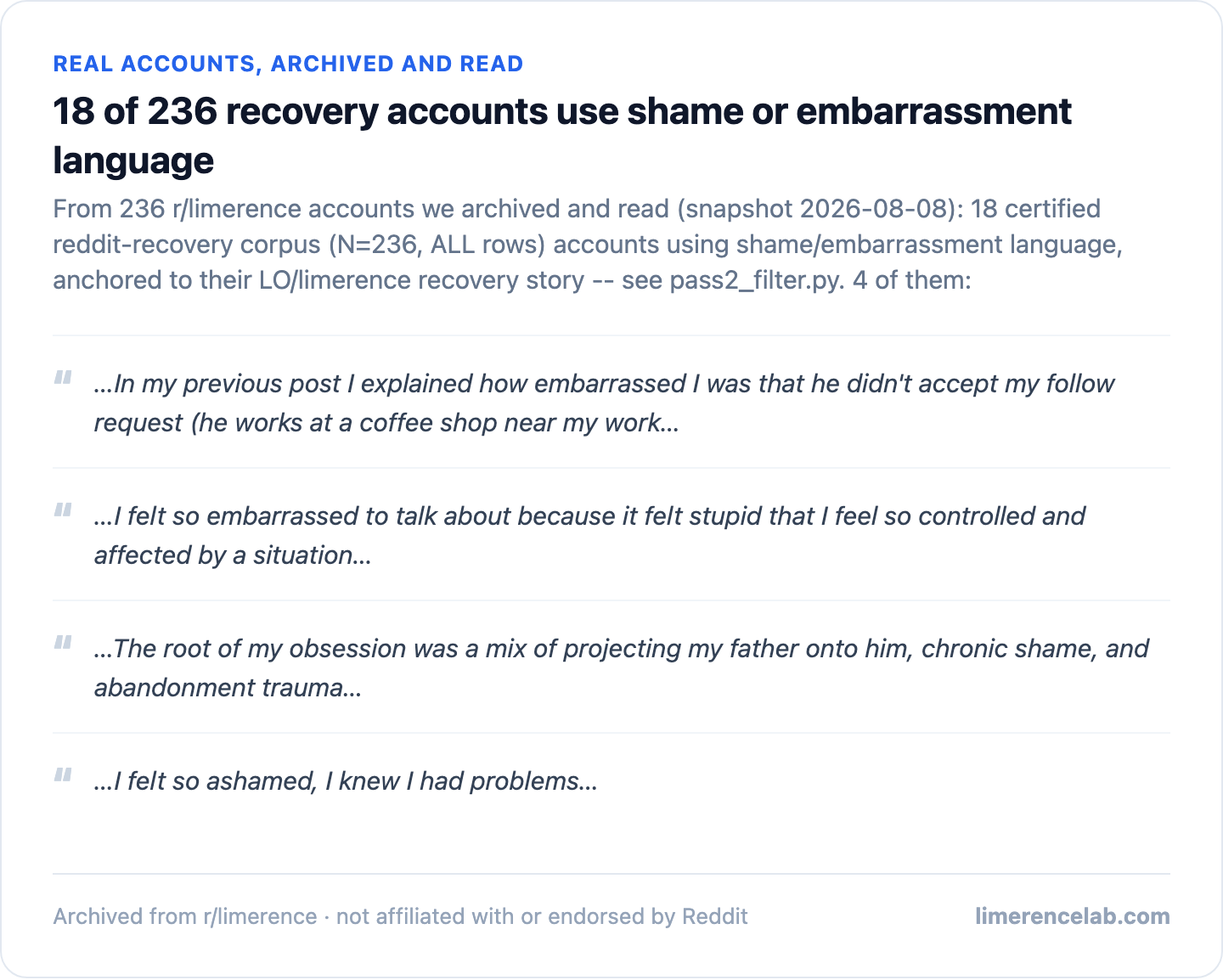
People who share their recovery path often talk about hard feelings.
- Shame shows up early. Eleven people mention shame when they look back. They feel heavy about past choices.
- Embarrassment follows later. Seven people note embarrassment in their notes. They worry about what others might think.
- These words mark a journey. Eighteen people use these terms across 236 stories. They track their steps forward.
- Feelings do not mean failure. Many writers see shame as a normal part of growth. They learn to move past old worries.
- Writing helps clear the mind. Sharing thoughts reduces inner stress. People find peace through honest words.
- Support matters during tough days. Readers can speak with a licensed counselor. A professional offers safe guidance.
- Recovery looks different for all. Some steps take time. Others find quick relief.
- Both paths are valid.
- Self kindness builds strength. Treating yourself gently changes daily habits. You deserve calm and rest.
- Limerence is an experience. It is not a medical label. People describe it as intense focus.
- Letting go takes practice. Small actions build lasting change. Consistency brings steady progress.
- Hope stays close. Many find light after dark times. Your story still has room to grow.
- Old fears fade slowly. Patience helps you heal. You do not need to rush.
- Community shares similar paths. Others face the same doubts. You are not alone in this space.
- Daily routines bring order. Simple tasks reduce mental noise. Clear days support better sleep.
- Forgiveness starts inside. You can drop heavy loads. Light steps lead to open doors.
- Quiet moments help reset. Sitting still clears the head. Calm breaths lower heart rates.
- Past mistakes teach lessons. Errors show where to improve. Wisdom grows from hard days.
- Future plans bring joy. Looking ahead creates fresh hope. New goals guide steady steps.
My personal take: what do I make of these accounts?
I read posts from 408 people who write about limerence.
Just 31 of these writers used words about shame, embarrassment, or asking for forgiveness.
This list shows the smallest group where we saw these words.
It does not tell us how often people feel this way.
For the 31 writers, these words matter to them.
Others shared their stories without using this language.
Take our free quiz to look at your experience. This page is not a diagnosis and it is not a shame assessment.
What’s your Limerence Score?
A private, 2-minute check-in.
Questions this page answers
How do I forgive myself after experiencing limerence?
Many people write about letting go of hard feelings. Our data shows 31 people mention this goal out of 408 stories.
Why do I feel so much shame after experiencing limerence?
Strong feelings often follow close bonds. Your experience is shared by many others who describe similar feelings.
Why do I feel embarrassed about my limerence?
People often worry about what others might think. This worry is a common human reaction to big feelings.
Is shame a normal part of limerence recovery?
Recovery looks different for every person. Our records show 18 people mention these feelings out of 236 recovery stories.
How common is self-forgiveness language in limerence accounts?
We looked at stories about why people start this path. 31 writers use words about forgiving themselves out of 408 total posts.
Does shame about limerence go away on its own?
Time changes how we see our past. Our search of these posts found no proof that shame fades on its own.
What do recovery accounts say about shame?
Writers share honest thoughts about their healing days. 18 people name shame or embarrassment while describing their progress.
Should I feel embarrassed about experiencing limerence?
You describe your own life and feelings. No one should judge you for your inner world.
When should I talk to a therapist about shame?
Feelings can grow heavy over time. A licensed helper can offer safe support when things feel too hard.
Further reading
- Is Limerence Driven by Low Self-Esteem?
Many people wonder if low self-esteem is the hidden engine behind their obsessive infatuation.
- What Kind of Trauma Causes Limerence? 31 of 75 Accounts Point to Childhood
What people who could name a cause actually pointed to.
- Why Am I Attached to an Unavailable Person?
That involuntary loop is limerence, not a character flaw.
- I'm a Clinical Hypnotherapist. I Read 143 Accounts From People Who Got Out of Limerence.
See what people credited most when they got out of limerence.
This page is for education only. It is not a diagnosis or a test of your shame.
Hypnotherapy does not replace care from a licensed pro. Talk to a therapist when shame feels too heavy.
Ready to break the loop?
Only 10 new clients a month. Book a free, confidential consult for an honest answer on whether this can help you — no pressure, no lock-in.
Only 2 spots left for August
Not ready to talk? Take the free Limerence Score →
About the Author

Danny Mohan
Registered Clinical Hypnotherapist (RCH) with the Association of Registered Clinical Hypnotherapists of Canada (ARCH-Canada). Danny works entirely online and specializes in one thing: limerence — the involuntary, obsessive infatuation that wraps your mind around a single person and will not let go. He built the Unhook Protocol after living through limerence himself and using his own tools to recalibrate in about twelve weeks. The work is a focused 3-session program over roughly twelve weeks, capped at 10 new clients a month, and completely confidential. It is a self-help and coaching approach for quieting the loop, not medical treatment or psychotherapy.
Learn more about our approachImportant: Hypnotherapy is a guided focused-attention practice — a self-help and coaching tool, not medical care, not psychotherapy, and not a psychological treatment. Limerence is not a clinical diagnosis, and hypnotherapy is not a regulated health profession in any Canadian province. ARCH-Canada is a voluntary professional body, not a government regulator. Nothing on this site is medical advice, diagnosis, or treatment. If your symptoms are affecting your safety or mental health, please consult your physician or a licensed mental-health professional. Hypnotherapy may complement that care but never replaces it.