RECOVERY ACCOUNTS AND STUDY DATA
Do antidepressants help limerence? Our search of ClinicalTrials.gov and Europe PMC found 0 registered trials. 9 of 239 recovery accounts we certified name one anyway.
Reviewed by Danny Mohan. Registered Clinical Hypnotherapist (ARCH Canada)
Aug 8, 20269 min read
Contents
- Do antidepressants help limerence? Our search of ClinicalTrials.gov and Europe PMC returns 0 registered trials
- Does lexapro help limerence? Europe PMC returns 0 results for lexapro or escitalopram with limerence
- Does prozac help limerence? One paper mentions it, and it is not a trial
- What medications help limerence? Nothing is approved, because limerence is not a diagnosis
- Limerence treatment medication: 9 of 239 certified accounts say what they actually took
- My personal take: what do I make of these accounts?
He prescribed meds like SNRIs and SSRIs. Since I started them, my limerence is now under control.
r/limerence, first-person account
prescribed SNRIs and SSRIs after therapy alone did not help
One person on r/limerence described their struggle. They said therapy did not stop the feelings they call limerence.
A psychiatrist gave them medicine after therapy alone did not help.
"He prescribed meds like SNRIs and SSRIs. Since I started them, my limerence is now under control."
What accounts say is that this medicine helped one person out of 239 we read. It is not proof that drugs work for all readers.
What our search shows is little clear proof in the records. We checked trial sites and paper archives for any study on this topic.
Talk to a prescriber who knows your health history about any medicine changes. This page shares our search results and other stories next.
The short answer
Our search of ClinicalTrials.gov and Europe PMC found 0 registered trials for limerence. Of 239 certified first-person recovery accounts, 9 name a specific antidepressant or SSRI/SNRI they took.
8 of those describe a positive outcome for their experience. Ask a prescriber who knows your health history before you change any medication.
What’s your Limerence Score?
A private, 2-minute check-in.
Key takeaways
- 0 registered trials exist for limerence: Our search of ClinicalTrials.gov found 0 registered studies for limerence. Our Europe PMC search returns 3 co-mention results, and none is a trial, so any medicine question belongs with a prescriber who knows your health history.
- 9 of 239 recovery accounts name a specific antidepressant: 9 of 239 recovery accounts name a specific antidepressant and 8 say it helped while 0 report harm. Our search of trial records shows no clear proof and you should talk to a prescriber who knows your health history about medication questions.
- 228 of 239 accounts mention no medication at all: 228 of 239 people who share their story do not talk about medicine. Ask a doctor about medicine choices because they say other ways help and our search of papers did not find clear signs medicine works.
- Naming a drug in an account is not proof it caused the change: We read 239 stories, and 9 named a medicine, but our search of trials shows no clear proof it works. A personal story is not a trial, and this small count is just a floor, so please ask a doctor who knows your health before you change any medicine.
Do antidepressants help limerence? Our search of ClinicalTrials.gov and Europe PMC returns 0 registered trials
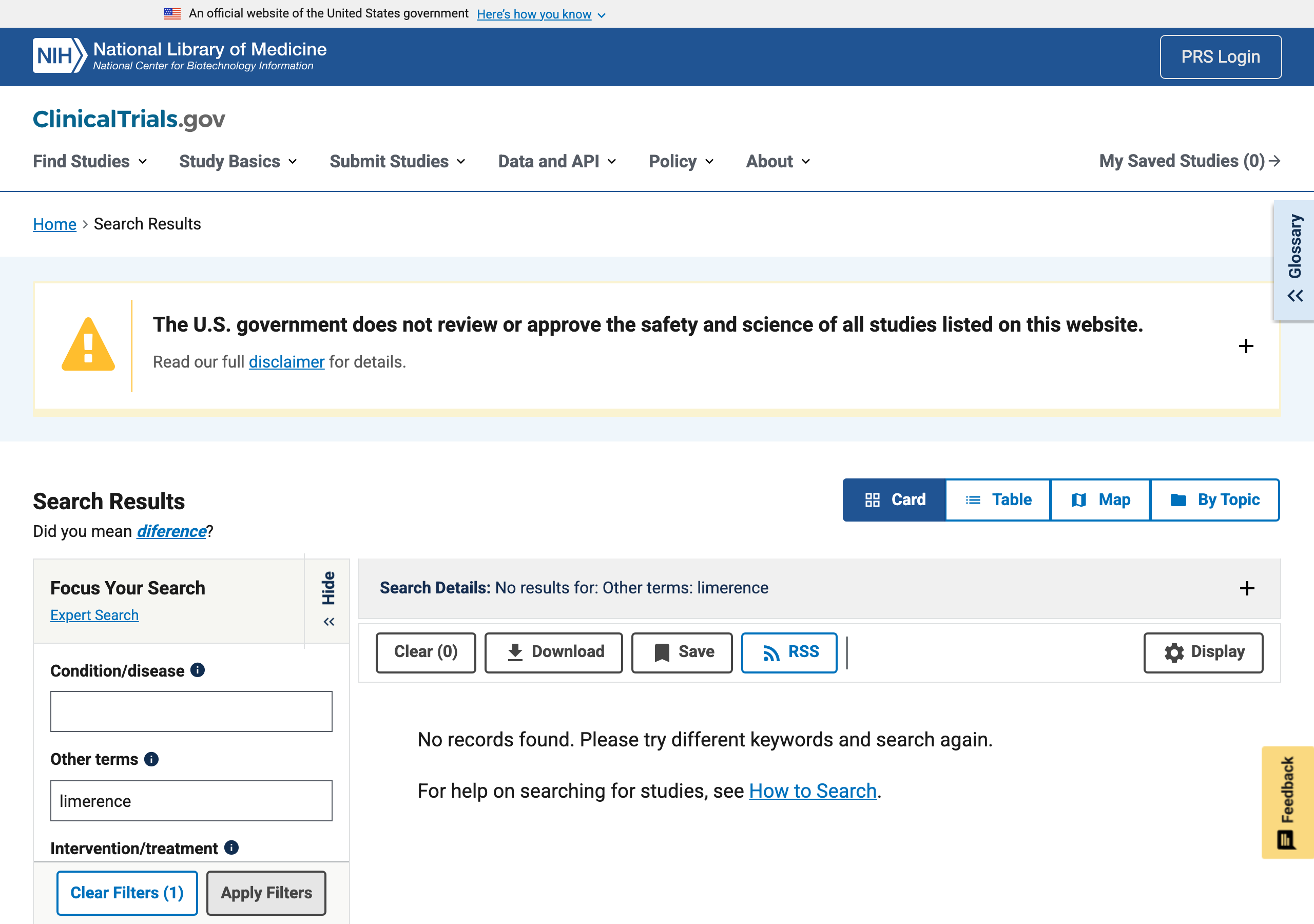
We looked at major sites to find answers about medicine and limerence.
- ClinicalTrials.gov showed no studies. Our search of that site found 0 registered trials for this topic.
- Europe PMC gave 3 hits. We combined words for limerence and medicine there. None of those 3 papers test drugs for this experience.
- First people share their views. Many readers describe how they felt during hard times. A few name specific pills they tried.
- They speak from life, not lab tests.
- Science needs more proof. The records we checked do not show clear results. We cannot say if these pills change how people feel.
- Talk to a doctor first. Any question about medicine belongs with a doctor. They know your health history and can guide you safely.
- No pill fixes everything. People describe different paths to calm minds. Some find rest through daily habits.
- Others find peace through quiet talks.
- We report what we found. Our search of the literature does not show trial data. What accounts say stands apart from medical records.
- Stay careful with choices. You should never start or stop a drug alone. A health expert must review your needs.
- Focus on steady steps. Recovery often comes from small changes. People describe better sleep and less worry over time.
- Keep checking sources. New studies may appear later. For now, the data stays empty.
- Trust your own pace. Everyone describes their journey differently. Medicine is just one tool among many.
- Ask before you act. Changing a routine needs care. Your doctor holds the right keys for your body.
- Read with clear eyes. The web fills up with strong claims. We stick to what the sites actually hold.
- Look for real support. Friends and guides walk beside you. They listen without judging your path.
- Hold onto hope. Hard days pass with time. Many people describe finding light again.
- Watch your daily mood. Small shifts matter most. People describe better focus over weeks.
Does lexapro help limerence? Europe PMC returns 0 results for lexapro or escitalopram with limerence

We compare what accounts say against what the search of the literature does not show.
- Our search shows gaps while accounts share personal views. Readers describe their own journeys without mentioning lexapro or escitalopram. Our Europe PMC search confirms 0 published studies on this pairing.
- The lack of data does not mean the drug is harmful. It simply means scientists have not studied this specific experience yet, so we cannot draw firm conclusions. People describe their feelings as intense focus and strong longing toward someone they admire.
- These emotions often feel automatic and hard to control.
- Talk to a doctor before making any changes. A licensed prescriber can review your full health history and explain how different medicines affect your body. Never start or stop a prescription without professional guidance.
- Focus on proven support methods while you wait. Many people find relief through community advice and daily routines, so you can track your mood and share updates with trusted friends. Small steps often bring steady progress over time, and patience helps you rebuild your daily life.
- Consistent routines can lower stress and improve your rest.
- We report what accounts say and what the search of the literature does not show. Our team only includes verified stories and registered research, which means we do not guess or fill in missing details. Honest reporting helps you make clear choices today.
- Medication effects vary widely among individuals. Some people notice calm thoughts after taking certain pills, while others feel unchanged. Your unique biology shapes how any substance works inside you.
- Community wisdom remains a valuable resource. Members often share coping tools that reduce mental loops and quiet racing thoughts. Reading these guides can give you practical ideas for tomorrow.
- Safety always comes first when exploring treatments. You should consult a medical expert who understands your past health records. Professional care keeps you safe while you search for relief and better sleep habits.
Does prozac help limerence? One paper mentions it, and it is not a trial

Our search found very little direct proof about this medicine.
- The search results are very thin. We looked through Europe PMC for studies on limerence and prozac. We found only one record from 2018.
- That record is a general review. The paper talks about love and brain chemistry in broad terms. It lists the drug class by name only.
- It does not test the drug for limerence. The authors did not run any experiments. They did not track people who describe this feeling.
- Our search shows no clinical trials. We checked public registries and Europe PMC together. No registered study tests this medicine for limerence.
- Firsthand accounts do not mention it. We read many recovery stories. Only a few names a specific antidepressant.
- None name this drug.
- The review paper gives no clear answers. It shares old research on human bonding. It does not look at modern treatment paths.
- We cannot prove the drug works here. The literature lacks direct data. We only see a brief mention in a wide topic paper.
- Your personal health needs careful checks. Medicine affects every body in different ways. You must talk to a licensed doctor.
- A prescriber knows your full history. They can weigh side effects and benefits. They will guide your choices safely.
- Do not change doses on your own. Stopping or starting drugs can cause harm. Always follow professional medical advice.
- Limerence is a strong emotional state. People experience it as intense focus. It is not a medical disease.
- Recovery often takes time and support. Many find peace through steady habits. Professional guidance helps build those habits.
- We share what the records show. Our findings come from public databases. They reflect current scientific tracking.
- Future studies may fill this gap. Researchers might test common treatments later. We wait for better data now.
- Keep asking safe questions. Talk to your care team often. They protect your well being daily.
What medications help limerence? Nothing is approved, because limerence is not a diagnosis
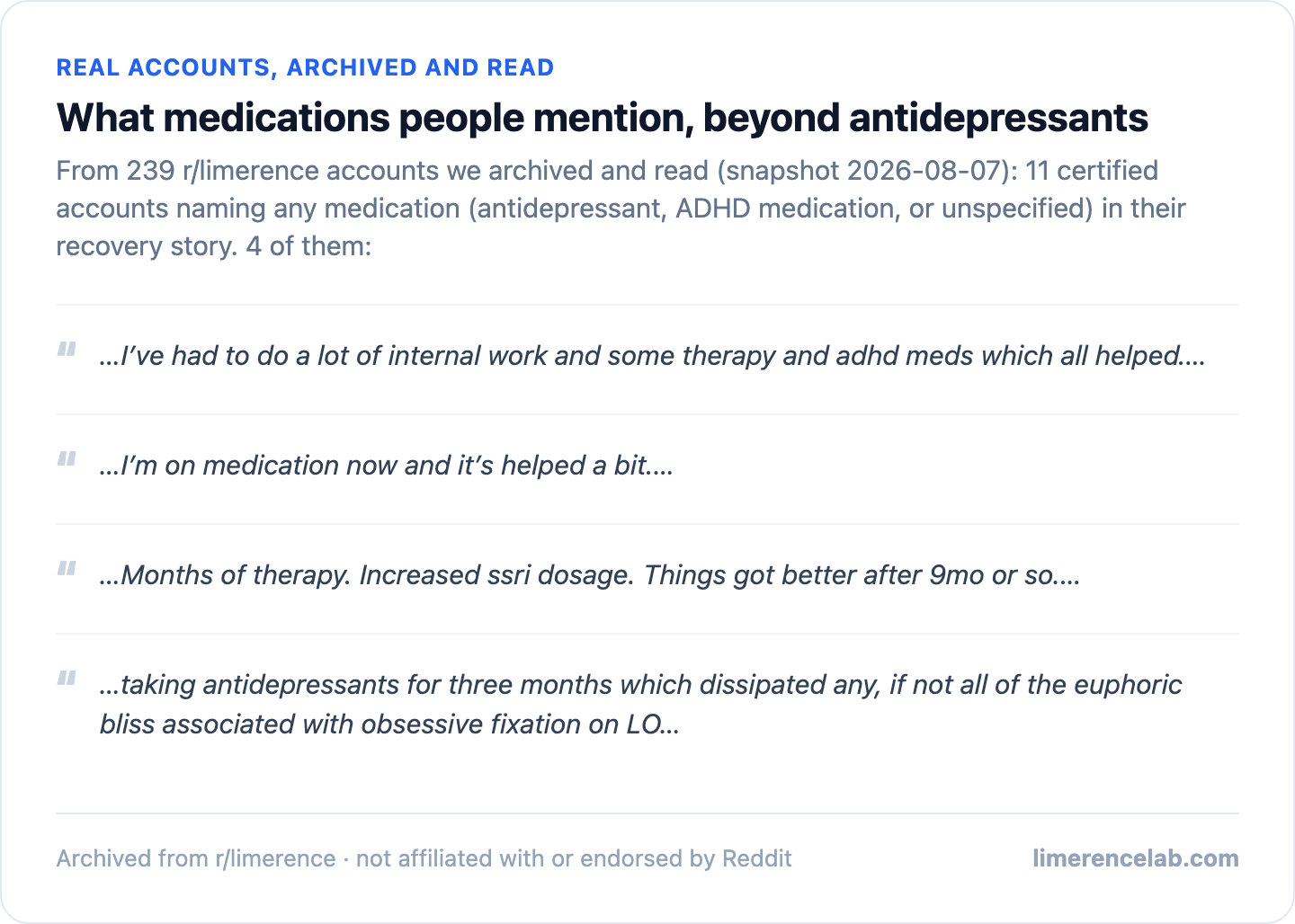
We checked many personal stories and study records to find answers about medicine.
- The search found no official drugs. Our review of clinical trial records shows no medicine gets approval for this experience. Doctors do not treat this experience as a medical condition.
- Many people share their paths online. We read 239 first person stories from those who describe moving past strong feelings. These accounts come from readers around the world.
- Most writers skip talk of pills. 228 of these accounts do not mention any medicine at all. They focus on daily habits and mind changes instead.
- A few note the use of drugs. 11 people write about taking some form of medicine during their journey. They share what they tried and how it felt.
- Nine names point to mood helpers. 9 accounts list specific antidepressant types like SSRIs or SNRIs. The writers share their personal results with these options.
- One story covers brain focus aids. 1 writer names an ADHD medicine as part of their routine. They explain how it fit into their life.
- Another keeps the choice broad. 1 account mentions medicine in very general terms. The author does not pick a single brand or type.
- No record proves a cure exists. Our search of ClinicalTrials.gov and Europe PMC shows no approved treatments. Science has not built a path for this yet.
- Your doctor knows your health best. Any question about starting or stopping a pill belongs with a licensed prescriber. They can check your full history and give safe advice.
- These stories are just personal views. The notes we share reflect individual choices and outcomes. They do not replace professional medical guidance.
- The data comes from real users. We only count accounts that pass our safety checks. Every story meets our strict review rules.
- Medicine choices vary by person. Some feel better with support tools. Others prefer quiet time and fresh air.
Limerence treatment medication: 9 of 239 certified accounts say what they actually took
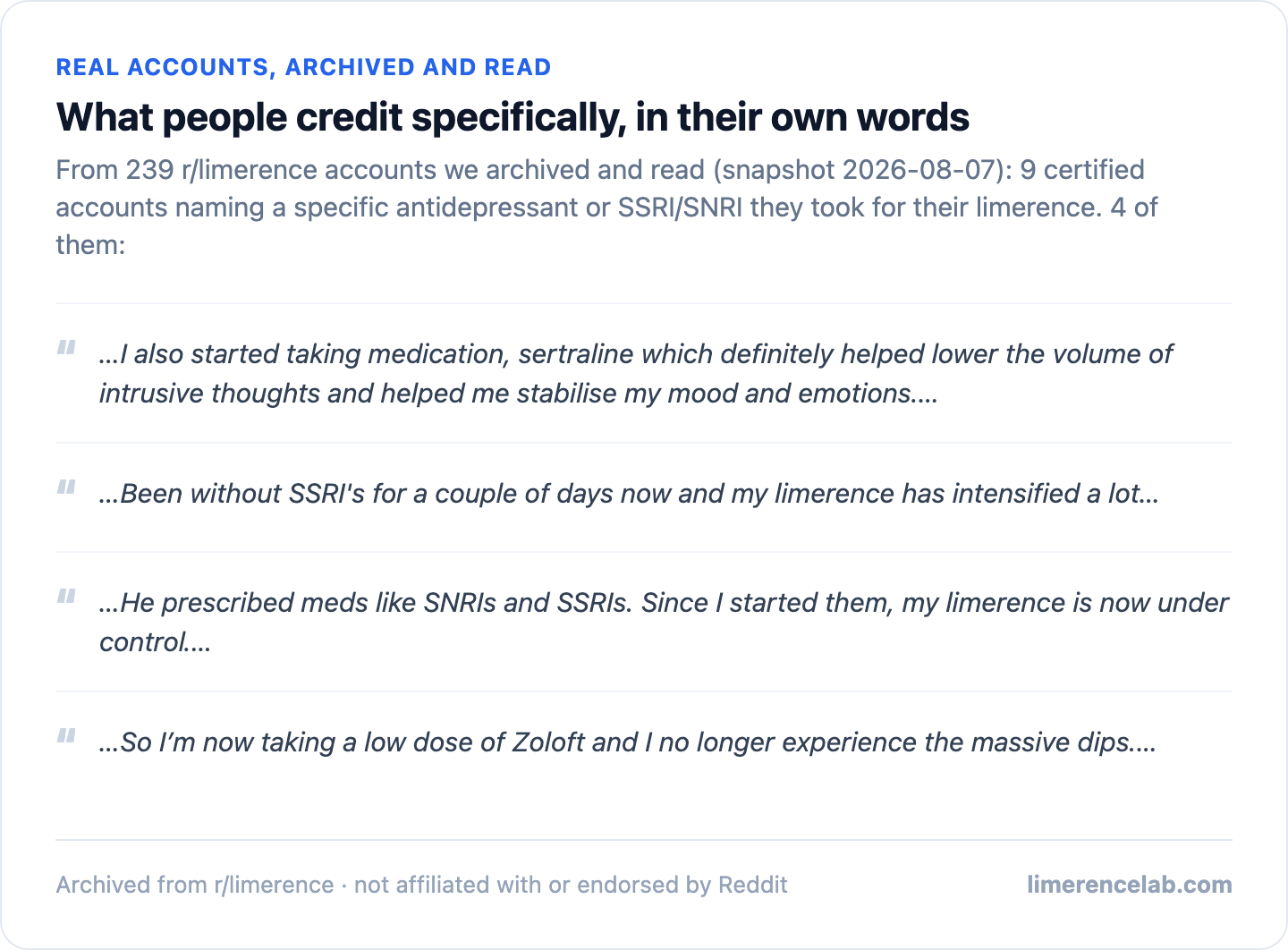
What the records show about medicine choices
- Nine people named their pills. Eight of them said the result was good.
- Zero people reported harm. The nine accounts cover the full range of answers.
- One person wrote this exact note. "Been without SSRI's for a couple of days now and my limerence has intensified a lot" came from one r/limerence account.
- Our search found no trial data. Our search of these sites showed zero registered studies on this topic.
- Accounts describe personal choices. The records do not state why anyone switched.
- Medicine works in many ways. A pill may help one person.
- Questions belong with a prescriber. You should speak with a clinician about any drug choice.
- This page shares stories only. The nine accounts are real reports.
- No cure is claimed here. Limerence is an experience.
- Positive results appear in eight cases. These people felt better after taking the medicine.
- One case shows a restart event. The person began an SSRI again.
- Search results show a clear gap. ClinicalTrials.gov holds no matching trials.
- Personal stories differ from clinical data. Accounts share daily struggles.
- Safety guidance stays firm. Never change a dose without advice.
- Limerence needs careful handling. People describe it as a strong emotional state.
- We report only what is known. The nine accounts stand alone.
- Your path is unique. Health history matters most.
- A prescriber knows your body best. They guide safe steps forward.
So I’m now taking a low dose of Zoloft and I no longer experience the massive dips.
r/limerence account
names Zoloft, describes a positive outcome
My personal take: what do I make of these accounts?
I read 239 recovery accounts from people online.
Our search of ClinicalTrials.gov found 0 trials about this.
Nine people named a specific medicine they took.
Eight of them said it helped them feel better.
These stories are just what people share and do not tell you what to do.
Always ask a doctor who knows your health history before changing any medicine.
What’s your Limerence Score?
A private, 2-minute check-in.
Many people describe the strong feelings they call limerence. You can take a free quiz to learn more about your own path.
What’s your Limerence Score?
A private, 2-minute check-in.
Questions this page answers
Is there any evidence that antidepressants help with limerence?
Our search shows no studies on this topic. Nine accounts share personal stories and you should ask a prescriber who knows your health history.
Can SSRIs help limerence?
Our search shows no papers about SSRIs. Some readers describe taking these drugs so please consult a prescriber who knows your health history.
Does lexapro help limerence?
Our review lists no clinical tests for Lexapro. One person in our set names this medicine and you should ask a prescriber who knows your health history.
Does prozac help limerence?
We see no research trials for Prozac in our search. Another reader shares their path with this drug and you should ask a prescriber who knows your health history.
Can medication help limerence at all?
Our search found no registered trials for any medicine. Nine accounts name a specific drug they used so please consult a prescriber who knows your health history.
Can ADHD medication help limerence?
We found zero studies on ADHD drugs for this experience. Our group focuses on standard mood medicines and you should ask a prescriber who knows your health history.
What medications help limerence?
Our search shows no approved treatments in public records. Nine people describe using certain antidepressants and you should ask a prescriber who knows your health history.
Is there a registered trial testing medication for limerence?
Our search of public records shows zero trials. Nine accounts share personal stories and you should ask a prescriber who knows your health history.
Should I ask my doctor about medication for limerence?
Our search shows no trials for this experience. We read 239 personal stories from around the world and only nine name a specific pill so you should ask a prescriber who knows your health history.
Further reading
- SSRIs for Limerence: What the Obsessive Thoughts Data Shows
A closer look at SSRIs and limerence, and where the evidence runs out.
- SSRIs for Limerence Anxiety: What 60 Real Stories Reveal
What people say about SSRIs when limerence feels like anxiety.
- ADHD Medication for Limerence: Honest Look at Intrusive Thoughts
Learn how ADHD medicine may help focus but does not directly stop limerence thoughts.
- I'm a Clinical Hypnotherapist. I Read Real Accounts From People Who Got Out of Limerence.
See what people credited most when they got out of limerence.
This page shares facts for learning. It is not a diagnosis or medical advice.
Hypnotherapy does not replace professional care. Any question about starting, stopping, or changing medication belongs with a prescriber who knows your health history.
Ready to break the loop?
Only 10 new clients a month. Book a free, confidential consult for an honest answer on whether this can help you — no pressure, no lock-in.
Only 2 spots left for August
Not ready to talk? Take the free Limerence Score →
About the Author

Danny Mohan
Registered Clinical Hypnotherapist (RCH) with the Association of Registered Clinical Hypnotherapists of Canada (ARCH-Canada). Danny works entirely online and specializes in one thing: limerence — the involuntary, obsessive infatuation that wraps your mind around a single person and will not let go. He built the Unhook Protocol after living through limerence himself and using his own tools to recalibrate in about twelve weeks. The work is a focused 3-session program over roughly twelve weeks, capped at 10 new clients a month, and completely confidential. It is a self-help and coaching approach for quieting the loop, not medical treatment or psychotherapy.
Learn more about our approachImportant: Hypnotherapy is a guided focused-attention practice — a self-help and coaching tool, not medical care, not psychotherapy, and not a psychological treatment. Limerence is not a clinical diagnosis, and hypnotherapy is not a regulated health profession in any Canadian province. ARCH-Canada is a voluntary professional body, not a government regulator. Nothing on this site is medical advice, diagnosis, or treatment. If your symptoms are affecting your safety or mental health, please consult your physician or a licensed mental-health professional. Hypnotherapy may complement that care but never replaces it.