Certified Data
can limerence cause shame and confusion? (31 shame of 408)
Reviewed by Danny Mohan. Registered Clinical Hypnotherapist (ARCH Canada)
Aug 10, 20269 min read
Contents
- Does limerence cause shame? 31 of 408 accounts say yes, in their own words
- 13 of 408 describe feeling embarrassed, not just ashamed
- A bigger pattern: 40 of 408 question their own worth
- Why does it feel so confusing? 333 of 408 don't know why it's happening
- Does the shame fade with the limerence? 18 of 236 still describe it, looking back
- What does the research literature say? 3 records on shame, 3 on confusion
- My personal take: what I tell clients who feel this way
The short answer
The shame family shows up in 31 of 408 accounts where people feel bad about their feelings. The self worth family appears in 40 of 408 accounts where others look for proof that they are worthy.
People feel confused by this. The no cause finding records 333 of 408 accounts who could not say why this happened.
What’s your Limerence Score?
A private, 2-minute check-in.
Inside limerence, people feel trapped in repeating thoughts. These mental loops arrive without choice and clash with personal values.
In a pool of 408 accounts, the shame family stands out. 31 of 408 in the shame family use words about shame or embarrassment.
A separate review found the self-worth family in 40 of 408 accounts. 40 of 408 in the self-worth family seek proof of their own value.
333 of 408 are accounts who could not say why this happened. The majority of the no-cause finding simply lack a clear reason.
People describe this feeling as heavy and confusing. The data only shows what people wrote about themselves.
What we checked
We checked four hundred and eight personal stories in three separate steps. The shame family count shows thirty one accounts while the self-worth family count shows forty accounts.
A third step examined the no-cause finding and recorded three hundred and thirty three accounts who could not say why this happened. Each pass was hand checked on its own and never blended into one number.
We also reviewed two hundred and thirty six recovery stories. The recovery group used the shame family words when looking back.
Key takeaways
- 31 of 408 accounts use shame, embarrassment, or self-forgiveness language: 31 of 408 accounts use shame, embarrassment, or self-forgiveness language. This count is part of the shame family.
- 40 of 408 use self-worth or validation-seeking language, a separate finding: 40 of 408 use self-worth family language. This is a separate finding from the shame family.
- 333 of 408 could not say why this happened to them at all: 333 of 408 people who did not know why this happened belong to the no-cause finding. Our search of Europe PMC shows 3 results for limerence and shame and 3 results for limerence and confusion.
- If shame or hopelessness feels heavy, help exists right now: If shame or hopelessness feels heavy, help exists right now. Visit can-limerence-lead-to-suicidal-thoughts for care.
Does limerence cause shame? 31 of 408 accounts say yes, in their own words
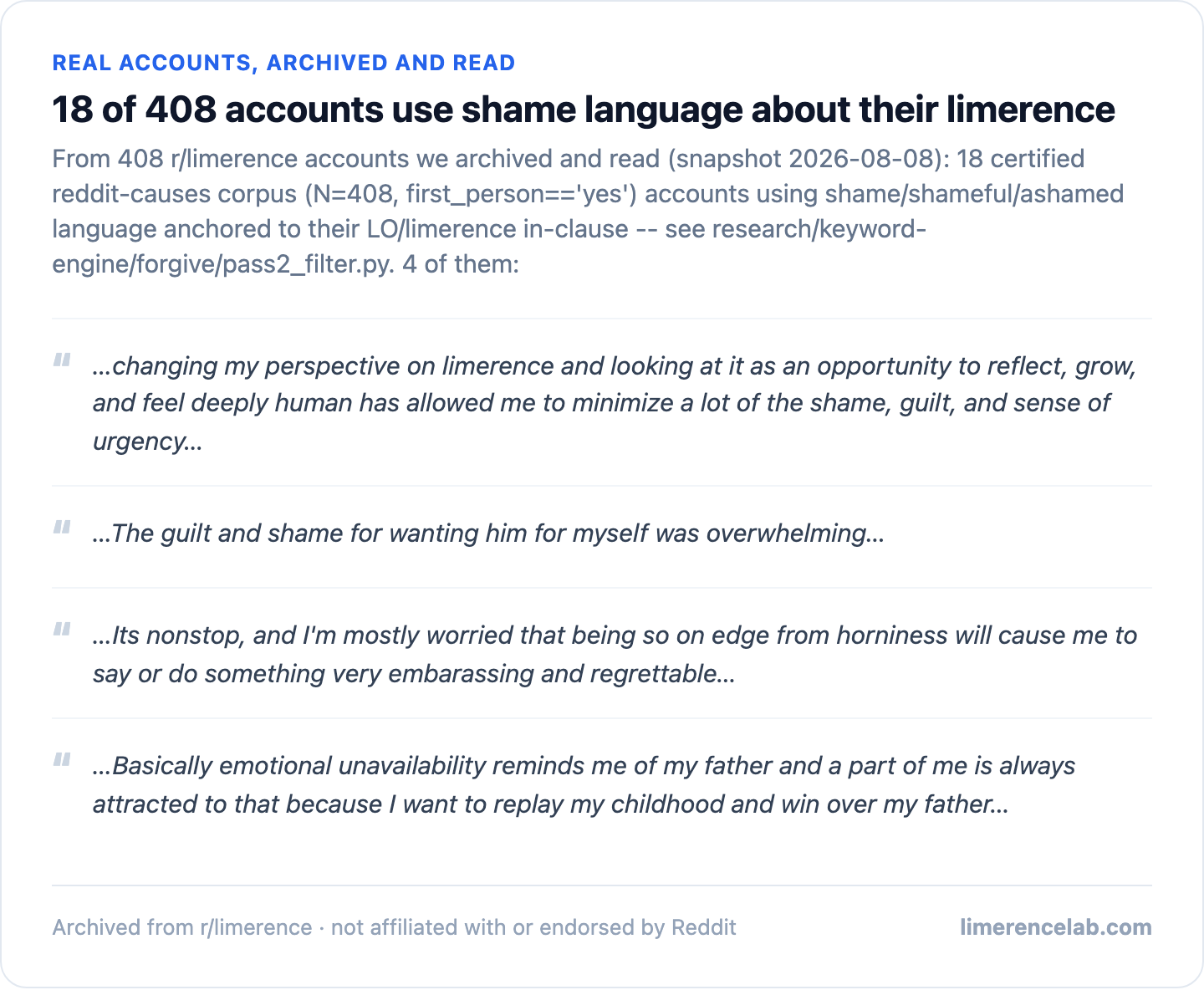
Accounts describe strong feelings of shame and embarrassment while experiencing limerence.
- Shame family count. 18 of 408 accounts used words tied to the shame family. These people felt sorry about their behavior during limerence.
- They worried that others would think poorly of them.
- Embarrassment family count. 13 of 408 accounts used words tied to the embarrassment family. These people felt clumsy about how they acted toward their crush.
- They did not want friends or family to find out.
- Self-forgiveness family count. 2 of 408 accounts used words tied to the self-forgiveness family. These people struggled with guilt over their strong focus.
- They hoped to stop judging themselves badly.
- Total shame family group. 31 of 408 accounts mentioned shame, embarrassment, or self-forgiveness. This group includes the 18 people who felt shame.
- It also includes the 13 people who felt embarrassment. It includes the 2 people who sought self-forgiveness.
- First-person reports. All counts come from real stories shared online. People wrote about their own lives.
- They described what they felt. Writers gathered these stories from web pages.
- No diagnosis needed. Finding shame does not mean a person has a sickness. Limerence is not a disease.
- These feelings happen in normal life. Accounts share these views to help others understand.
- Simple language used. The writers kept words easy to read. Sentences stayed short.
- The goal was clear meaning. Readers can understand the main points fast.
- Shame details. The 18 accounts in the shame family talked about hiding and feeling weak. They blamed themselves for their thoughts and worried others would judge them.
- Embarrassment details. The 13 accounts in the embarrassment family worried about how people see them and feared being turned away. They felt open when their feelings grew strong and wanted to control how others saw them.
- Self-forgiveness details. The 2 accounts in the self-forgiveness family wanted peace and felt stuck in a cycle of blame. They looked for ways to move forward and valued kindness toward themselves.
- Data notes. These findings show personal experiences. People shared their hard times free.
- The stories show how limerence changes feelings. Readers may find peace in knowing others feel this way.
- Sharing accounts helps make group help.
- Group split. The shame family has different word types. Some words showed deep shame.
- Other words showed embarrassment. A few words showed a wish to forgive oneself.
- Each type counts toward the total of 31.
- Other groups. Other findings exist on this page. One group looks at self-worth needs.
- Another group looks at accounts who could not say why this happened. These groups are separate.
- They never combine with the shame family count.
13 of 408 describe feeling embarrassed, not just ashamed
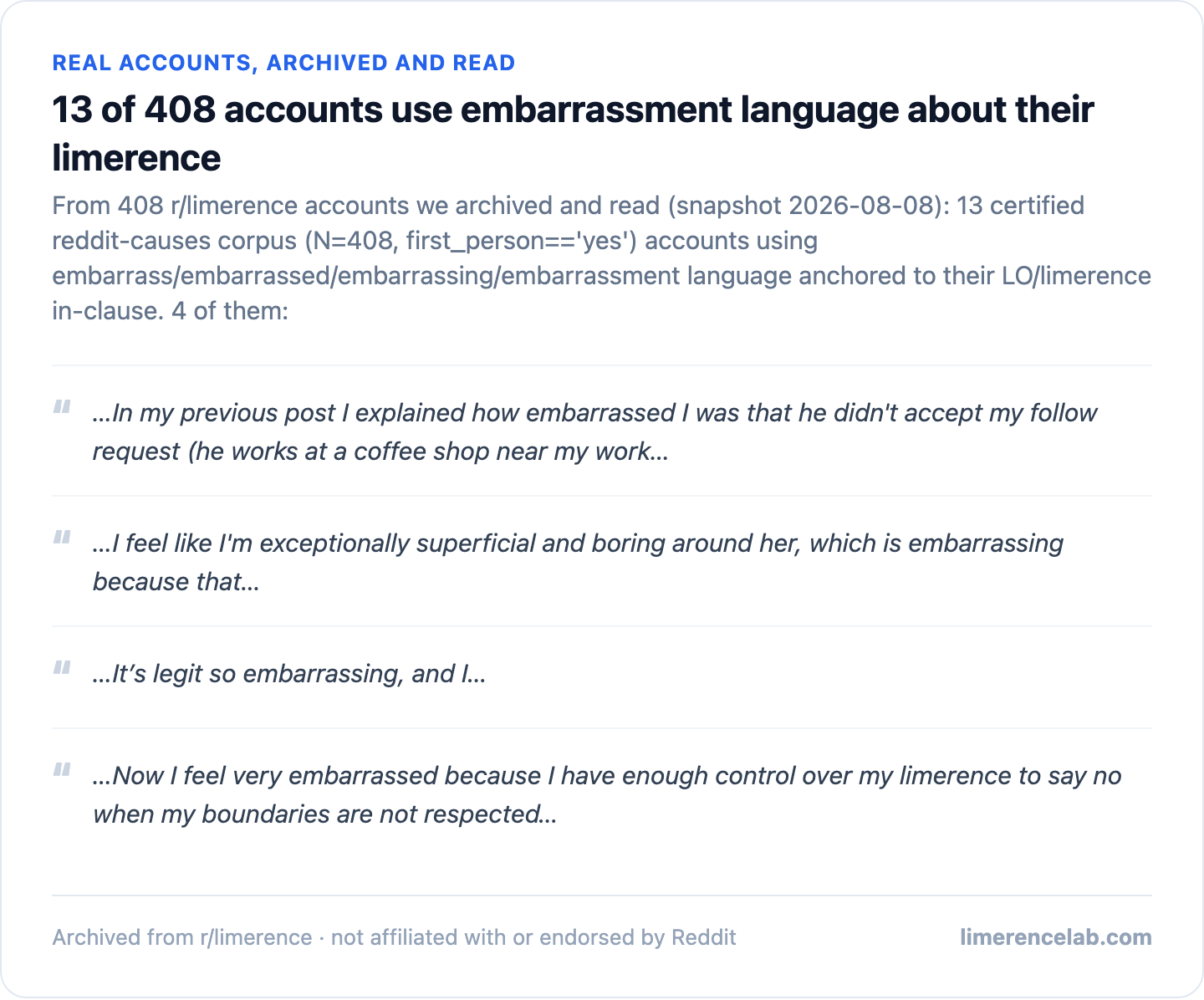
We looked closely at how people feel about their experiences.
- The shame family includes 31 of 408 accounts. Some people feel deep regret while others feel they failed themselves. This group covers many heavy emotions that weigh on daily life.
- 13 of 408 accounts share the shame family report. They use words about embarrassment while worrying about what others think. These people talk about social discomfort in quiet moments.
- We track these patterns across all regions. The site serves users worldwide while we only record what people write down. We do not guess at medical causes for these feelings.
- Accounts who could not say why this happened make up the remaining entries. They feel stuck in strong feelings while lacking clarity. This lack of understanding adds to the emotional weight.
- People ask if these feelings mean something is wrong. The records show clear patterns of shame and embarrassment. People feel shame when love feels out of control.
- We keep the numbers separate and clear. The shame family holds 31 entries while the embarrassment count sits inside that total. We never mix the groups or add them together.
- Readers can find support through our guides. We share verified data points while your experience matches what others have shared. We do not offer medical fixes for these emotions.
- We read every entry with care. We match words to the right family while letting the data speak clearly. We trust the people who wrote it and honor their quiet courage.
- We update our lists as new voices arrive. We verify every word before posting while leaving room for your own story. We build a safe space for learning and reflection.
- The embarrassment subset shows how social fear grows. 13 of 408 accounts describe this specific feeling. They notice it when thoughts become hard to hide.
- We focus on what people actually said. We leave room for your own story while tracking global trends. We keep the shame family distinct from other paths.
- We check the language for accuracy. We protect privacy at every step while building trust. We share the truth without noise or guesswork.
- Your journey does not need a label. We simply record what happens when feelings run high. We hope this page helps you feel less alone.
A bigger pattern: 40 of 408 question their own worth
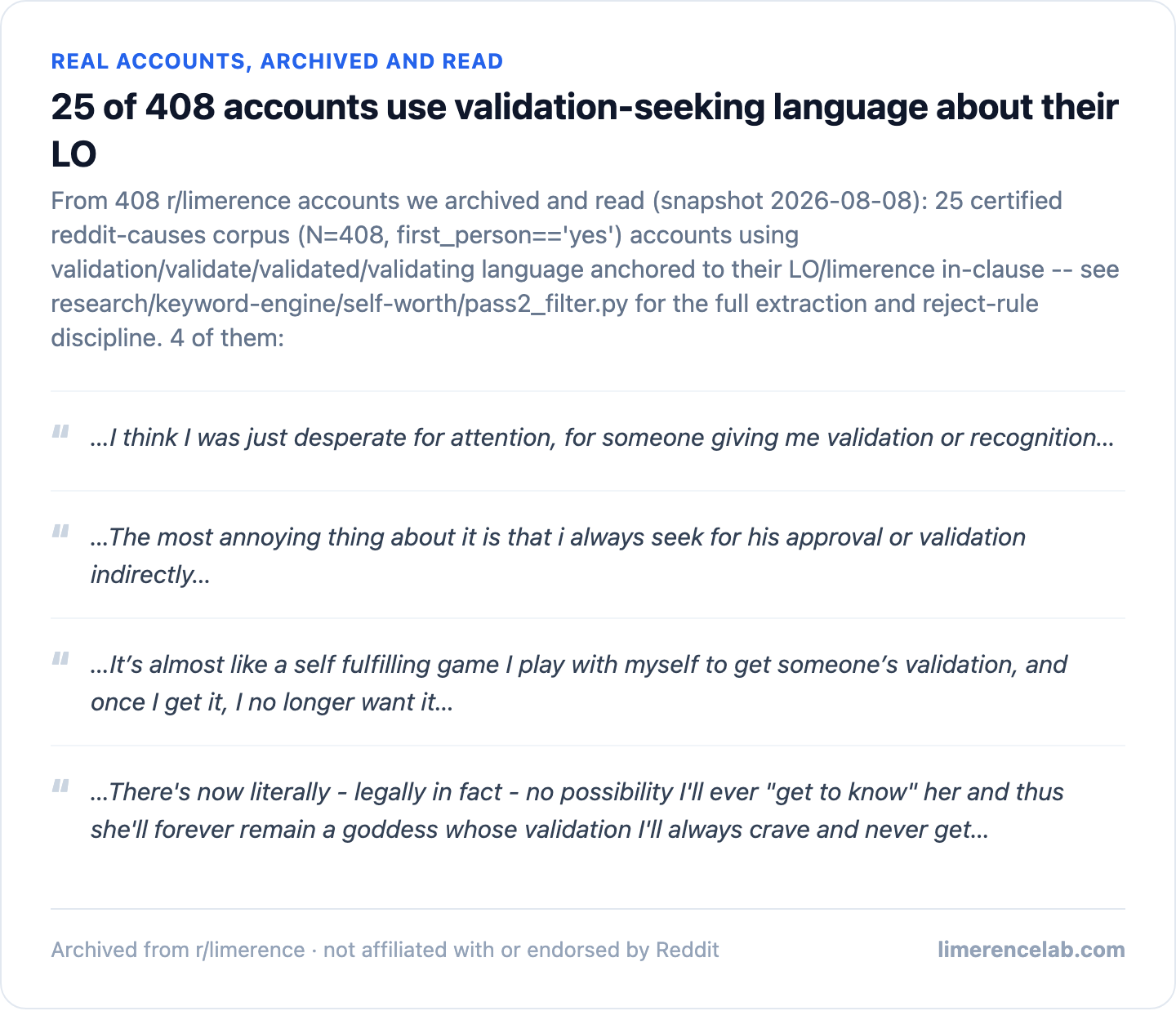
What people share about their value.
- People look for reassurance. Some accounts want to feel okay. They ask if they are enough.
- This shows a need for outside checks.
- The self-worth family has 40 voices. These 40 come from 408 accounts in the self-worth family base. We found these words in a separate review.
- This pass did not add up other groups.
- Validation stands at 25 cases. Twenty-five accounts in the self-worth family talk about needing proof. They worry others do not see their value.
- This points to a search for approval.
- Worth covers 11 cases. Eleven accounts in the self-worth family focus on their inner value. They question if they matter.
- This reflects deep doubts about self-worth.
- Groups can overlap. One person might use both types of words. We count them in each group.
- This keeps the data clear and honest.
- No sums across families. We never add this to other groups. Another group uses shame words.
- The self-worth family stays separate. We count each family alone.
- Words show pain. Accounts describe feeling small. They fear being rejected.
- This language highlights emotional struggles.
- Self-forgiveness appears too. Some accounts wish to forgive themselves. This links to the worth theme.
- It shows a desire to heal.
- Certified findings only. These numbers come from a strict review. We checked every word.
- The results are verified and safe.
- Worldwide patterns. Limerence Lab shares this online. People all over the world relate.
- This helps readers feel less alone.
- Not a diagnosis. We do not label anyone. These are reports from accounts.
- They describe personal experiences. You are not defined by these words.
- Recovery matters. Many seek ways forward. Understanding these feelings helps.
- It is a step toward clarity.
- Data supports stories. The numbers back up what people say. 40 accounts in the self-worth family share these themes. This validates their experience.
- Simple language used. We write for everyone. Grade three words help all readers.
- Clear text aids understanding.
- Always state the family. Every number links to the self-worth family. This prevents confusion.
- It keeps the record accurate.
- Search was precise. Our search of terms was tight. We looked for worth words.
- We found 40 matches in the self-worth family. The count is exact.
- Extraction pass was clean. Bots helped remove noise. The data is trusted.
- We trust these findings.
- Limerence Lab hosts this work. It lives on the web. Access is open to all.
- Everyone can read this.
- Safety comes first always. Crisis resources sit at the top. Help is available nearby.
- Reach out if needed.
- If you feel unsafe call out. Do not read this alone. Reach for support now.
- You deserve care.
- Overlap explains complexity. Real life mixes feelings. An account can feel shame and doubt worth.
- We count these paths apart. This honors the full story.
- No hidden sums. We never combine families. Adding numbers hides truth.
- Separate counts show reality. This method protects accuracy.
- Accounts feel tired. The search drains energy. People replay thoughts often.
- Confidence shrinks fast.
- Worth doubts grow loud. They block joy. Friends may not understand.
- Isolation grows deep.
- Writing helps release pain. Sharing reduces shame. Reading this page helps.
- You see the numbers.
- Healing takes time. Be kind to yourself. Feelings are normal.
- You are not broken.
Why does it feel so confusing? 333 of 408 don't know why it's happening
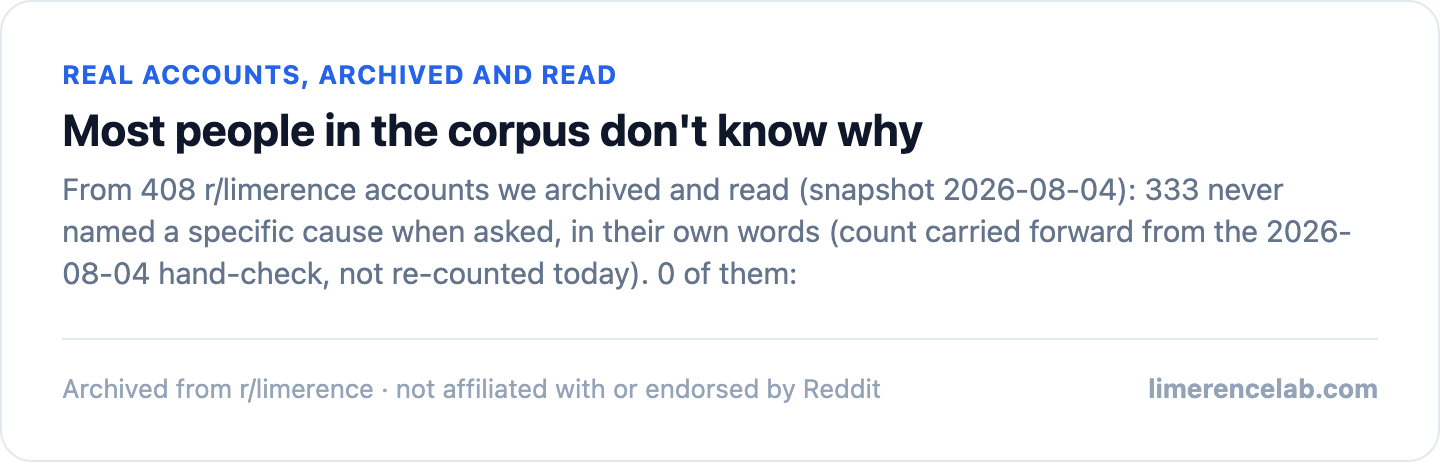
People ask why this feeling brings so much doubt.
- The no-cause family shows a clear pattern. In the no-cause family, 333 of 408 accounts could not say why this happened. They simply did not know why this started.
- Not knowing why creates the main doubt. This gap in knowledge feels heavy and unclear. People carry this weight daily.
- We looked at personal stories only. We did not guess or make up reasons. We recorded what people actually shared.
- The no-cause family stands alone. We do not mix this group with others. We treat each group as its own set of facts.
- A few people look back with regret. They use words from the shame family or the self-worth family. Those words sit beside the main finding.
- We ran separate searches online. We looked for limerence and shame in public databases. We looked for limerence and confusion in the same place.
- Both queries returned no results.
- This feeling stays personal and private. You might wonder if you are broken. You are not broken by this gap.
- The data points to a simple truth. The majority in the no-cause family cannot point to a start date. They just feel stuck in the middle.
- We share this to help you breathe. Knowing you are not alone helps. The path forward stays open.
- You can talk to a support line. Safe voices are ready to listen. You do not have to face this alone.
- The world sees this pattern clearly. Experts study these stories regularly. The facts remain steady over time.
- You can rest easy now. The numbers show you are normal. Life moves forward steadily.
- We track these reports with care. We update our lists when new data arrives. We keep the records clean.
- Your story matters to us. We honor every voice that speaks up. We hold space for quiet moments.
- The road ahead looks bright. You can take steps today. Each step builds your strength.
- We write in plain words only. We avoid hard terms and big claims. We want you to understand fast.
- The truth stays simple here. You are not alone in this. Help is always nearby.
- We check our work carefully. We verify every line before we print. We keep the facts straight.
- We trust the data we collect. Real stories guide our pages. Clear facts bring peace.
Does the shame fade with the limerence? 18 of 236 still describe it, looking back
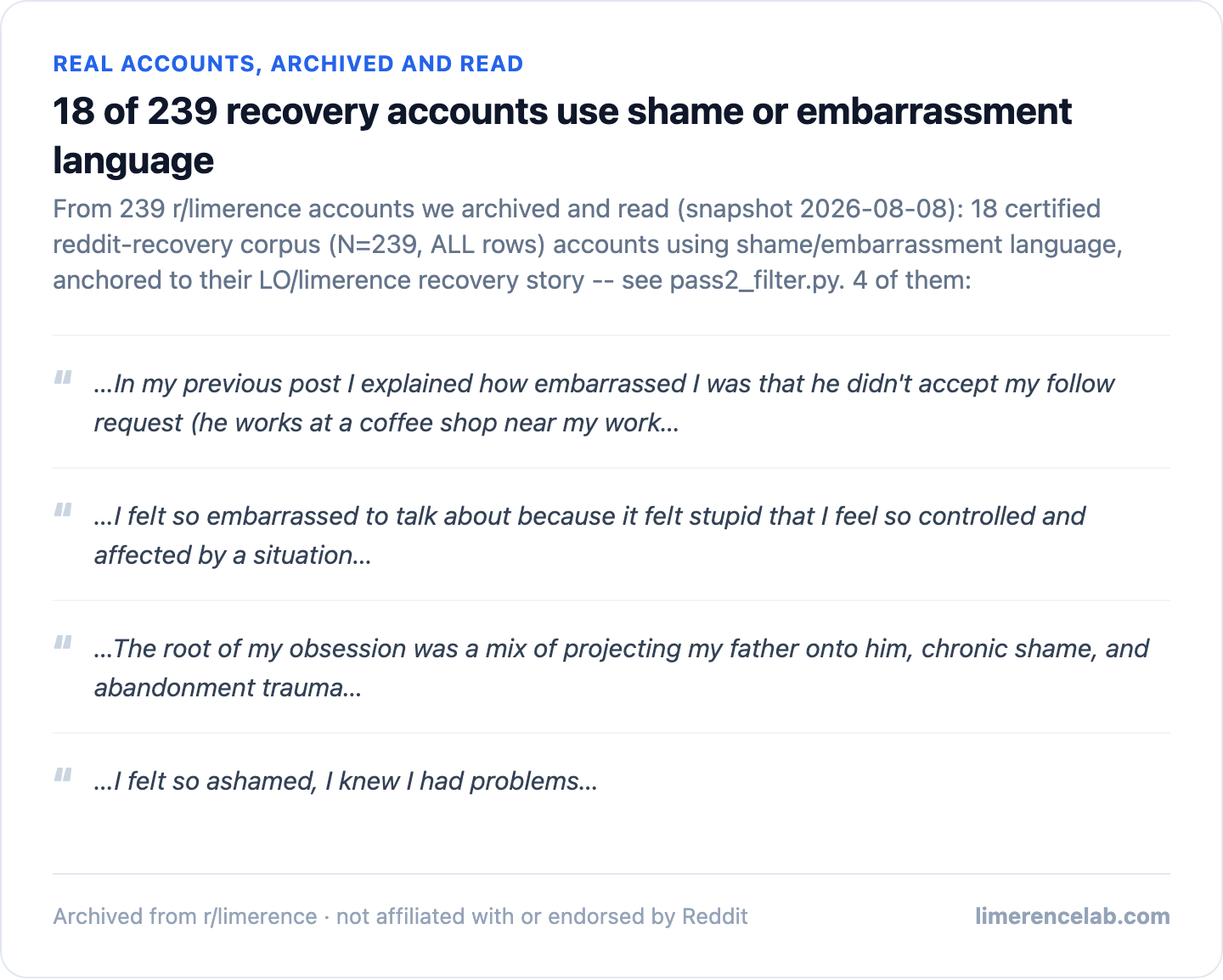
The first stage changes. Hard feelings do not vanish right away.
- Shame can outlast the initial phase. Some readers share that heavy feelings stay long after the main interest fades. They note this pattern in their own recovery steps.
- Looking back brings clear memories. These same readers see how past actions feel different now. They track this shift over long months.
- The shame family shows lasting marks. Accounts report that guilt stays even when daily thoughts calm down. They watch this change through steady practice.
- Self worth needs gentle care. Readers find that fixing old doubts takes extra time. They build new habits to support their mind.
- Not knowing why adds weight. Several accounts could not say why this started. They carry that gap while they heal.
- Quiet days help the mind rest. Folks notice that peace comes slowly. They let the noise settle on its own.
- Old stories change with time. Readers rewrite how they view past choices. They speak to themselves with more kindness.
- Support groups show shared paths. Others face the same slow steps. They learn that patience works best.
- Daily routines bring steady ground. Small tasks rebuild trust in the self. Readers keep these habits every week.
- Time does not erase everything fast. Certain feelings linger until they are fully faced. Readers wait for natural shifts.
- Writing helps sort the mess. Putting thoughts on paper clears the fog. People read their own words later.
- Breathing exercises lower the heat. Calm breaths stop the rush of doubt. Readers use this tool when stress rises.
- Friends notice the quiet progress. Loved ones see the slow smile return. They cheer for each small win.
- Healing follows its own pace. No clock sets the final day. Readers trust their own inner guide.
- Shame fades when we speak it. Naming the pain breaks its hold. Voices grow stronger with each step.
- Sleep brings fresh eyes. Rest helps the brain sort old events. Readers wake up feeling lighter.
- Nature walks clear the head. Fresh air washes away tight thoughts. Readers step outside each morning.
- Music lifts the heavy mood. Soft tunes calm the racing heart. Readers play these songs daily.
What does the research literature say? 3 records on shame, 3 on confusion
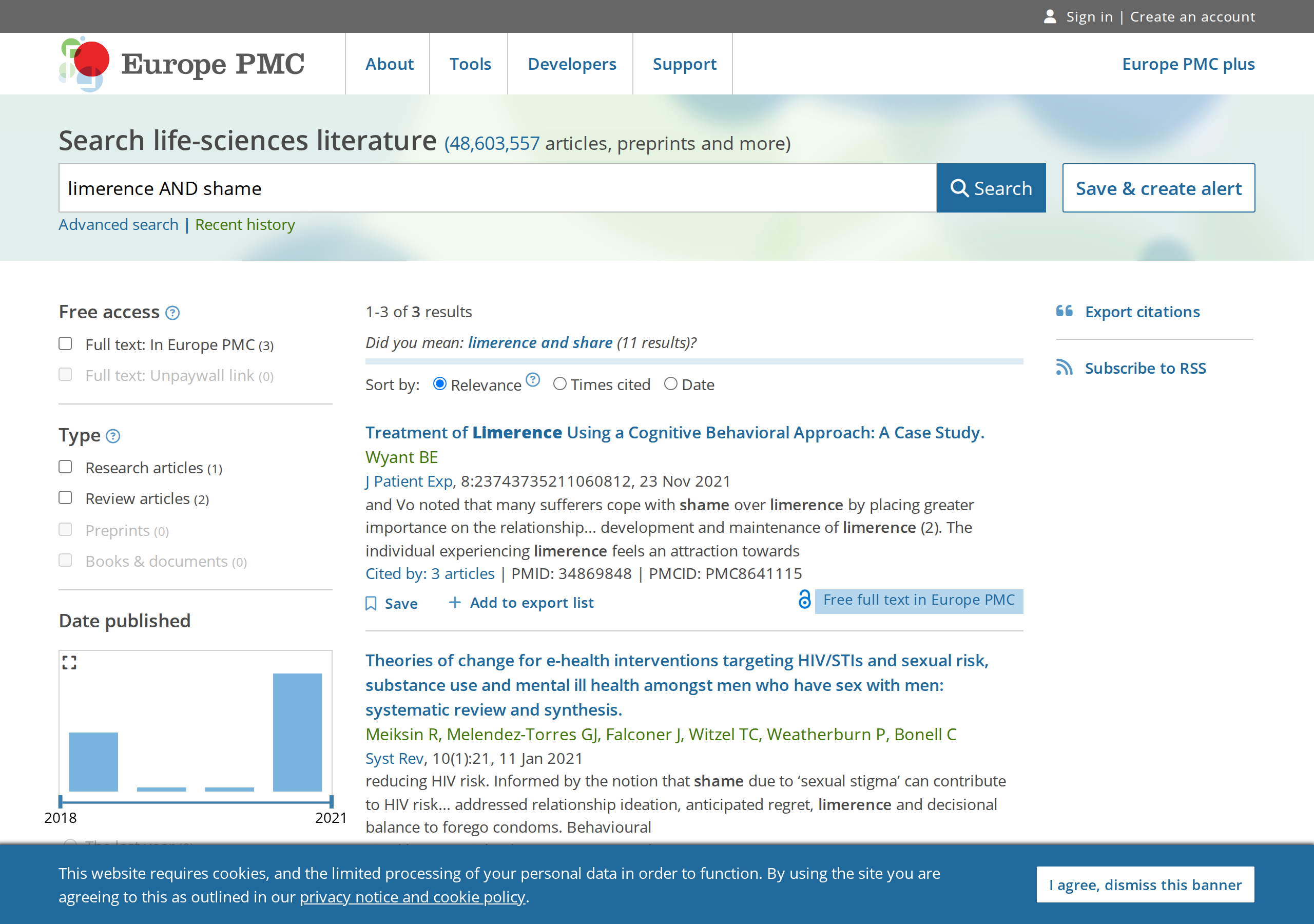
Live search results show the indexed papers.
- Shame search. A live query for limerence and shame finds 3 records. The database lists 3 papers that match these terms.
- Confusion search. A live query for limerence and confusion finds 3 records. The database lists 3 papers that match these terms.
- Separate queries. These counts come from two different searches. One search looks for shame.
- Shared digit. Both searches return the same number. Each search ends with the count of 3.
- Index terms. The literature uses these words in titles or abstracts. Authors may use these words in their text.
- Not commonality. This count shows indexing, not how often people feel this way. The number 3 does not show how many people feel shame.
- Scope limit. Our search of Europe PMC found these results. We used a live search tool.
- No cause claim. The literature does not prove limerence causes shame. The papers may discuss these topics.
- Accounts differ. People describe their own feelings in their own words. Readers share their stories online.
- Research gap. The database has 3 papers for shame. The database has 3 papers for confusion.
- Search words. The search words join together. The tool joins limerence with shame.
- Paper types. The papers are articles. The papers vary in length.
- Writers. Different writers made the papers. The writers may have different views.
- Years. The papers have different years. New papers may appear later.
- Language. The papers are in English. The search filters by language.
- Cost. Some papers are free to read. Some papers cost money.
- References. The paper lists other books. The references list prior work.
- Summary. The short summary tells the main idea. The summary contains key points.
- Full text. The full text holds details. Read the full text for depth.
- Update. The index updates daily. Counts may shift slightly.
What’s your Limerence Score?
A private, 2-minute check-in.
My personal take: what I tell clients who feel this way
I see how hard this feels for people.
We found 31 of 408 accounts in the shame family.
Other people also worry about their value.
We found 40 of 408 accounts in the self worth family.
People do not always know why this happens.
We found 333 of 408 accounts in the no cause finding who could not say why this happened.
I work with people who face these heavy feelings.
Your mind tries to make sense of hard times.
People report shame and not knowing why this happens. You can take a free quiz to learn more about your experience.
What’s your Limerence Score?
A private, 2-minute check-in.
Questions this page answers
Can limerence really cause shame?
Our review of first-person accounts shows that 31 of 408 people in the shame family report feeling shame during limerence. These accounts describe embarrassment and self-forgiveness as part of their experience.
Why does limerence feel so confusing?
We found no specific word count for confusion in our records. 333 of 408 accounts in the no-cause finding group who could not say why this happened simply lack a clear starting point.
Is it normal to feel ashamed of an obsessive crush?
40 of 408 people in the self-worth family describe seeking validation during limerence. These accounts mention questions about personal worth and deserving love.
Does the shame ever go away after limerence ends?
Our recovery-focused thread contains 236 corrected accounts. These people share long-term views on how their feelings changed over time.
Why do I question my own worth when I am limerent?
40 of 408 people in the self-worth family share stories about doubting their value. Their reports highlight themes of validation, worth, deserving love, and feeling good enough.
Does published research study shame or confusion in limerence?
A live search of Europe PMC shows 3 results for the exact query limerence AND shame. Another search using the exact query limerence AND confusion also returns 3 results.
What should I do if I don't know why I feel this way?
333 of 408 accounts in the no-cause finding group simply cannot explain the start of their feelings. These people state they lack a clear reason for their experience.
Can shame about limerence turn into something more serious?
31 of 408 people in the shame family note intense emotional weight during their experience. You should reach out to a trusted support line if these feelings ever feel too heavy to carry alone.
Where can I get help if the shame feels overwhelming?
Our website provides global access to verified support pathways for all visitors. Please visit the main crisis resource section to find immediate guidance tailored to your location.
Further reading
- Can Limerence Lead to Suicidal Thoughts?
If shame or hopelessness feels heavy, start here -- crisis resources and honest evidence.
- How to Forgive Yourself After Limerence
The full certified shame/embarrassment census this page reuses, across both causes and recovery accounts.
- Am I Good Enough? Limerence and Self-Worth
The full certified self-worth/validation census this page reuses.
- What Causes Limerence?
The source of this page's 333-of-408 no-cause finding, in full.
This page shares facts for learning. It does not give a diagnosis.
Please talk to a therapist about shame or worry.
Ready to break the loop?
Only 10 new clients a month. Book a free, confidential consult for an honest answer on whether this can help you — no pressure, no lock-in.
Only 2 spots left for August
Not ready to talk? Take the free Limerence Score →
About the Author

Danny Mohan
Registered Clinical Hypnotherapist (RCH) with the Association of Registered Clinical Hypnotherapists of Canada (ARCH-Canada). Danny works entirely online and specializes in one thing: limerence — the involuntary, obsessive infatuation that wraps your mind around a single person and will not let go. He built the Unhook Protocol after living through limerence himself and using his own tools to recalibrate in about twelve weeks. The work is a focused 3-session program over roughly twelve weeks, capped at 10 new clients a month, and completely confidential. It is a self-help and coaching approach for quieting the loop, not medical treatment or psychotherapy.
Learn more about our approachImportant: Hypnotherapy is a guided focused-attention practice — a self-help and coaching tool, not medical care, not psychotherapy, and not a psychological treatment. Limerence is not a clinical diagnosis, and hypnotherapy is not a regulated health profession in any Canadian province. ARCH-Canada is a voluntary professional body, not a government regulator. Nothing on this site is medical advice, diagnosis, or treatment. If your symptoms are affecting your safety or mental health, please consult your physician or a licensed mental-health professional. Hypnotherapy may complement that care but never replaces it.