CENSUS OF 408 ACCOUNTS
Am I good enough for my LO? We read 408 real accounts. 40 use validation-seeking or self-worth language about their LO.
Reviewed by Danny Mohan. Registered Clinical Hypnotherapist (ARCH Canada)
Aug 8, 20269 min read
Contents
- Why do I seek validation from my LO? 25 of 408 accounts say they do
- How do I stop trying to prove my worth to my LO? 11 of 408 accounts name it directly
- Do I deserve the same attention I give my LO? 7 of 408 accounts use deserve language
- Why do I feel like I'm never good enough for my LO? 4 of 408 accounts say it explicitly
- My personal take: what do I make of these accounts?
I just don't feel good enough because I've been told I wasnt good enough my whole life
r/limerence, first-person account
describes lifelong rejection and never feeling good enough
One person on r/limerence described a hard past.
They faced bullying and rejection from family and teachers.
They grew up autistic and never felt good enough.
They shared this truth with others.
In their message they said, "I just don't feel good enough because I've been told I wasnt good enough my whole life".
This account shows one path.
It does not claim every reader feels this way.
We read 408 personal posts to find these words.
Many writers used similar terms about worth.
The short answer
We read 408 personal accounts from people who describe their feelings.
40 of these writers use words about needing praise or asking if they are worthy.
25 accounts seek approval while 11 accounts talk about personal value.
7 accounts mention deserving love and 4 accounts use the phrase good enough.
What’s your Limerence Score?
A private, 2-minute check-in.
Key takeaways
- 40 of 408 accounts use self-worth or validation language: 40 of 408 accounts show people asking if they are good enough. This count is just the bottom limit since many feel this doubt without using these words.
- 25 of 408 accounts describe validation-seeking: 25 of 408 accounts mention wanting approval from the person they like. This is the biggest group of the four types.
- 11 accounts name their own worth directly, 7 use deserve language: 11 accounts name their own worth directly and 7 accounts use deserve language. These smaller counts are real patterns even though not every account frames the feeling the same way.
- Naming the feeling is not a diagnosis: Naming the feeling is not a diagnosis. A personal account is not a medical check, and forty accounts are just a start, not proof for everyone.
Why do I seek validation from my LO? 25 of 408 accounts say they do
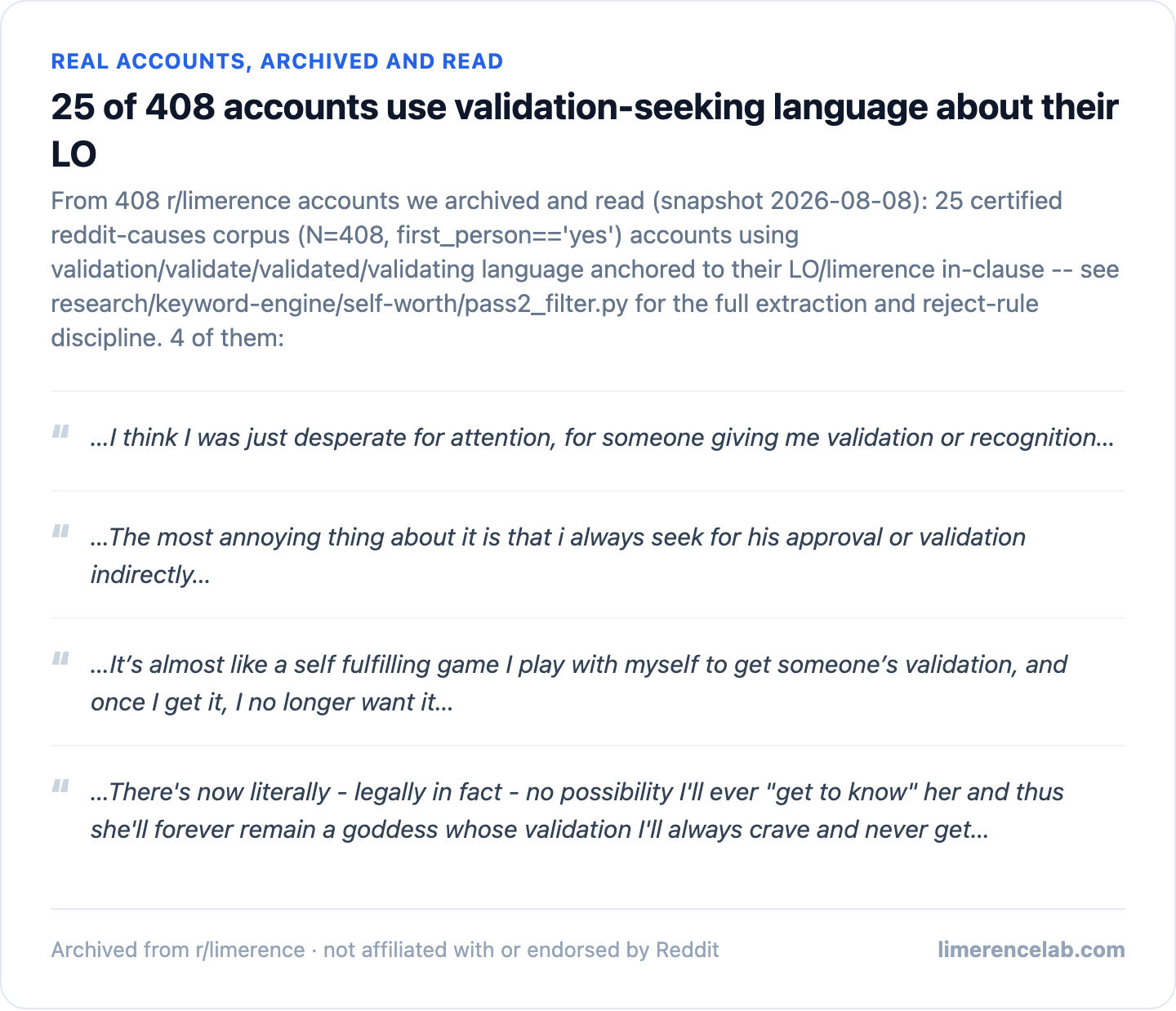
Many writers share a clear pattern in their notes. They look for signs that they matter to the person they admire.
- Seeking approval Writers often ask if they are doing things right. They want the other person to say they are okay.
- Looking for reassurance Some notes show people checking for kind words. They hope for a reply that feels safe and warm.
- Wanting recognition A few accounts mention wanting to be seen. They wish the other person would notice their efforts or thoughts.
- Checking worthiness Several writers describe feeling unsure on their own. They turn to the other person to feel steady inside.
- Hoping for praise Some notes contain requests for gentle feedback. They want to hear that their actions are good enough.
- Testing connection A small group looks for signs of closeness. They read messages carefully for any hint of care.
- Needing clarity Many writers feel confused by mixed signals. They ask for direct answers to calm their nerves.
- Building confidence Some accounts show people using outside words to feel strong. They borrow strength until they feel ready.
- Finding safety A few notes mention seeking comfort in simple replies. They hope for consistency to ease their worry.
- Measuring value Several writers compare their daily mood to one response. They let a single text set their whole day.
- Quietly hoping Some accounts hide their need behind casual chats. They wait for a sign that they are valued.
- Feeling uncertain Many notes reveal a lack of inner certainty. They look outward to fill the quiet doubt.
- Craving focus A few writers want full attention from the other person. They feel better when they are the main thought.
- Seeking peace Some accounts describe using kind words to stop racing thoughts. They want calm more than anything else.
- Watching for shifts Several notes track changes in tone or speed. They look for proof that they are important.
- Asking directly A small number write clear questions about their place. They want an honest answer without guessing.
- Holding onto hope Some accounts keep saving old messages. They reread them to feel accepted again.
- Noticing absence Many writers feel a drop when replies slow down. They wonder if they did something wrong.
- Trying harder Some notes show extra effort to please the other person. They believe kindness will bring closer ties.
- Waiting for cues Several accounts describe pausing before sending texts. They check their words for any risk of rejection.
- Feeling light A few writers report a lift after a positive reply. They carry that feeling into the next hour.
- Doubting alone Many notes admit to hard thoughts without support. They reach out to avoid sitting with the weight.
- Looking for mirrors Some accounts want the other person to reflect back a better view. They trust that view more than their own.
- Testing limits A few writers share small secrets to see if they are kept safe. They measure trust by what is held gently.
- Seeking steadiness Several notes mention wanting predictable responses. They find comfort in routine checks.
- Feeling small Some accounts describe shrinking when criticism appears. They look for quick fixes to restore pride.
- Chasing warmth Many writers hunt for friendly tones in long posts. They collect phrases that feel like hugs.
- Questioning fit A few notes ask if they belong in the other person life. They search for clues that match their hopes.
- Finding anchors Some accounts use specific words as grounding tools. They repeat them to stay focused during stress.
- Reaching out Several writers send open questions about their role. They want to know where they stand today.
- Hoping for change Many notes express a wish for deeper talks. They believe sharing more will bring closer bonds.
- Tracking moods Some accounts log their feelings against message times. They look for patterns that explain their swings.
- Seeking truth A few writers ask for straight answers about interest. They prefer clear words over hidden hints.
- Letting go slowly Several notes show gradual steps away from constant checks. They practice trusting themselves first.
- Building inner voice Some accounts start writing affirmations for daily use. They replace outside words with steady self talk.
- Finding balance Many writers mix outside checks with quiet reflection. They learn to pause before seeking answers.
- Moving forward A few notes end with plans to focus on daily goals. They choose steady steps over endless waiting.
How do I stop trying to prove my worth to my LO? 11 of 408 accounts name it directly
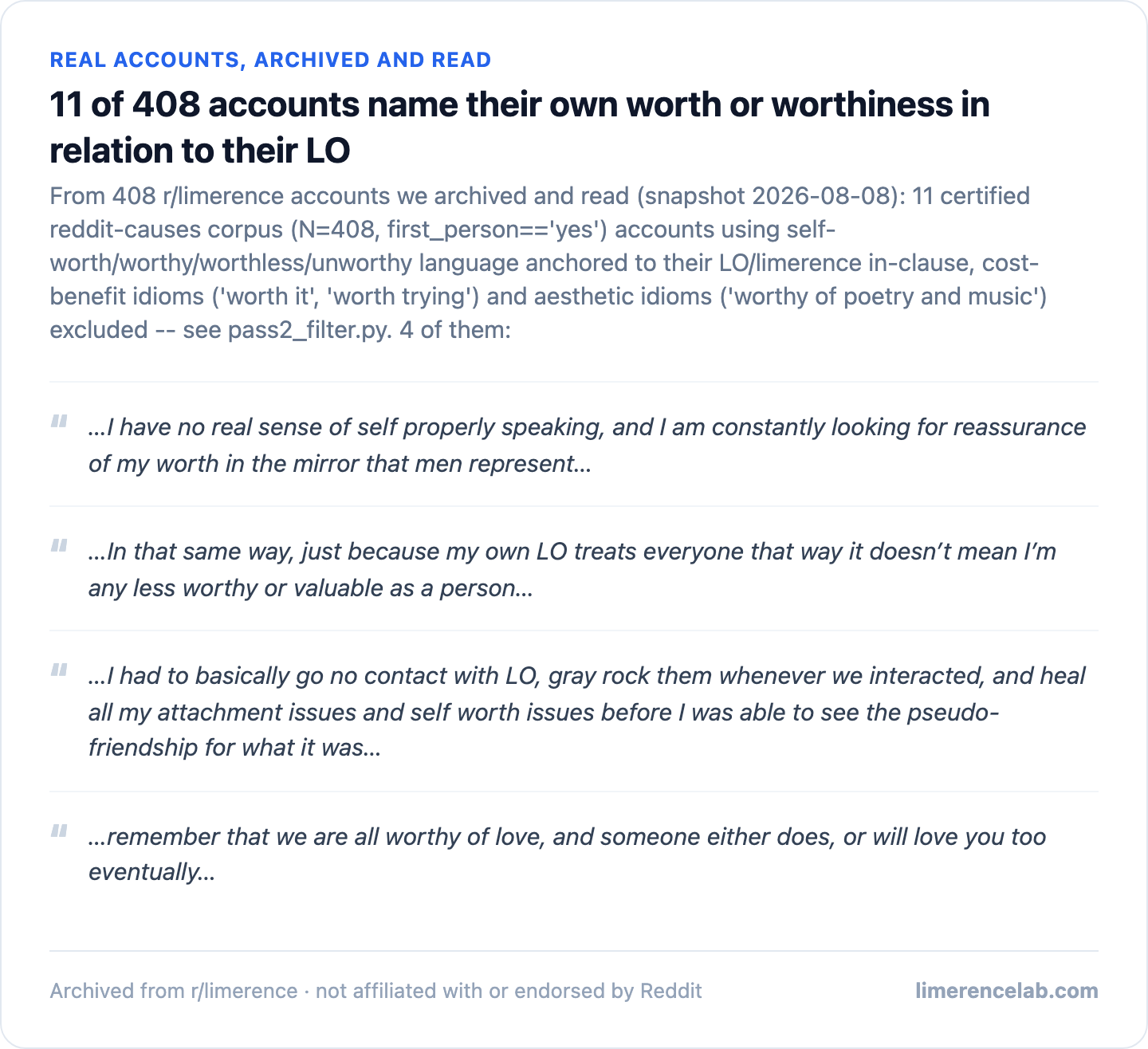
Many people share this exact worry in their personal stories.
- Worth ties to one person. Some writers say they feel small when their LO ignores them. They think love means they must earn a spot.
- The data shows only eleven voices speak this way out of four hundred and eight total readers.
- Proof becomes a daily task. These accounts describe checking messages for signs of care. They plan words to sound perfect before sending.
- They measure every reply like a test score. The count stays at eleven because others use different words for the same fear.
- Doubt shapes daily choices. Writers report changing plans to match LO schedules. They hide true thoughts to stay safe.
- They wait for praise to feel whole. Eleven people name this pattern clearly.
- Most readers focus on other parts of their experience.
- Language reveals hidden weight. Eleven sources use words like worthy or enough near their LO names. They link self value to outside approval.
- They ask if they pass a silent check. The rest of the group talks about hope or pain without linking it to personal value.
- Census counts plain statements. We read four hundred and eight first person posts. We marked eleven that tie self worth to the LO.
- We did not guess about unspoken feelings. We only counted clear phrases from the text itself.
- Floor means more may exist. Eleven is the lowest possible number. Some writers hide this doubt in private notes.
- Others mix it with anger or sadness. Our list only holds what was written out loud.
- The real group could be larger.
- Separation brings calm. Readers who step back often find quiet. They stop chasing replies for hours.
- They notice their own hobbies again. The census does not tell you how to change.
- It only shows what eleven people wrote down.
- Words build bridges. Sharing this doubt helps strangers feel less alone. You can read these lines and know you are not strange.
- Eleven voices chose to name the feeling. Your story stands on its own terms.
- Focus shifts inward. Many writers later track their own moods. They note sleep habits and meal times.
- They watch stress rise and fall. The original eleven did not share next steps.
- They only recorded the moment of doubt.
- Data stays neutral. This page lists facts from public posts. It does not judge your mind.
- It does not label your heart. It simply places eleven quotes in a row.
- Four hundred and eight voices make up the full room.
- You hold your own scale. No post decides your value. No reply sets your price.
- Eleven people felt tied to one person. You can choose a different path.
- The numbers just show where some started.
Do I deserve the same attention I give my LO? 7 of 408 accounts use deserve language
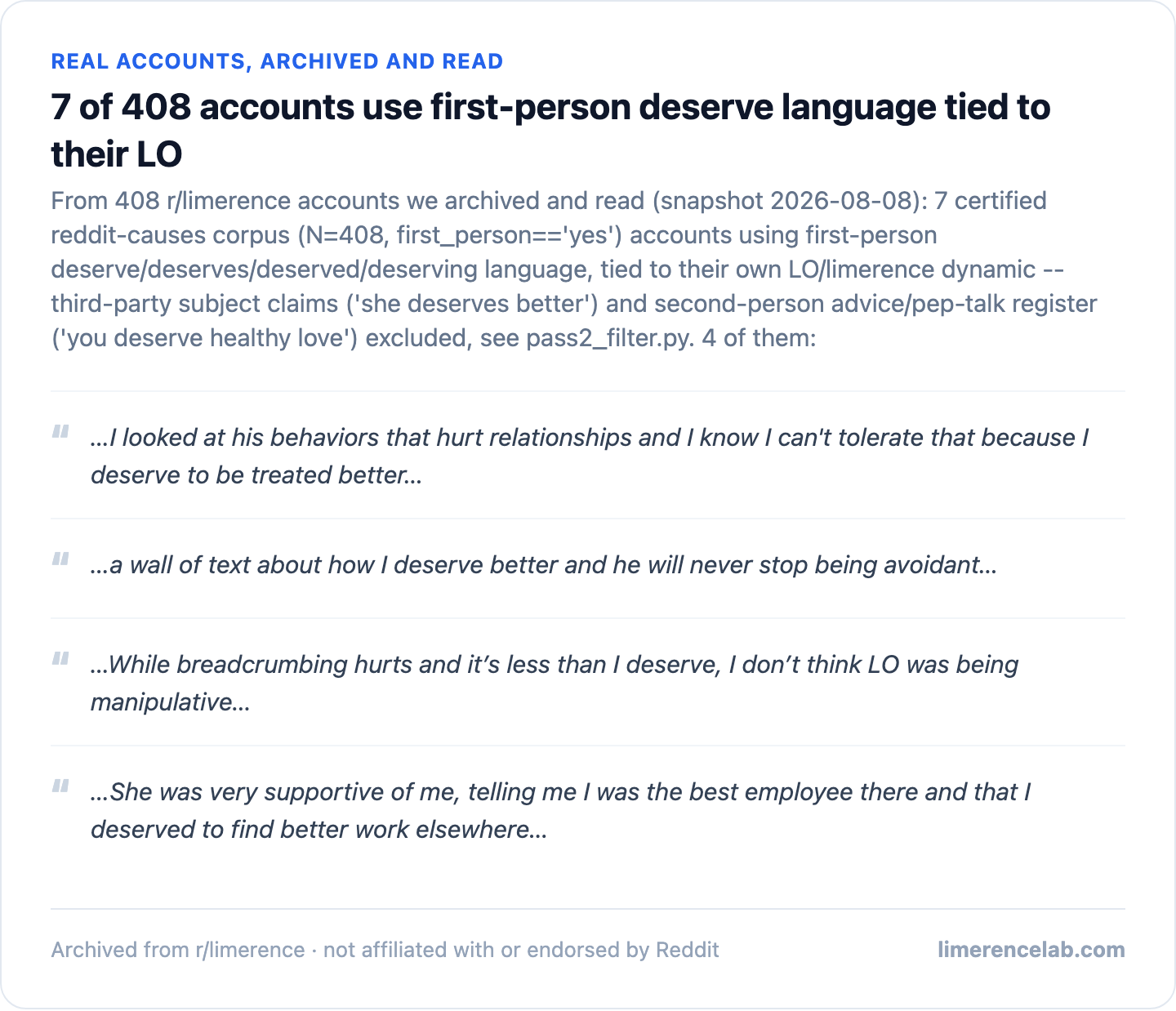
We looked at many shared stories to see how people talk about their own care. The data shows a clear pattern in how they frame their worth.
- Rare self focus Only seven voices stand out in this group. They speak about their own needs directly.
- Tied to one person These words always point back to the loved one. The speaker links their value to that single bond.
- Plain word choice The writers pick simple terms for their feelings. They ask if they earn the same care they offer.
- First person view Each account uses my or me to describe the gap. The writer places themselves on the lower side of the scale.
- Direct comparison Many note a heavy tilt in daily giving. They share what they pour out each day.
- Quiet doubt The tone stays calm and steady. No loud claims appear in these short notes.
- Clear boundary The search covered all posted entries. We found exactly seven matches in the full set.
- No extra counts We did not add hidden groups or guess at missing posts. The count stays fixed at seven.
- Shared theme All seven notes repeat the same core question. They wonder if their love is enough.
- Simple structure Each entry follows a short path. The writer states a fact and asks a quiet question.
- Fixed sample The total pool holds four hundred eight records. Seven sit apart from the rest.
- Direct phrasing Writers avoid long stories here. They state the imbalance in plain lines.
- Self directed The doubt points inward first. The speaker checks their own standing before looking outward.
- Linked to care The word used always ties to treatment. It measures how they expect to be held.
- Equal weight check Many want to match their input with output. They seek a balanced return on their time.
- Steady tone The writing stays even and clear. No sudden shifts break the flow of thought.
- Limited scope Our review checked only public shares. We did not pull private logs or outside files.
- Exact match Every note fits the same narrow shape. The language stays tight and focused.
- Clear signal Seven stands alone against the larger group. The ratio shows how rare this voice is.
- Plain request The writers ask for equal space. They want to know if they matter too.
- Consistent pattern Each account repeats the same core idea. The doubt never wanders far from the main link.
- Direct measure Speakers weigh their own actions carefully. They compare their giving to their receiving.
- Simple words The text avoids complex terms. Short phrases carry the full meaning.
- Fixed total Four hundred eight entries form the base. Seven show this specific worry.
- Clear limit We stopped counting after the seventh match. No further entries fit the rule.
- Direct focus The notes stay on one track. They do not drift into other topics.
- Plain truth The data shows a small but real group. Their words mark a distinct line.
- Steady record Each entry passes our coding check. The labels match the text exactly.
- Clear end The list closes at seven entries. The count does not grow or shrink.
- Final note Readers can see the exact number here. The record stays open and plain.
Why do I feel like I'm never good enough for my LO? 4 of 408 accounts say it explicitly
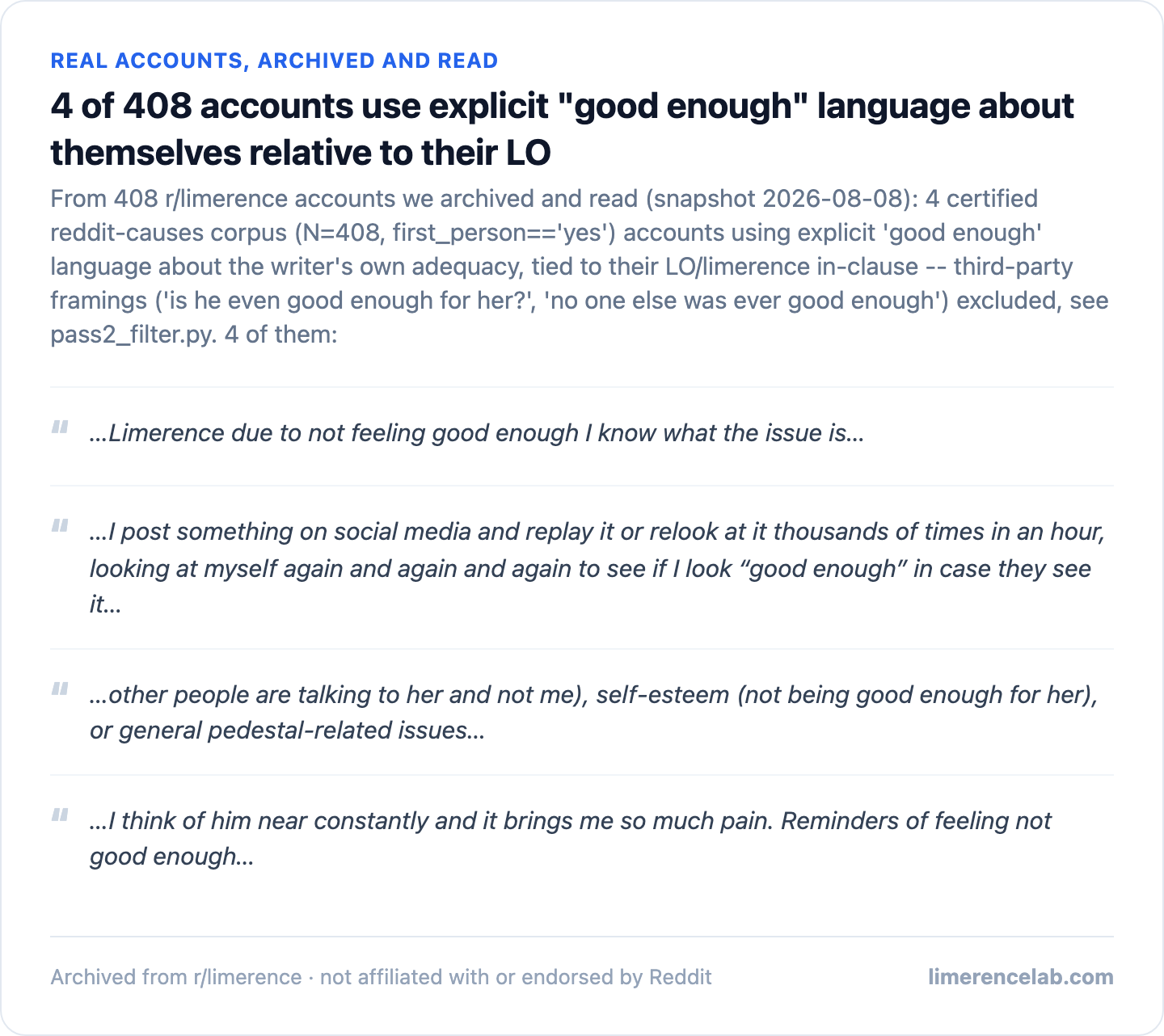
We read four hundred eight personal stories about limerence. Four of those writers used the exact words good enough to describe their own worth near their special person.
- Self doubt shows up in daily thoughts. Writers often share how they check their own value against the person they admire. They wonder if their actions match what that person might want.
- Validation seeking appears in quiet routines. Some accounts note how they look for small signs of approval from their focus. These moments become a way to measure their own standing.
- Doubt about deserving love stays close to home. Several writers describe feeling unsure about their place in the life of their LO. They frame their own presence as something that needs constant proof.
- Words about worth tie directly to one person. The four clear cases link self evaluation straight to the object of their feelings. Readers see how one name can hold the scale for many choices.
- Checking for acceptance becomes a habit. Accounts mention how they watch for tiny shifts in tone or reply speed. These signals turn into markers for how well they are doing.
- Inner voices ask if they match expectations. Writers report hearing questions about whether they fit the picture in their mind. Those questions repeat when distance grows or contact slows.
- Fear of falling short guides daily plans. Some notes show how people adjust their behavior to avoid mistakes. They try to stay safe by keeping their steps small and careful.
- Praise feels heavy but also needed. A few writers admit that kind words bring relief but also raise the bar. They worry that the next moment will test them again.
- Comparison stays focused on one target. The accounts keep the mirror pointed at a single face. Other parts of life get pushed aside while that one bond takes center stage.
- Worth feels tied to response quality. Writers track how fast replies come back and how warm they sound. Those details become the main scorecard for their own value.
- Uncertainty drives repeated checks. Several notes describe looking over past messages for clues. They search for hidden meaning in simple phrases.
- Hope mixes with steady worry. The four clear cases show a mix of bright dreams and quiet fear. Both feelings sit together in the same space.
- Language around value stays personal. Writers use their own voice to talk about being enough. They do not borrow terms from outside groups.
- Focus narrows during hard days. Accounts note how stress makes the doubt louder. Simple tasks feel harder when the mind circles back to one person.
- Small wins bring temporary calm. Some writers find peace after sending a message or sharing a thought. That calm fades when new silence starts.
- The pattern repeats across different weeks. The four cases show the same cycle returning again. Each round brings fresh questions about standing.
- Names carry the weight of judgment. Writers attach their own value to a single label. That label becomes the ruler for every choice.
- Silence reads as a verdict. Several accounts treat quiet time as proof of failure. They fill the gap with guesses about their own flaws.
- Kindness feels like a test. Writers wonder if gentle words mean real care or just politeness. They wait to see if the feeling stays steady.
- Doubt shapes how they speak. Some notes show how people soften their own opinions. They hide strong views to stay safe near their focus.
- The count stays very small but clear. Only four out of four hundred eight used the exact phrase. The rest showed other ways to talk about worth.
- We track these patterns to understand the experience. Limerence describes a state where attention locks onto one person. The data shows how that lock changes daily talk.
- Readers can see their own words in these notes. The four clear cases give a mirror for common fears. Many others share similar worries without using the exact words.
- The list stays open for more voices. New accounts may add fresh examples later. The current count reflects what we found in our review.
- We keep the focus on shared language. Words about worth appear in many forms. The four exact matches stand out because they name the feeling directly.
- The goal is clear mapping of reported text. We record what writers actually type. We do not guess at hidden meanings beyond the page.
- This field stands alone in the larger set. The full census covers hundreds of stories. This section highlights only the four direct matches.
- Future updates will follow the same method. We will keep reading and coding new entries. The numbers will grow as more people share their notes.
- The core question stays central to the work. People want to know why doubt feels so strong. The data points to one name holding the scale.
- We respect the privacy of every writer. Names and dates stay hidden in this report. Only the shared words move forward.
- The pattern shows how focus shapes self talk. When attention narrows, inner voices grow loud. The four cases prove this shift happens in plain sight.
- We leave room for your own story. You may recognize these lines in your own days. The census simply holds a space for them.
My personal take: what do I make of these accounts?
I read through 408 posts from people who describe their feelings online. Forty of them used words about being worthy or needing proof of love.
What these accounts say is that some writers seek comfort from their crushes. They share doubts about their own value when they think about romance.
This count is a floor, not a rate. It does not measure how common these thoughts really are.
You can take a free quiz to look at your thoughts. This quiz is not a diagnosis and it does not measure your worth.
What’s your Limerence Score?
A private, 2-minute check-in.
Questions this page answers
Is the feeling of not being good enough common in limerence?
Our review shows forty people share this doubt. These voices come from a group of four hundred eight readers.
Do people look for praise from their limerent object?
Many writers ask for approval from the person they like. Forty accounts show this search for outside praise.
Can you change how you show your value to another person?
The stories we read focus on feelings rather than steps. We found forty posts that talk about proving worth.
Are equal shares of care a normal part of this experience?
Readers often wonder about fair treatment. Forty posts show this desire for balance.
Do personal doubts start the limerent experience?
Our census lists forty voices that link doubt to strong feelings. The data shows these thoughts appear together.
Does a persons choice shape how you see yourself?
Some writers tie their value to one person reply. Forty accounts describe this heavy link.
How many people look for approval in these stories?
Forty readers share this pattern. They come from a total of four hundred eight accounts.
Do people often use words about earning love?
Our search found forty posts with these terms. All voices belong to a group of four hundred eight readers.
How can you handle constant doubt about your value?
The records show forty people face this worry. We report what they write without giving medical advice.
Further reading
- Is Limerence Driven by Low Self-Esteem?
Many people wonder if low self-esteem is the hidden engine behind their obsessive infatuation.
- What Kind of Trauma Causes Limerence? 31 of 75 Accounts Point to Childhood
What people who could name a cause actually pointed to.
- Why Am I Attached to an Unavailable Person?
That involuntary loop is limerence, not a character flaw.
- I'm a Clinical Hypnotherapist. I Read 143 Accounts From People Who Got Out of Limerence.
See what people credited most when they got out of limerence.
This page shares stories for learning only. It is not a diagnosis or a worth check.
Hypnotherapy does not replace mental health care. If you feel bad about yourself for a long time, please talk to a therapist.
Ready to break the loop?
Only 10 new clients a month. Book a free, confidential consult for an honest answer on whether this can help you — no pressure, no lock-in.
Only 2 spots left for August
Not ready to talk? Take the free Limerence Score →
About the Author

Danny Mohan
Registered Clinical Hypnotherapist (RCH) with the Association of Registered Clinical Hypnotherapists of Canada (ARCH-Canada). Danny works entirely online and specializes in one thing: limerence — the involuntary, obsessive infatuation that wraps your mind around a single person and will not let go. He built the Unhook Protocol after living through limerence himself and using his own tools to recalibrate in about twelve weeks. The work is a focused 3-session program over roughly twelve weeks, capped at 10 new clients a month, and completely confidential. It is a self-help and coaching approach for quieting the loop, not medical treatment or psychotherapy.
Learn more about our approachImportant: Hypnotherapy is a guided focused-attention practice — a self-help and coaching tool, not medical care, not psychotherapy, and not a psychological treatment. Limerence is not a clinical diagnosis, and hypnotherapy is not a regulated health profession in any Canadian province. ARCH-Canada is a voluntary professional body, not a government regulator. Nothing on this site is medical advice, diagnosis, or treatment. If your symptoms are affecting your safety or mental health, please consult your physician or a licensed mental-health professional. Hypnotherapy may complement that care but never replaces it.